Insomnia is defined as a disruption related to sleep. This state of sleep disorder occurs when an individual is experiencing difficulties in either sleeping or staying asleep, failing to get sufficient sleep, or not sleeping effectively. Sleep disruption is a medical condition known as insomnia that is diagnosed in around 10 per cent of the world.
Usually, insomnia is treated as a minor condition and goes away after mild therapy. However, in other cases, insomnia can be a major mental disorder where a person becomes sleep-deprived, and the deprivation starts to affect the normal bodily and cognitive functions.

What are the Causes of Insomnia?
A person needs to sleep at least 7 to 9 hours a day to function properly and be well rested. If this cycle is disrupted, restlessness can influence cognition. There are many causes of sleep disorders, but the major one remains long-term stress.
Some other causes of insomnia are:
→ Tough or Irregular Work Schedule. The increase in night shifts and longer work hours has led to a rise in the rate of insomnia sleep disorder. When a body is not getting enough rest throughout the day, it affects sleep primarily.
→ Excessive Eating at Later Hours. Eating excessively or at later hours can also disrupt sleep patterns. It can cause restlessness at night. It is suggested not to eat heavy food in the evening as it can affect the digestive system.
→ Caffeine or Alcohol. Caffeine is also known as the “anti-sleep” pill. But it should not be taken in excess. The same goes for alcohol. When these two are taken more than necessary, it can affect your sleep schedule and quality.
→ Genetic.: Insomnia can also be passed down from one generation to the next. The sleeping patterns and quality of sleep are both important in this.
What are the Types of Insomnia?
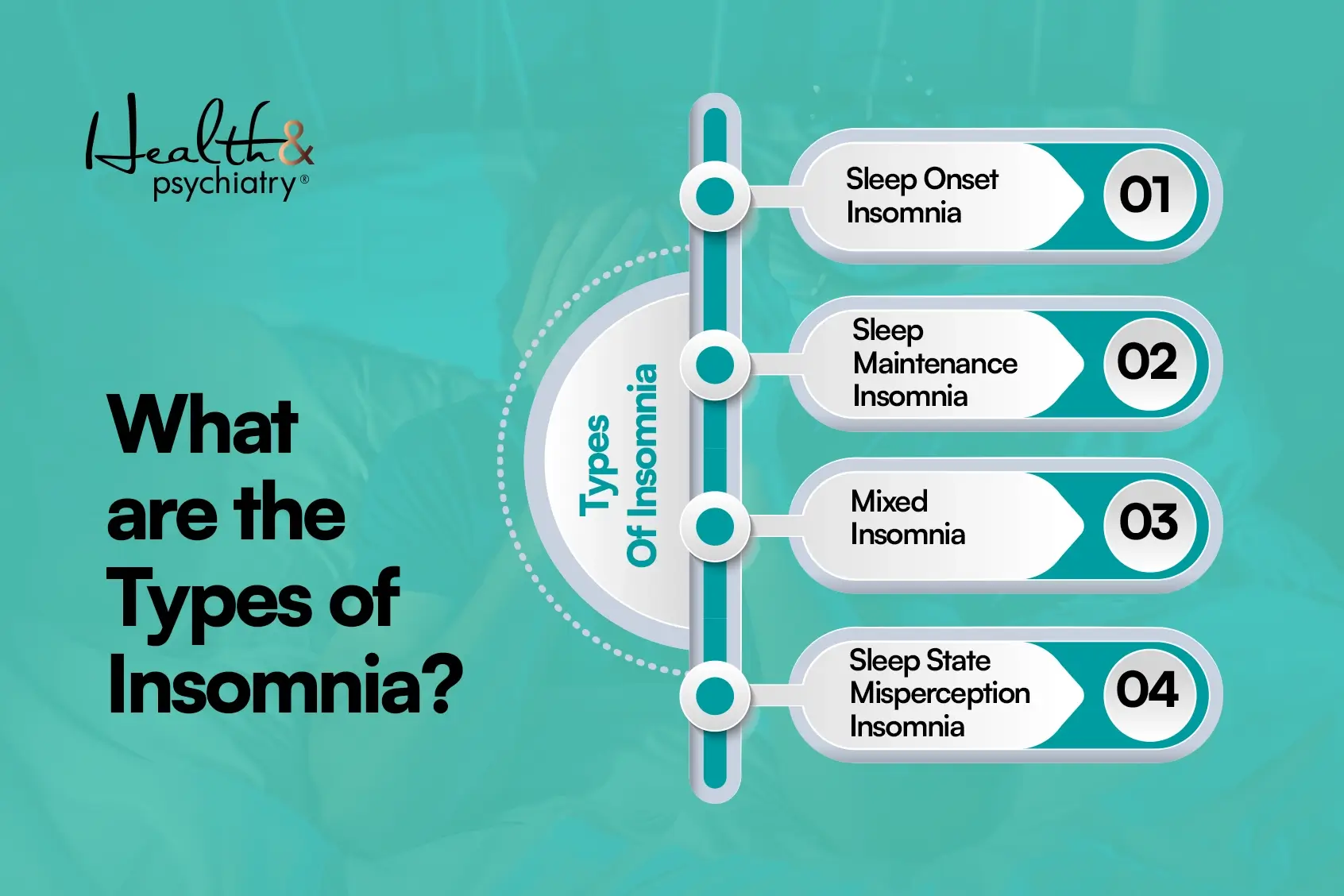
The four major types of insomnia are:
1. Sleep-onset insomnia is a condition where the person has a problem with sleep at the onset of the night. Individuals of this kind tend to spend several hours lying awake, but they are too fatigued to sleep. It is generally associated with anxiety, over stimulated mind or sleep constitutions that interfere with the natural wind-down mechanism.
2. Sleep-maintenance insomnia is characterized by the process of waking up in the middle of the night and being inability to sleep again. People can also wake up several times or spend long durations awake at night.
3. Mixed insomnia is a disorder where one experiences difficulties in falling asleep as well as being troubled by frequent awakenings in the night. This mixture may result in discontinuous and restless sleep, making be difficult to remain awake and be productive throughout the day.
4. Sleep state misperception or parasomnical insomnia is a condition where an individual feels that they are sleeping a lot less than they are in fact sleeping. Though their sleep patterns are observed to be normal, they complain that they were barely able to sleep. This type is closely related to increased sensitivity, anxiety, and exaggeration of being awake at night.
Other than that, the types of insomnia are divided into two categories.
|
Categories |
Types |
Explanation |
|
Time |
Acute & Chronic |
Acute insomnia is short-term, while chronic insomnia is long-term. |
|
Cause |
Primary & Secondary |
Primary insomnia is medically diagnosed insomnia, while secondary insomnia is counted as a symptom of another condition or disease. |
What are the Symptoms of Insomnia?
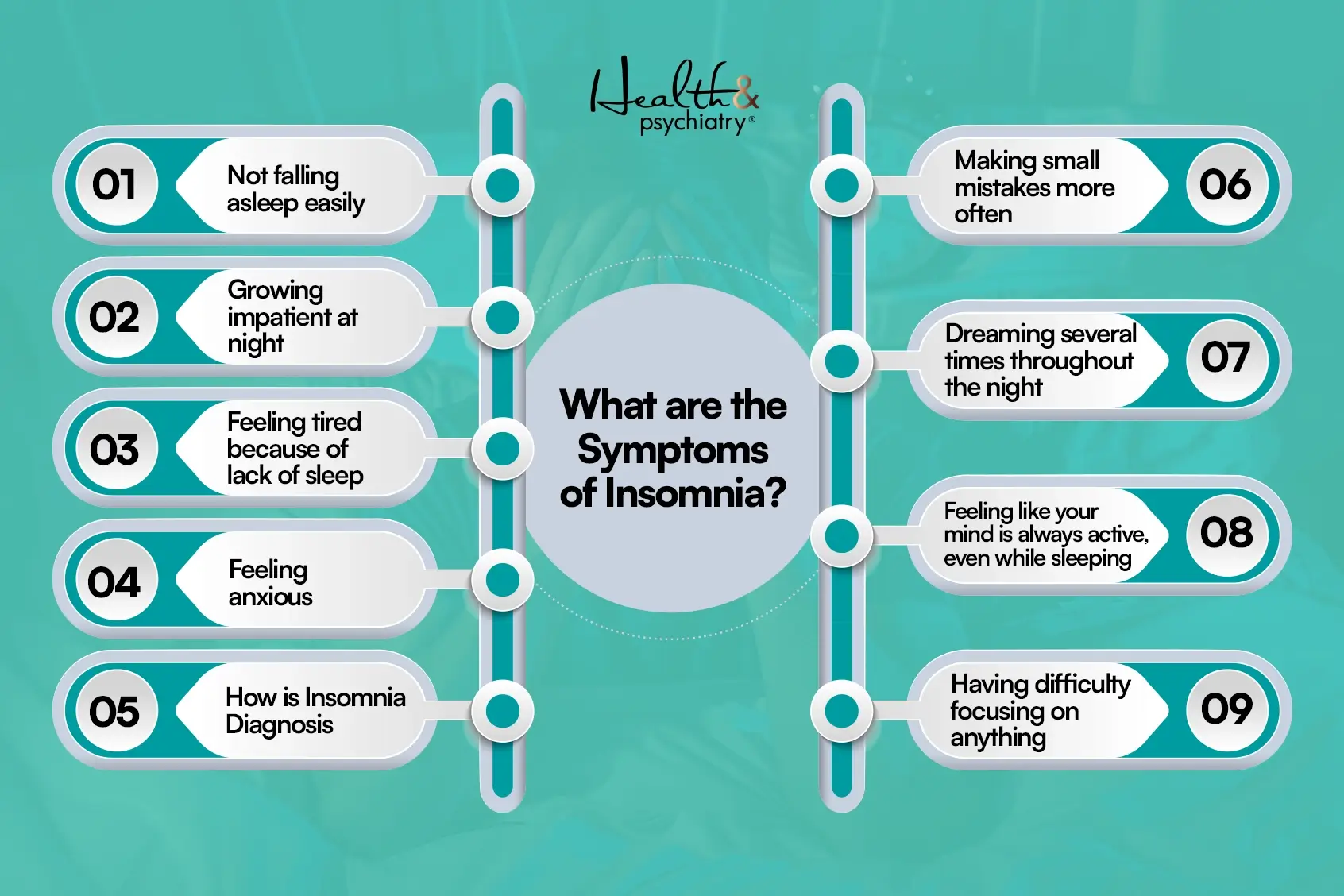
Insomnia manifests in three major forms, including difficulties during the sleeping process, daytime effects, and indications that the disorder has turned into a chronic one.
Daytime Effects
Since restorative sleep renews the body and mind, getting poor sleep and the results will include:
- Tiredness and low energy
- Youngness of wit or difficulty in concentration.
- Memory lapses
- Agitation, anxiety, or depression.
- Weak performance in the workplace, in school, or in daily activities.
Difficulty Sleeping
The difficulty in getting the required sleep is one of the most obvious signs of insomnia:
- Sleep-Onset (Initial) Insomnia: You don’t sleep even after trying for hours.
- Middle Sleep-Maintenance Insomnia: It is the most widespread pattern that affects the most individuals with insomnia. In this, you keep getting up in between.
- Early-Morning (Late) Insomnia: In it, you wake up before your time and then stay tired.
Chronic Insomnia
Not all insomnia is long-term. To be classified as chronic insomnia, sleep problems must have some characteristics:
- Sleep Conditions: The sleeping disorders are also present despite having a sufficient amount of time to sleep, having a nice place, and no immediate circumstances of life (like jet lag or changes in schedules) to get in the way.
- Frequency: The symptoms are experienced at least thrice a week.
- Duration: The problem is at least three months.
- No Other Explanation: The other sleeping disorders, a medical or mental illness, the use of substances or medications, do not cause the insomnia in their entirety.

However, one should remember that in the majority of cases, the manifestations of insomnia can be easily confused with other symptoms because of their similarity with other mental health issues.
So, the major symptoms of insomnia are:
- Not falling asleep easily.
- Growing impatient at night.
- Feeling tired because of insomnia.
- Dreaming several times throughout the night.
- Feeling anxious.
- Having difficulty focusing on anything.
- Making small mistakes more often.
- Feeling like your mind is always active, even while sleeping.
How is Insomnia Diagnosis Done?
The insomnia diagnostic process incorporates both approaches. As a general rule, the specialists begin with cross-questioning of sleeping patterns, lifestyle, and medical history. The patients are also advised by the medical personnel to maintain a sleep diary for at least a week prior to undergoing a follow-up appointment, during which they are to be diagnosed.
Some other tests include using the Pittsburgh Sleep Quality Index. Patients can personally use this at home and consult a professional with the results.
Other examinations are polysomnography, which is a test of sleep apnea used to test sleep, involving spending a night in a laboratory, and the multiple sleep latency test (MSLT) and actigraphy.
Are There Any Therapies For Insomnia?
The treatment of insomnia is multifarious; some of the treatment methods are better than others. The choice of treatment also varies based on the nature and the intensity of the symptoms.
Major ones that you can consider are:
→ Cognitive Behavioral Therapy
The CBT for insomnia is one of the primary insomnia therapy options. The cognitive behavioral therapy helps the patient get rid of the negative thoughts and the overthinking thought cycle so that the mind can get at ease and rest.
It also helps with falling asleep without thinking about having difficulty sleeping or other sleep patterns.
Through therapy, an individual is able to acquire new and better behavioral patterns, such as good sleeping habits. This can assist in enhancing the lifestyle at large.
Part of the therapies that fall under the CBT category include:
- Breathing exercises
- Muscle relaxation therapy
- Sleep restriction method
- Light therapy
- Stimulus control therapy
→ Lifestyle Modifications
Another treatment option for insomnia is lifestyle modifications. In this type, a person is encouraged to adopt positive habits. Though time-consuming, lifestyle modifications can be very effective in the long run.
A few of these changes in your lifestyle can be; not eating in the evening, exercising or walking every day before bed, limiting the time you watch the screen, going to bed early and waking up early, taking naps, reducing your consumption of caffeine and alcohol, eating healthy and engaging in mindful exercises to keep the negative thoughts out of your mind.
→ Medical Aid
For chronic insomnia, one serious option is to consider medical aid. However, it should be managed strictly under the medical personnel’s supervision. The medication is given after a psychiatric evaluation, when other psychological treatments and lifestyle modification are not working anymore.
The patients are educated that they must keep in mind that medication is not the right insomnia treatment for undertake. It is as important to maintain a healthy lifestyle as the treat and management of insomnia.
→ Home Remedies
One of the changes that you can make in your daily routine and help you a lot is small but meaningful: maintaining a consistent sleeping and wakefulness pattern, relaxing before bed and having a regular bedtime ritual, exercising during the day, and avoiding caffeine or watching the screen at night all help improve the quality of sleep.
A natural sleep cycle can also be supported by creating a comfortable sleep environment, namely, cool, quiet, and dark. These domesticated habits are complementary to the treatment plan and can accelerate your health.
→ Alternative Medicine
You don’t have to always go for medication or CBT. Alternative medication is also a useful option to treat your lack of sleep... You can try breathing exercises or meditation to relax your mind before sleeping.
Acupuncture is also useful to some people in terms of stress reduction or relaxation promotion. Some herbal teas like Chamomile, melatonin, or valerian root could also be considered as herbal supplements, which is ONLY possible under the guidance of professionals in order to be safe and compatible with other treatments.
When used in a responsible way and together with your primary care plan, these complementary methods can positively impact overall sleep health.
Checklist To Follow Before Preparing for Your Appointment
→ Understand your symptoms by doing your own research.
→ Keep a sleep diary or journal.
→ Notice your sleeping environment and triggers.
→ Notice the flaws in your lifestyle.
→ Prepare your medical history.
→ Be on time for the appointment...
Comprehensive Insomnia Treatments at the Health and Psychiatry!

Fighting with insomnia alone can get hard. Hence, we’re here to help you fight it. Whether you want telehealth or in-clinic treatment, we offer both.
Now there’s a telehealth option at Health and Psychiatry that lets you attend your sessions online without any delays. So, no more making up excuses for not showing up. If you’re suffering from any type of insomnia or have just started noticing the early signs, book your appointment right away.
At Health and Psychiatry, we offer mental health treatment options under the expert care of Dinar Sajan, MD. Available to treat insomnia.
Do you require therapy, medical procedures or simply a change of lifestyle? We have got you!
Get in touch with us and start your wellness quest with us.
FAQs
Are there means of treating insomnia without medication?
Yes. Cognitive behavioral therapies and lifestyle modifications are some of the approaches that can be administered to insomnia to treat and manage it.
Is insomnia treatable?
Yes. Acute insomnia is treatable with therapy. Chronic insomnia can be managed with a combination of supervised medication aid and therapy, depending on your symptoms.
Is insomnia a mental illness?
Insomnia is a sleeping disorder. However, it is mostly related to mental health. Insomnia is normally collateral to another mental illness, like depression or anxiety.
Can I treat chronic insomnia?
Yes, we have various treatment services for patients diagnosed with acute and chronic insomnia at Health and Psychiatry.
What is the diagnosis process for insomnia?
In order to diagnose insomnia, a professional caregiver records personal circumstances, medical history, and other symptoms. Some diagnostic procedures also include supervised sleeping in a lab.
Is insomnia related to other health issues?
Insomnia is the lack of sleep, and adequate sleep is necessary to maintain normal brain and bodily functions. When sleep patterns are disrupted for a long time, it starts affecting the overall health and body conditions.