Bipolar disorder affects approximately 2.8% of adults in the United States. It is already affecting the lives of nearly 7 million Americans in 2025. Such statistics render it one of the most widespread lifelong mood disorders that need to be treated by a professional in a psychiatric facility or bipolar disorder treatment center.
Behind that statistic are real people: Maybe a college student who can not understand why she is suddenly unable to focus on exams. Although she has aced everything last semester. There is a father who maxed out credit cards during a spending spree he could not control, or the artist whose creativity soars to brilliant heights before sinking into darkness…
What Is Bipolar Disorder?

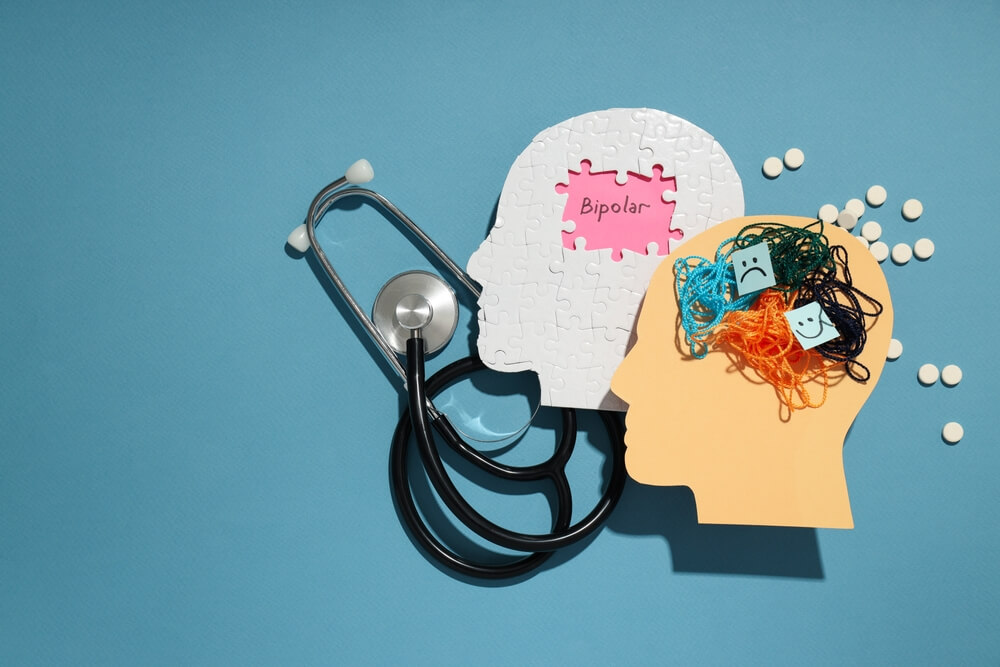
One in every 200 individuals is reported to be affected by this psychiatric disorder worldwide. Bipolar disorder is a psychological problem. A bipolar individual experiences observable and problematic changes in mood, energy, and activity levels. These transformations have a massive effect on everyday operations. It was formerly known as manic-depressive illness. Bipolar disorder results in abnormal alternations in extreme moods. It is not like ordinary mood swings that are experienced by everyone. The bipolar disorder mood events are acute, chronic, and may greatly disrupt relationships, workplace performance, and the overall quality of life. These episodes are defined by a period of high mood (mania or hypomania) and depression, which can be separated by a period of stable mood. The disorder normally develops during late adolescence or early adulthood but may occur at any age. It has been shown that bipolar disorder possesses a great genetic factor, and heredity is a major factor in the onset of the disorder. Imaging of the brain has shown structural and functional differences in bipolar disorder patients, especially in the regions of mood regulation and executive functioning.
Types of Bipolar Disorder
There are different types of bipolar disorder, which are identified by mental health professionals:
→ Bipolar I Disorder
It is distinguished by at least one manic episode. The bipolar I disorder episode is usually severe enough to warrant emergency hospitalization. These manic episodes can be preceded or followed by hypomanic or major depressive episodes. In a manic episode, the individuals have a significantly dangerous and elevated, expansive, or irritable mood and heightened energy or activity.
→ Bipolar II Disorder
It involves a pattern of depressive episodes and hypomanic episodes, but never a full manic episode. Hypomania is a less severe form of mania, happens in bipolar II. While episodes are less intense, the behavioral changes are still problem-causing. Many people experience longer and more frequent depressive episodes. It causes greater functional impairment and needs proper treatment at a bipolar disorder treatment center.
→ Cyclothymic Disorder
It is also called cyclothymia. In this disorder, there are episodes of hypomanic symptoms and depressive symptoms. But they are long-lasting. For at least two years in adults, one year in children and adolescents. Although less severe, the cyclothymic disorder can also have a serious effect on your daily functioning.
→ Other Specified and Unspecified Bipolar Disorders
Add bipolar symptoms that do not fit into the three categories mentioned above, yet include clinically significant mood elevation. This may involve cyclic rapidity or symptoms caused by drugs or illnesses.
Signs & Symptoms of Bipolar Disorder

Early recognition of bipolar disorder signs and symptoms is essential for effective treatment.
→ Manic Episode Symptoms
- Exceedingly high moodiness, excitement, or irritability.
- More energy and activity, and less sleep.
- Speedy speech and breathlessness.
- Impulse and irresponsible conduct (spending sprees, reckless driving).
- Delusional narcissism or self-inflation.
→ Hypomanic Episode Symptoms
- Just like mania, but not so severe.
- Obvious to other people, but not demanding hospitalization.
- Usually comes before or after depressive events.
→ Depressive Episode Symptoms
- Prolonged depression, emptiness, or despair.
- No longer interested in hobbies or social activities.
- Fatigue and low energy.
- Problems with sleep (excessively sleepy or lack of sleep)
- Alterations in weight or appetite.
- Poor concentration/making decisions.
- In severe cases, suicidal thoughts.
→ Mixed Episodes
Some individuals experience mixed episodes. It shows a mix of symptoms of mania and depression. It is more dangerous sometimes, as it increases the risk of suicide and functional impairment.
Bipolar Disorder Treatment: Comprehensive Approaches

Treatment options for bipolar disorders normally entail a combination of bipolar disorder medication, therapy, and lifestyle modification. The majority of bipolar disorder patients need lifelong therapy because it is usually taken as a lifelong condition that cannot be cured, but should be controlled.
Bipolar Disorder Therapy
Psychotherapy is a necessary part of the full treatment of bipolar disorder. Different therapy options for bipolar disorder can help a person comprehend his or her state, identify the symptoms of mood swings, and acquire the skills of coping with the disorder.
→ Cognitive Behavioral Therapy (CBT) assists one to recognize and modifying negative thinking and behavior, which can aggravate the bipolar disorder symptoms. CBT methods educate on problem-solving and strategy development to cope with stress and identify symptoms of mood outbursts at an early stage.
→ Family-Focused Therapy engages the family in treatment, enhances communication, problem-solving in the family, and educates family members on the disorder. The family support goes a long way in enhancing treatment results.
→ Interpersonal and Social Rhythm Therapy (IPSRT) is based on the stabilization of daily rhythms (sleep, eating, activity schedules, etc.). This method acknowledges that mood episodes can be caused by a disruption in the day-to-day activities.
→ Psychoeducation at bipolar disorder treatment centers offers the full information concerning bipolar disorder, its treatment, and self-management techniques. Knowledge of the condition equips the individuals to be actively involved in the treatment.
Bipolar Disorder Treatment Centers: The Right Level of Care!
There are different levels of care based on the severity of the symptoms and needs of a person. The selection of the appropriate bipolar disorder treatment center or program is important for recovery.
→ Inpatient Treatment for Bipolar Disorder
The bipolar disorder inpatient treatment involves 24-hour care at a hospital. It is usually very intensive and is only used in severe cases of manic or depressive episodes, and in cases where one may cause harm to themselves or others. Bipolar inpatient treatment centers provide psychiatric stabilization, drug modifications, and crisis intervention in a secure, organized setting.
Bipolar inpatient services are usually accompanied by a duration of stay of several days to a few weeks, where they are fully assessed and treated in the case of acute attacks.
→ Bipolar Disorder Residential Treatment Centers
Bipolar residential treatment facilities provide a middle ground between outpatient care and hospital care since they offer more support to patients requiring more than outpatient services but not as much as hospital care. This form of program offers extensive programming within the context of a therapeutic community, and typically takes a few weeks to months.
Management of medication, individual and group therapy, skills training, and 24-hour support are included in the treatment, as it teaches individuals to find the tools that will help them stay stable in the long run.
→ Outpatient Treatment for Bipolar Disorder
A bipolar disorder clinic is a specialized outpatient clinic that provides services to persons who can be stable enough to continue with their day-to-day life and who are undergoing regular treatment.
During outpatient bipolar treatment, the individual is taken through a therapy session at least once a week or once every two weeks in addition to frequent psychiatric visits to manage medication.
Most of the bipolar disorder treatment facilities provide in-depth assessment, continued medication therapy, and evidence-based psychotherapy in an easily accessible outpatient facility.
→ Intensive and Partial Hospitalization Programs
Partial Hospitalization Programs (PHP) offer serious treatment on a daytime basis. It allows eligible patients to go home in the evenings. These treatment programs for bipolar disorders provide some hours of structured programming in a day. It includes therapy, medication, and skills groups.
Intensive Outpatient Programs (IOP) are more structured than traditional outpatient treatment. They offer more than several therapy sessions weekly. So they are appropriate for bipolar patients who have undergone a higher level of treatment but now require extra assistance from a bipolar disorder treatment center.
→ Bipolar Treatment Online and Telehealth Care
Online therapy for bipolar disorder offers great ease in managing the condition. Health & Psychiatry, with the best bipolar disorder therapists in Tampa, Florida, offers virtual consultations, telepsychiatry sessions, and remote medication management.
Online treatment is especially helpful for those who live far from major bipolar disorder treatment centers and want to continue an expert level of care to manage their mental health.
Take the Next Step Toward Stability and Wellness!

Professional help is available at Health & Psychiatry, the best bipolar disorder treatment centers in Tampa.
Is someone you love experiencing symptoms of bipolar disorder?
Do NOT wait for symptoms to become overwhelming.
Early intervention makes a significant difference in long-term outcomes and quality of life.
Our compassionate team and bipolar disorder specialists, under the guidance of Dr. Sajan Dinar, MD., specialize in mood disorder management. We have been committed to helping you for decades.
Achieve lasting stability and improved quality of life at our bipolar disorder treatment center. We offer flexible scheduling, including telehealth options, to make quality mental healthcare accessible.
Contact us now and schedule your same-day appointment!