In recent years, the difference between gender dysmorphia vs dysphoria sexual dysmorphia has become prominent, but they are not understood correctly. Body Dysmorphic Disorder (BDD) and Gender Dysphoria are two disorders that are easily mixed up.
Although the process of distress is similar in both cases, concerning the body, they are caused by completely different psychological reasons and demand entirely different treatment.
Research carried out in the American Journal of Psychiatry also shows that body dysmorphic disorder is common. In approximately 2% of the general population, and is far more widespread than gender dysphoria.
What is Gender Dysphoria?

Gender dysphoria is a disorder. It occurs due to a lack of congruence. That is between the gender identity and the sex that was assigned to a person at birth. Not all transgender and gender-different people experience dysphoria. Diagnosis is grounded in distress and dysfunctionality of functionality and not gender identity.
Some symptoms can manifest as discontent with gender characteristics, gendered social roles, or appearing to be the gender that is not in accordance with oneself. In addition, distress may be worse. Especially when one is undergoing a physical transition such as puberty.
The therapy is individualized and may involve psychotherapy, social affirmation, hormone therapy, or even surgery, with substantial evidence showing gender-affirming care can reduce depression, anxiety, and suicidality among patients assessed by a significant margin.
What is Body Dysmorphia?

While Body Dysmorphic Disorder is a disease that influences mental health, which is an obsessive fixation on the flaws in the appearance that are of trivial or invisible flaws in appearance, these thoughts are intrusive, time-consuming, and difficult to reassure, unlike ordinary appearance concerns.
Patients of BDD tend to be highly self-conscious, nervous, and troubled about certain parts of the body: face, skin, hair, or weight.
Moreover, the BDD falls under the Obsessive-Compulsive and Related Disorders category since it is characterized by repetitive behaviors like checking the mirror, over-grooming, seeking reassurances, or shying away from social activities. The anxiety of BDD often disrupts work, school, and relationships, and is linked to the high probability of depression and suicidal thoughts.

The evidence-based treatment of BDD involves Cognitive Behavioral Therapy (CBT) based on the specifics of the obsessive thought patterns, as well as the use of psychiatrist-recommended medications. Cosmetic surgery is usually inefficient and may aggravate the symptoms by supporting distorted ideas.
Difference Between Gender Dysmorphia vs Body Dysmorphic Disorder
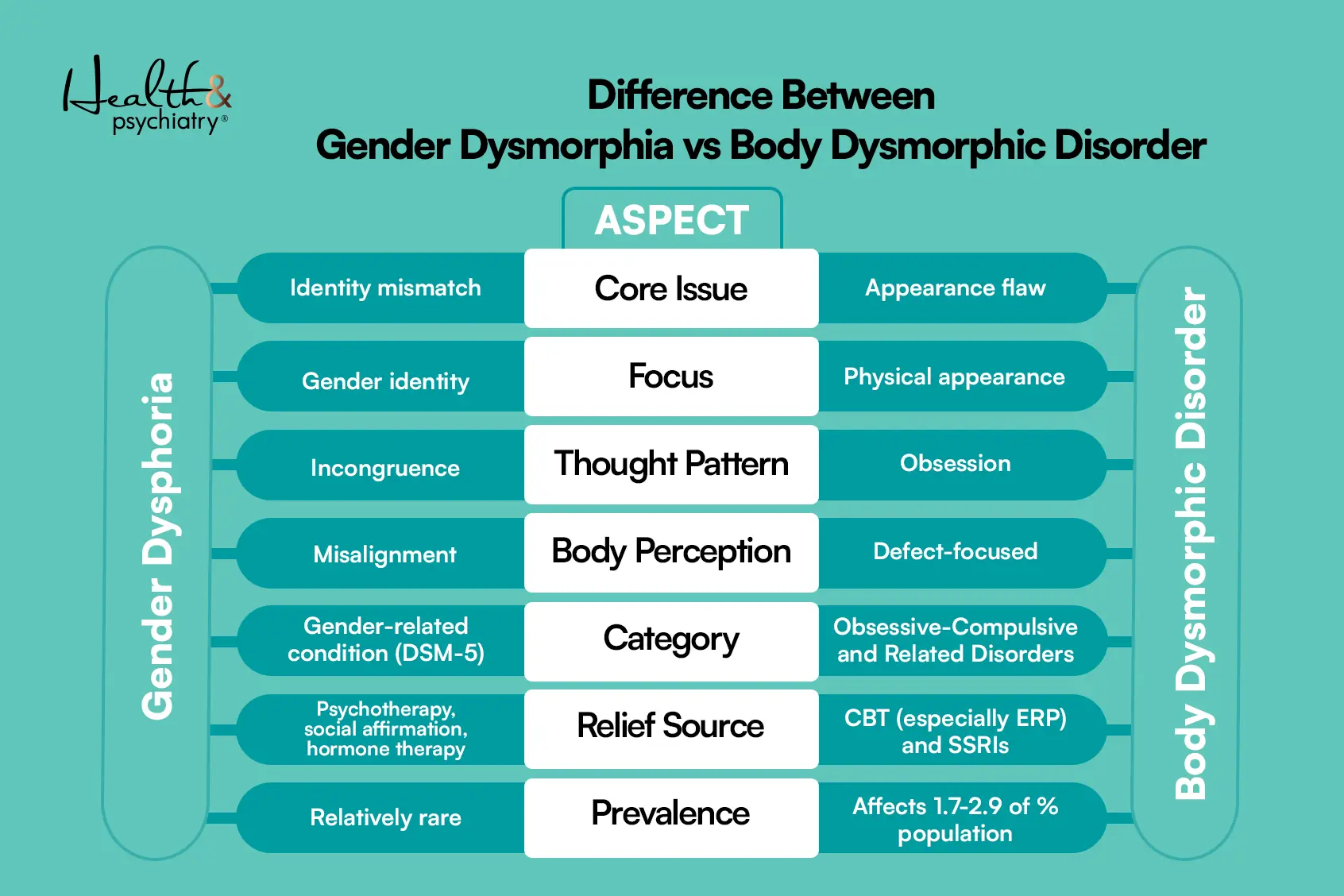
Even though both conditions are associated with distress concerning the body, the disturbance of gender dysphoria and body dysmorphia is fundamentally dissimilar in nature.
→ Gender dysphoria has its foundation in identity incongruence - the body does not correspond to the way a person perceives themselves to be. Instead of being a component of a body that is perceived to be flawed or unattractive, the distress is a result of the feeling that it is something that does not fit or correctly reflects gender.
→ On the contrary, distorted perception and obsessional judgment of appearance are the motivators of body dysmorphic disorder. The person feels that there is something that is wrong with their body, yet objective data and reassurance prove otherwise. The suffering is cosmetic and not identity-centered.
→ The other significant difference is the outcome of treatment. When treating gender dysphoria, treatments to match the body or role with gender identity can be a source of permanent relief.
The appearance changes in BDD are hardly effective in alleviating distress, since the underlying distorted thinking is not addressed. This difference is crucial in clinical settings, where an incorrect diagnosis can lead to an inefficient or dangerous intervention.
Can Dysmorphia and Dysphoria Occur Together?
Yes, body dysmorphic disorder and gender dysphoria can go hand in hand, albeit being different diagnoses. As an example, transgender person can have gender dysphoria concerning sex characteristics and BDD concerning unrelated appearance features, e.g., skin or face symmetry.
Developing identity-based distress and obsessive appearance issues are the two situations that need a close clinical evaluation. In one of the research studies published in The Journal of Clinical Psychiatry, the necessity to differentiate between the two is discussed because otherwise, inappropriate treatment planning is created.
Lastly, treatment of BDD involves cognitive errors and obsessive-compulsive actions, and treatment of gender dysphoria involves identity affirmation and personalized treatment.
Get the Help You Need!
Gender Dysphoria and Body Dysmorphic Disorder are the two disorders that are frequently referred to, yet they are not interchangeable. One is an appearance-oriented obsessive disorder, and the other is an identity-connected experience of distress. Knowing the difference enables the clinicians, patients, and families to seek evidence-based care that will actually bring about the end of suffering.
It is imperative to have a proper diagnosis before any kind of treatment is administered. The research has shown that the earlier the disorder of body dysmorphia is treated, the better the prognosis in the long term. So, don’t suppress your emotions and get treated for it!
Access specialized OCD and gender dysphoria treatment in Florida. Contact Health & Psychiatry Clinics for trusted, professional care.
FAQs
What is the main difference between gender dysphoria vs body dysmorphia?
Gender dysphoria is distress over the mismatch between identities and the assigned sex, whereas body dysmorphia is an obsessive desire about the alleged physical defects that are not of objective importance.
Can a person have both conditions?
Yes, it is true that a person can have both conditions and fit the diagnostic criteria, but it is still clinically different and needs a different approach to treatment.
Does gender dysphoria go away on its own?
Gender dysphoria does not normally self-heal or resolve on its own without assistance or intervention of any kind to some extent. Therapy, social confirmation or needs-specific medical care all relieve many people.
How is body dysmorphia diagnosed?
Body dysmorphic disorder is a condition that is diagnosed by a licensed mental health professional through standardized criteria which generally includes appearance-preoccupation, compulsive tendencies and severe disability in the day-to-day functioning.