You're fast asleep… and then, without warning, you're wide awake. Suddenly. Heart pounding, chest tight, struggling to breathe? And convinced that something terrible is about to happen. The difference is that nothing triggered it. No nightmare you can remember. Just raw, overwhelming fear at 2 in the morning.
If this sounds familiar, you may be experiencing nocturnal panic attacks. In simple words, they are sudden episodes of intense fear that jolt people out of sleep.
Yes. They are frightening, exhausting, and deeply disruptive.
But here's the important part… They are not dangerous! And they are very treatable…
Statistics reported that about 11% of Americans experience a panic attack each year.
What Are Nocturnal Panic Attacks?
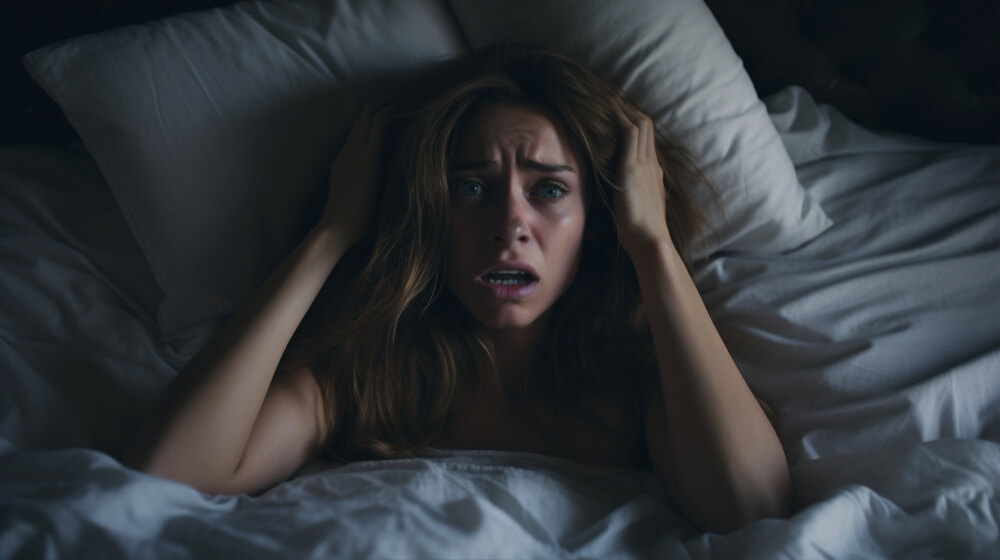
A nighttime panic attack is a sudden surge of fear. It emerges with intense physical symptoms that wake a person from sleep.
It is not similar to daytime panic attacks. As they are usually linked to a stressful thought or situation…
Your panic attacks during sleep occur without any obvious trigger. You are simply asleep… And then. You are not! Lasting for less than 10 min. It is typical for nocturnal panic attack symptoms to peak and begin fading
Research has established that these attacks occur specifically during non-REM (NREM) sleep, not during dreaming. This is important because it means the attack is not caused by a bad dream. The body's alarm system fires spontaneously, in the absence of conscious thought or worry.
It is also important to separate sleep panic attacks from night terrors. Because, night terrors are a sleep disorder. It is most common in children.
The difference is that during a night terror, the person may scream or thrash but remains asleep and has no memory of the episode.
On the other hand, the nocturnal panic attacks cause the person to fully wake. That person is then vividly aware of the fear. They may feel the physical sensations caused by panic attacks in sleep, often for a long time afterward.
How Common Are Nocturnal Panic Attacks?
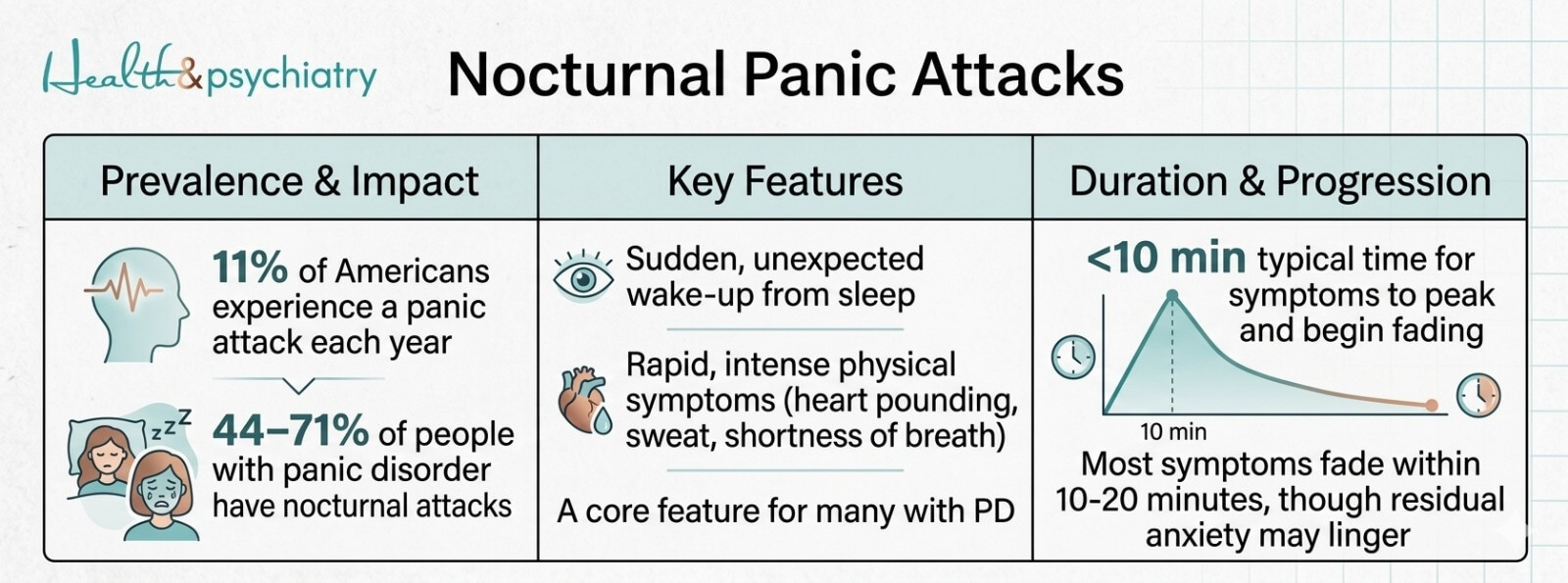
Nocturnal panic attacks do not occur frequently in the general population but they are well known in people with anxiety disorders- panic disorder in particular.
Although every year approximately 1 in 10 individuals has a panic attack, only a relatively small number (2 to 5 percent) develop a panic disorder.
Yet, in this population, nocturnal panic attacks are rather common, with about 50 percent to 70 percent of the population affected.
Simply put, these nighttime episodes might seem infrequent and frightening, yet they are a widespread occurrence of panic disorder and a factual explanation of anxiety-related disorders.
Symptoms Of Nocturnal Panic Attacks
At night, nocturnal panic attack symptoms tend to be sudden. Particularly jarring as the body goes from rest to high alert within seconds.
→ Physical Symptoms Of Nocturnal Panic Attacks
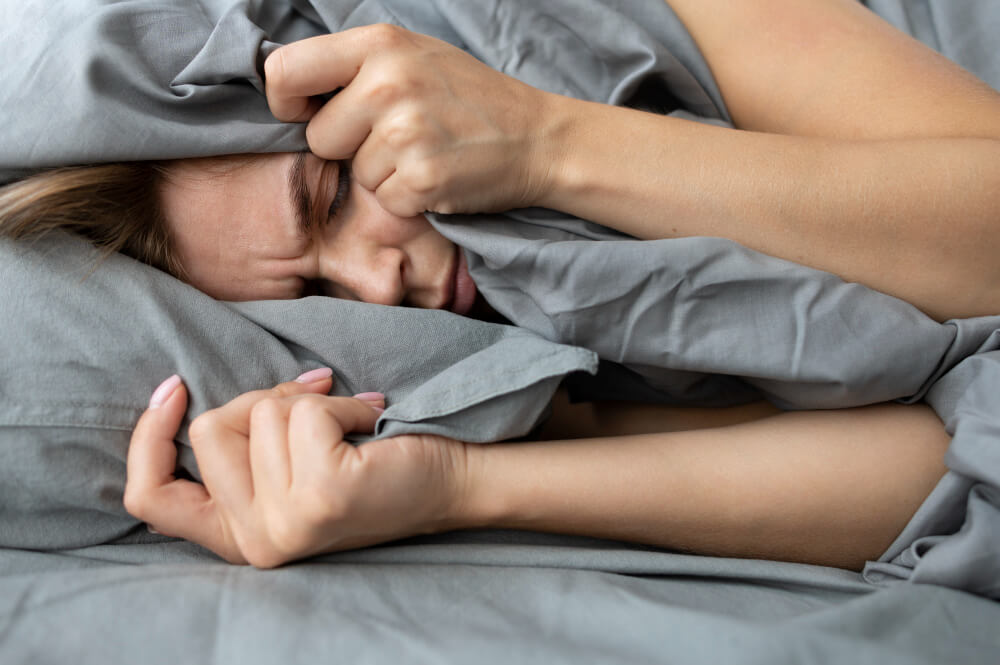
- Racing or pounding heartbeat.
- Sweating.
- Trembling or shaking.
- Dizziness or light-headedness.
- Nausea or stomach discomfort.
- Numbness or tingling (hands, feet, face).
- Chills or hot flushes.
- Shortness of breath or choking sensation.
- Chest pain or tightness.
→ Psychological Symptoms of Nocturnal Panic Attacks
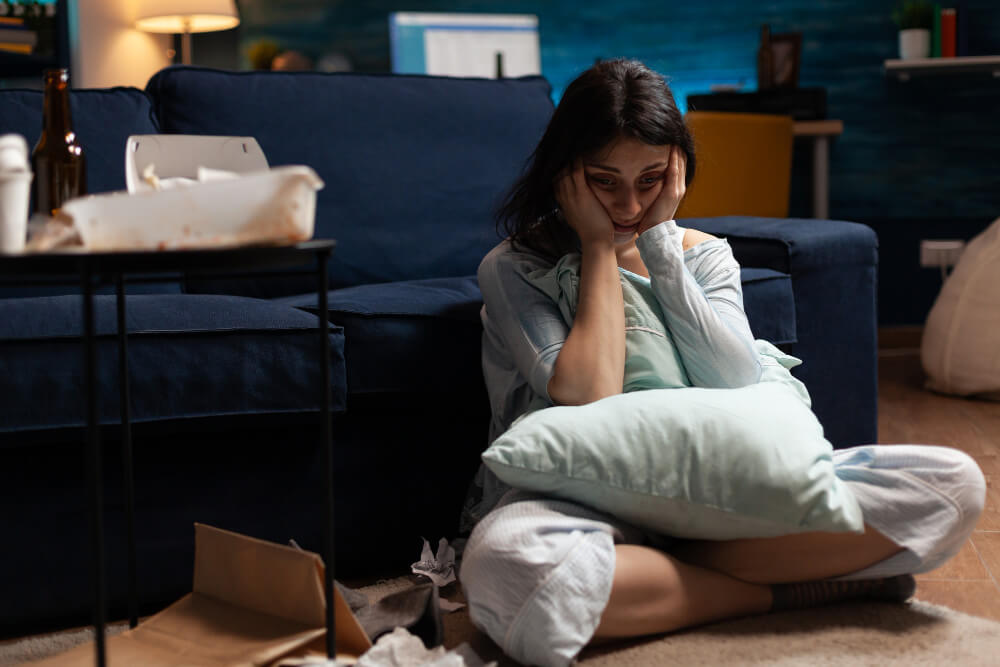
- Extreme discomfort with a sense of dread or terror.
- Feeling of losing control.
- Feeling of impending death or disaster.
- Derealization (feeling unreal or detached).
- Confusion about what is happening?
- Intense urge to escape or flee.
- Fear of having a heart attack…
Research suggests that people who have nocturnal attacks are more likely to experience intense breathing symptoms. It comes with a sensation of choking or being unable to breathe… It can take much longer to feel calm enough to sleep again.
Causes of Nocturnal Panic Attacks
Panic attacks during sleep might feel random… But several underlying factors contribute to their occurrence.
1. Panic Disorder & Anxiety Disorders
One of the most common causes of nocturnal panic attacks is panic disorder (PD). Some other anxiety-related conditions also cause them.
It is to be noted that 44–71% of people with panic disorder also experience nocturnal panic attacks.
Individuals with generalized anxiety, social anxiety, or panic disorder often have heightened baseline anxiety levels.
So during their sleep.. when their brain may continue processing stress and fear responses. It causes the triggering a panic attack. It is sudden. Even without conscious awareness.
In many cases, people who experience daytime panic attacks are more likely to have them at night as well.
2. Overactive Nervous System
An overactive autonomic nervous system, particularly the sympathetic (“fight-or-flight”) system, plays a key role in causing panic attacks at night.
When this system is hypersensitive, it may:
- Misinterpret normal bodily sensations (like changes in heart rate or breathing).
- Trigger sudden surges of adrenaline during sleep.
- Cause the body to react as if it is in danger.
→ This can lead to waking up with NP symptoms such as a racing heart, sweating, or shortness of breath.
3. Sleep Cycle Changes
Sleep disturbances causing attacks are often linked to transitions between sleep stages, especially during non-REM (NREM) sleep.
Disruptions in sleep cycles may:
- Trigger sudden awakenings.
- Increase vulnerability to panic responses.
- Create confusion or disorientation. Intensifying fear.
→ People who experience poor sleep quality, insomnia, or irregular sleep schedules may be more prone to these attacks.
4. Hormonal Fluctuations
Your hormones significantly influence your mood and stress responses. Fluctuations in hormones such as, cortisol (stress hormone), adrenaline and also your melatonin (sleep hormone) can disrupt the body’s balance. It then increases nighttime anxiety.
→ Hormonal changes can be due to stress. Also medical conditions, menstrual cycles, or thyroid imbalances can contribute to nocturnal panic episodes.
5. Lifestyle and Environmental Triggers
Certain daily habits and environmental factors can make a person suffer from nocturnal panic attacks. These triggers include::
- Intake of caffeine or stimulants (especially later in the day).
- Alcohol consumption. It can disrupt sleep patterns.
- Your stress levels are high. Maybe due to unresolved emotional tension.
- Sleep deprivation or irregular sleep routines
- Overstimulation before bed (e.g., screens, intense activity).
→ These factors can overstimulate the brain and body, making nighttime panic more likely.
Why Do Panic Attacks Feel Worse at Night?
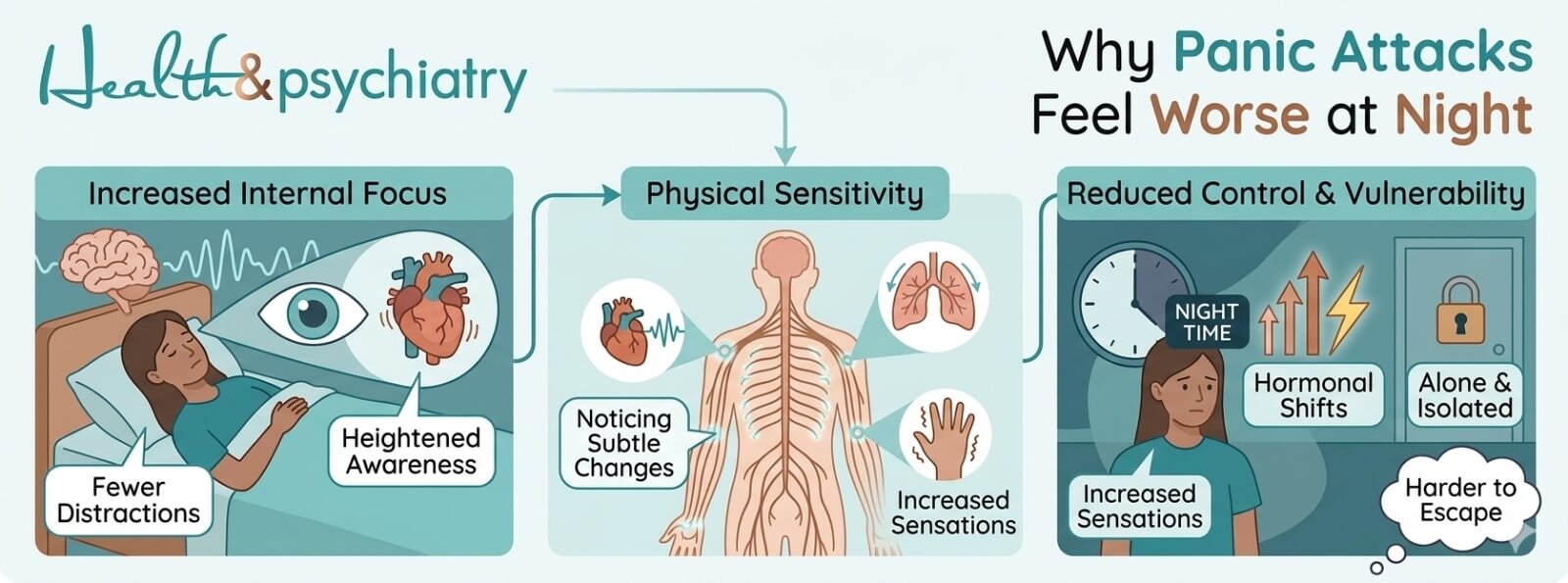
Panic attacks often feel more intense at night. And this experience is both common and understandable.
While the physical symptoms of a panic attack may be similar to daytime attacks.. several factors make nighttime episodes feel more worse.
1. Lack of Distractions
Normally, your mind is occupied with work during daytime, with conversations, and daily tasks. Well, everything becomes settled down and quiet at night..
With fewer distractions:
- Your thoughts become more noticeable.
- Physical sensations (like a racing heart) feel stronger.
- Anxiety can escalate more quickly.
→ Awareness is heightened. With no distractions making panic feels more intense.
2. Increased Focus on Physical Sensations
You often lie still in a quiet environment at night. You mind make it easier for you to notice subtle bodily changes, such as: your heartbeat, your breathing patterns, and muscle tension…
→ For someone prone to anxiety, these normal sensations can be misinterpreted. They can trigger panic attacks at night due to danger. Stimulating or worsening a panic attack.
3. Sleep Cycle Vulnerability
Panic attacks at night often occur during transitions between sleep stages.
These moments can cause:
- Sudden awakenings.
- Disorientation.
- A surge of adrenaline.
→ Waking up abruptly in a state of fear… without a clear reason.. can make the experience feel more intense than daytime panic.
4. Reduced Sense of Control
At night, you’re more physically restricted… or alone, while others may be asleep or unavailable. It may feel harder to “escape” the moment. This can increase feelings of helplessness and amplify panic.
5. Hormonal and Biological Factors
The body’s internal rhythms also play a role. At night:
- Cortisol levels fluctuate.
- The body transitions into rest mode.
- Small imbalances can trigger stress responses.
→ These biological shifts can make the nervous system more sensitive to panic triggers.
6. Fatigue and Emotional Processing
By nighttime, your body and mind are already tired. Fatigue can:
- Lower your ability to cope with stress.
- Increase emotional sensitivity.
- Make anxious thoughts feel more intense.
→ Adding to it, some unresolved stress from the day may surface. Especially when your mind finally slows down, causing nighttime panic attacks.
Ways to Stop Nocturnal Panic Attacks!
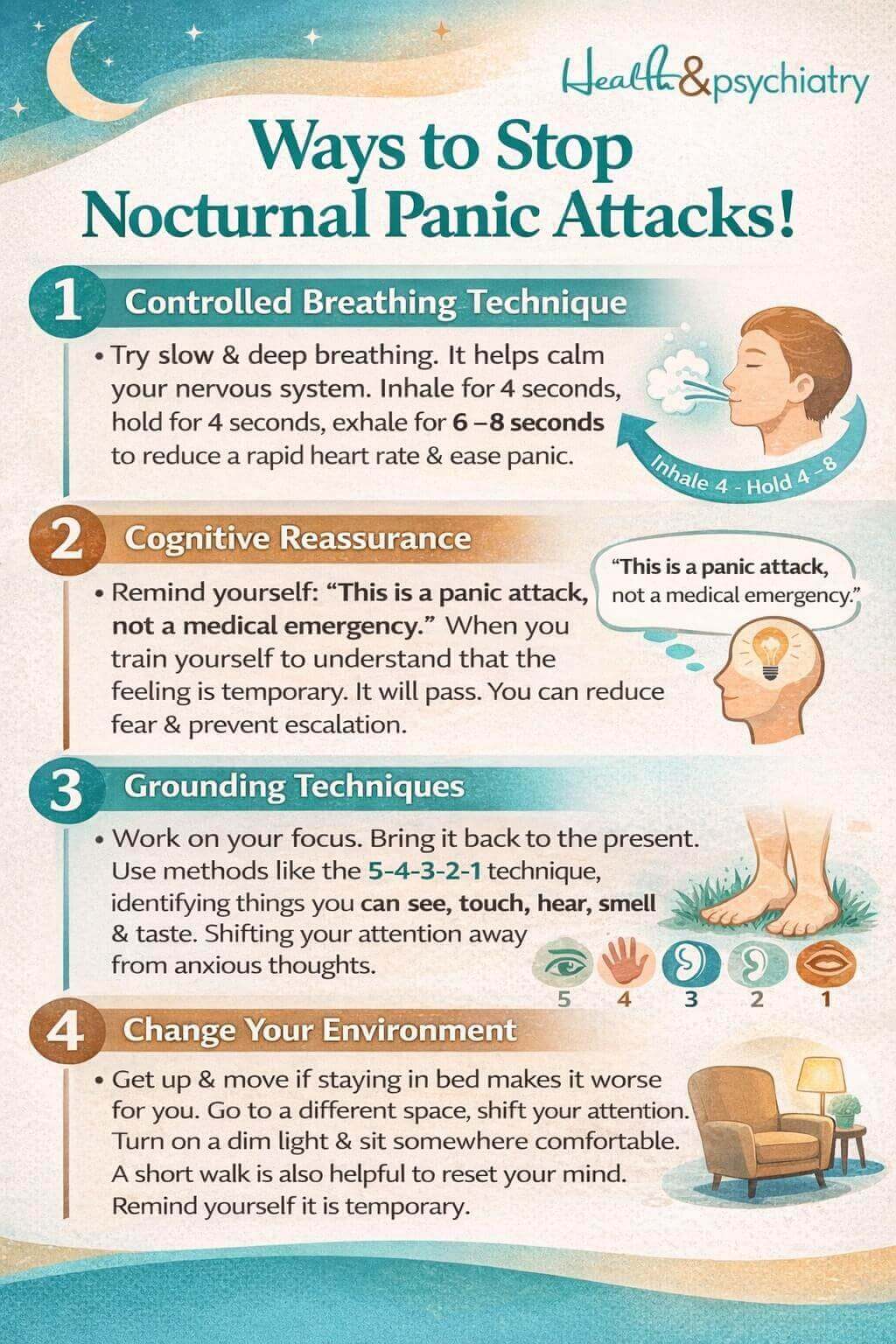
→ Controlled Breathing Technique. Try slow & deep breathing. It helps calm your nervous system. Try inhaling for 4 seconds, then holding for 4 seconds. After that, exhale for 6 to 8 seconds to reduce a rapid heart rate and ease panic.
→ Cognitive Reassurance. Remind yourself: “This is a panic attack, not a medical emergency.”
When you train yourself to understand that the feeling is temporary. It will pass. You can reduce fear and prevent escalation.
→ Grounding Techniques. Work on your focus. Bring it back to the present moment. Try it.
Use methods like the 5-4-3-2-1 technique. It entails identifying things you can see, touch, hear, smell, and taste. It really helps while shifting your attention away from anxious thoughts.
→ Change Your Environment. Get up & move. Especially , if staying in bed makes it worse for you. Go to a different space. Shift your attention. Remind yourself, that the moment is temporary.
Turn on a dim light and sit somewhere comfortable. A short walk is also helpful to reset your mind.
Treatment Options for Nocturnal Panic Attacks
1. Cognitive Behavioral Therapy (CBT)
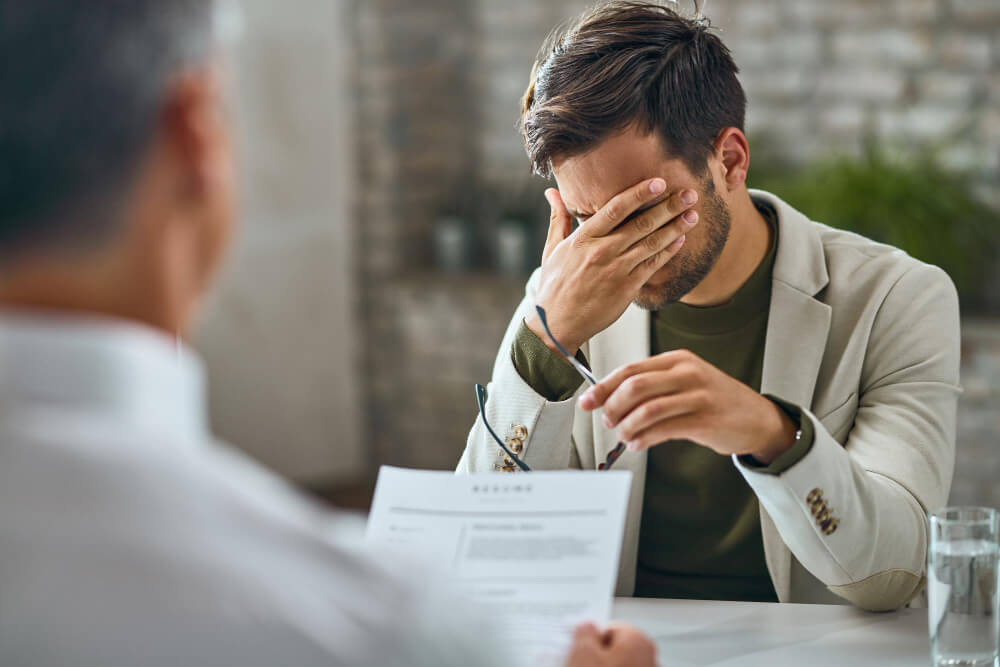
Considered a gold standard for the treatment of nocturnal panic attacks. CBT is one of the most effective…
How?
It helps you to identify your negative thought patterns. Let you know what triggers your anxiety. So you can change it or avoid it.
CBT involves teaching practical coping strategies to manage nocturnal panic attack symptoms..
2. Exposure Therapy
It is a component of CBT. Highly-promising and approved by the American Psychological Association (APA); Exposure therapy involves gradually desensitizing patients to the physical sensations of panic (racing heart, breathlessness). It is to, so they no longer trigger catastrophic fear. Interoceptive exposure has strong evidence for panic disorder.
Over time it reduces fear. Then helps the brain learn that these sensations are not dangerous.
3. Medication
In some cases, doctors may prescribe medications such as antidepressants (e.g., SSRIs) or anti-anxiety pills as nocturnal panic attacks treatment along with CBT.
Psych meds can help regulate mood and reduce the frequency and intensity of panic attacks.
4. Stress Reduction Techniques
Practices like meditation, deep breathing, progressive muscle relaxation, and maintaining a consistent sleep routine can significantly lower overall anxiety levels, making nocturnal panic attacks less likely.
Regular mindfulness practice, yoga, progressive muscle relaxation, and aerobic exercise reduce baseline nervous system arousal over time. These are effective complements to therapy, not replacements for it.
What to Expect After a Nocturnal Panic Attack?
The immediate crisis passes in minutes. But the aftermath can linger.
Here is what typically follows and how to navigate it.
First 10–20 minutes: Physical settling
→ Heart rate and breathing gradually return to normal. You may feel shaky. You may sweat or be exhausted. This is your body coming down from an adrenaline surge… completely normal and not harmful.
20–60 minutes: Difficulty returning to sleep
→ Residual anxiety and a hyper-alert nervous system can make it hard for you to fall back asleep.
Avoid checking your phone. Do not start looking up symptoms. Take it lightly and never think about it. Calm down and engage yourself elsewhere.
Light, repetitive activity (reading, soft music) is more helpful.
Next day: Fatigue and low mood
→ Interrupted sleep leads to daytime tiredness, irritability, and difficulty concentrating.
Over time, repeated attacks can cause anticipatory anxiety around bedtime - a dread of sleep that makes the problem worse.
Ongoing: The importance of routine
Aim for consistent sleep and wake times. Limiting caffeine after noon, avoiding alcohol, and practicing relaxation before bed all help reduce the frequency of future attacks. Focus can break the anticipatory anxiety cycle.
Risk Factors For Nocturnal Panic Attacks
- Existing panic disorder. Having daytime panic attacks strongly predicts nocturnal ones.
- Gender. Interestingly, nocturnal-only attacks are more common in men over 40. While panic disorder overall is more common in women.
- Childhood sleep terrors. Research shows adults with nocturnal panic attacks have higher rates of childhood sleep terrors.
- Comorbid depression or anxiety. A person presents with any other mental health conditions, significantly increase risk and severity of nocturnal panic attacks..
- Respiratory issues. People with asthma, COPD, or sleep apnea have higher rates of nocturnal panic, particularly with choking sensations.
- High stress or trauma. Major life stressors, grief, or a history of trauma sensitize the nervous system. Thus lowering the threshold for panic.
When To Seek Professional Help?
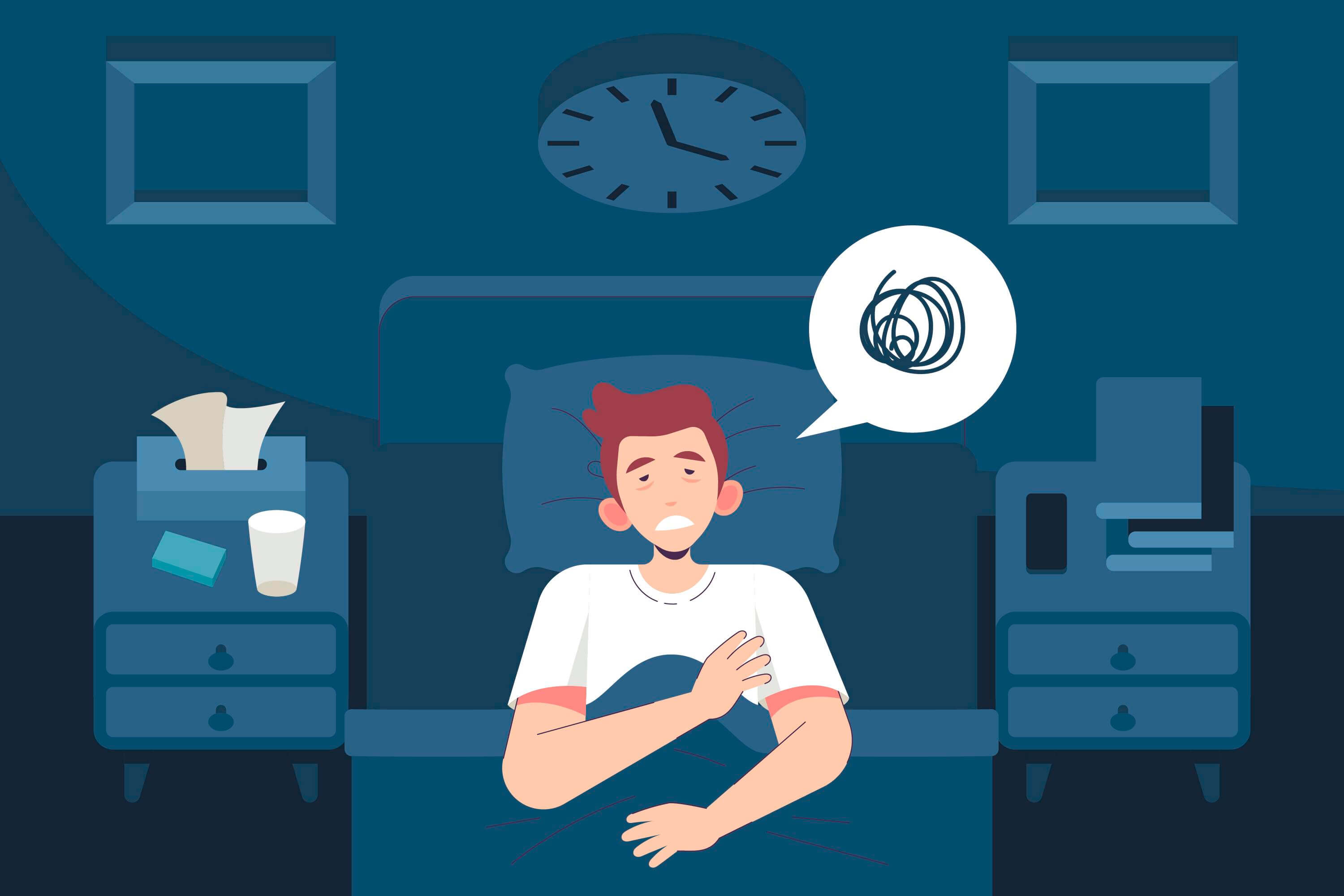
A single nocturnal panic attack is distressing. Although it is not necessarily a cause for immediate concern.
However, you should speak to a healthcare provider. If:
- You have had more than one nocturnal panic attack…
- You are developing fear or avoidance around going to sleep..
- Your sleep is consistently disrupted, causing daytime impairment…
- You are also experiencing daytime panic attacks or persistent anxiety…
- You are unsure whether what you experienced was a panic attack or a cardiac event…
Do not wait until the problem feels unmanageable, seek treatment or ways; how to prevent your panic attacks if they are problematic for your ongoing life and routine activities.
Early treatment is more effective. Preventing the secondary complications such as chronic insomnia, anxiety, social withdrawal, depression, and more. They can develop when nocturnal panic attacks go untreated.
Find Lasting Relief from Nocturnal Panic Attacks Today with Health & Psychiatry in FL

You don’t have to keep struggling with sleepless nights. Sudden waves of panic attacks during the night can be exhausting.... And affecting your quality of life.
At Health & Psychiatry in Florida, compassionate, expert care & treatment for nighttime panic attacks in Florida is available to help you regain control and restore restful sleep.
Our professional team offers personalized treatment plans… It includes initial psychiatric evaluation, medication management, and evidence-based approaches tailored to your needs.
We provide expert mental healthcare for various psychiatric problems, such as OCD, Schizoaffective disorder, rumination disorder, binge eating disorder, ADHD & others.
With our convenient telepsychiatry services, you can connect with licensed mental health professionals from the comfort and privacy of your home…We aim to make care and health easier for you than ever. Get the support you need, wherever you are.
Take the first step toward calmer nights and better mental health.
Contact Health & Psychiatry today to schedule your consultation.
FAQs
Can nocturnal panic attacks be cured?
Many people achieve complete remission with proper treatment. CBT, medication, and lifestyle changes can significantly reduce or eliminate attacks.
How long do nocturnal panic attacks last?
The intense peak of a nocturnal panic attack typically lasts less than 10 minutes, after which symptoms gradually subside. However, residual physical symptoms (elevated heart rate, shakiness) and psychological distress can persist for 30–60 minutes.
Are nocturnal panic attacks a sign of a serious medical condition?
Nocturnal panic attacks themselves are not medically dangerous. However, the symptoms (chest pain, racing heart, breathlessness) can mimic serious cardiac events, so it is always appropriate to have a first episode evaluated by a doctor to rule out medical causes.