About 70% of individuals with OCD experience some benefit from medication, exposure, and reaction prevention or a combination of the two. For almost 30 years, these techniques have been used to treat obsessive-compulsive disorder, and studies have shown that they are effective.
Unfortunately, there are only a few options for those whose symptoms improve somewhat or fail to improve at all with these treatments. Transcranial magnetic stimulation for OCD can be an option for those individuals.
What is TMS Therapy for OCD?
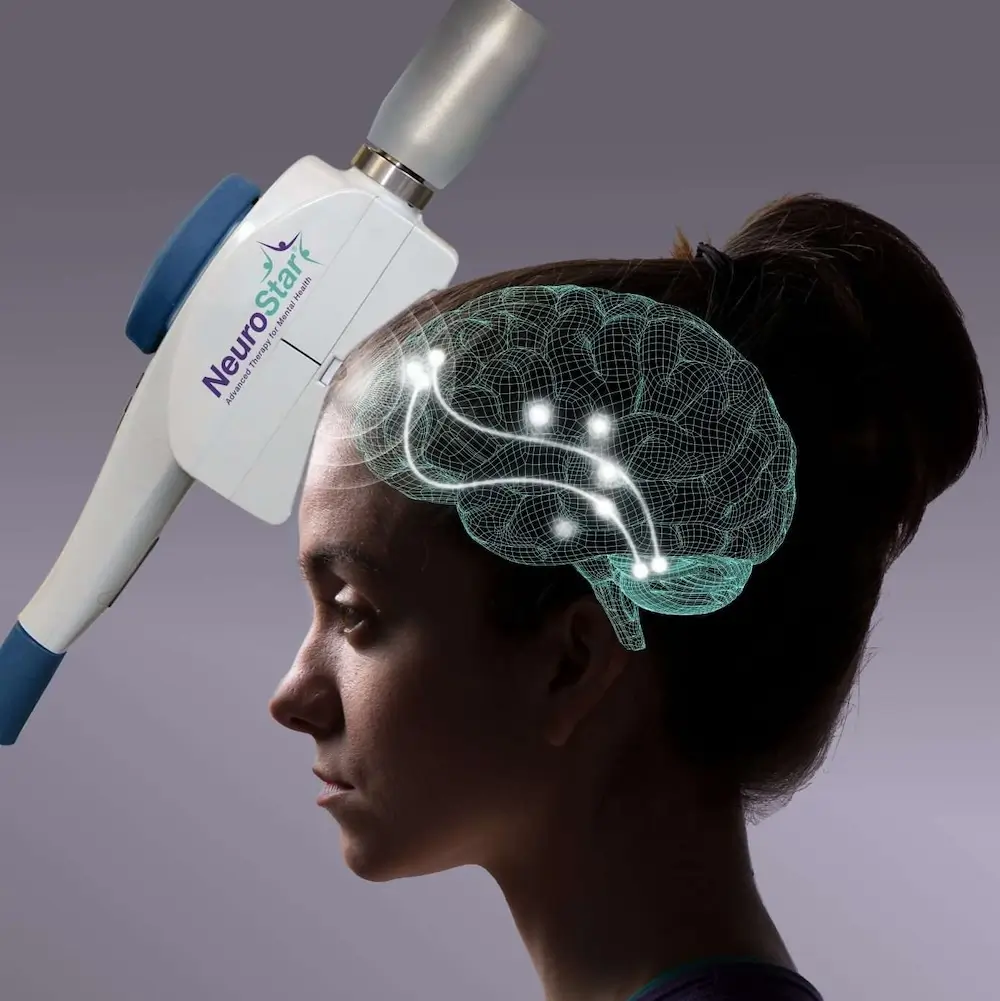
Transcranial Magnetic Stimulation (TMS) is an FDA-cleared non-invasive treatment for OCD. This uses targeted magnetic fields to stimulate specific areas of the brain involved in obsessive-compulsive disorder (OCD).
During a session, patients sit comfortably in a chair while a small TMS device containing a wire coil is placed against the scalp. When electrical current flows through the coil, it generates a magnetic field that safely passes through the hair, skin, muscles, and skull. It is to influence brain activity linked to OCD symptoms.
Patients typically describe the sensation as a gentle tapping on the head. So, there is no electrical shock involved, and there is no harm or pain felt… TMS does not require anesthesia or sedation, causes minimal discomfort, and allows patients to return to their normal daily activities immediately after treatment.
How TMS Works for OCD?
TMS treats serious mental health issues such as severe depressive disorder, migraines, and tinnitus. Different TMS equipment may be required to target specific brain regions, depending on the medical condition.
In the last 10 to 15 years, researchers have created TMS treatments that focus on the parts of the brain that are damaged in OCD. They have found that stimulating these parts of the brain has helped about 45% of OCD patients feel better.
TMS for OCD Success Rate
Some people with OCD who struggle to respond to other treatments can get actual relief from their symptoms with transcranial magnetic stimulation. Research indicates that 40 to 60 percent of individuals with OCD report an enormous reduction in symptoms.
Not everyone gets better, and the response rates are not all the same. TMS may be a welcome choice in situations where some of the preferred therapies, such as ERP therapy and medication, have failed.
What OCD Symptoms Can TMS Help With?

Transcranial magnetic stimulation of OCD concentrates on the areas of the brain that constitute networks of obsessive thoughts and compulsive action. Transcranial magnetic stimulation (TMS) in treating OCD could help in reducing intrusive thoughts, repetitive checking, excessive cleaning, counting rituals, and mental compulsions.
TMS Transcranial magnetic stimulation of OCD also proves useful in alleviating anxiety associated with obsessions and also enhances emotional regulation. Patients with OCD who partake in TMS state that they have better functioning daily, less distress, and better control of symptoms that disrupt their work, relationships, and general quality of life.
Benefits of TMS for OCD
Deep TMS can treat mental health disorders like severe depressive disorder. Magnetic waves from deep TMS exercise the brain. Deep TMS is a safe and effective new treatment that has helped many patients non-invasively. Most patients get a headache that passes within hours. The point is that this treatment has many benefits and few risks.
Here are a few benefits of transcranial magnetic stimulation for ocd:
1. No Sedation Required
No sedation needed. Driving to and from meetings makes treatment as easy as therapy and doesn't make patients sleepy.
2. No Surgery or Hospital Stay
No hospitalization or hospital clothes. Deep TMS does not require surgery, so patients can go home and sleep in their own beds. Patients can enter in their own clothes. Remove your headwear and spectacles at the entry.
3. No Body-Wide Side Effects
No body-wide effects. Very precise method: Deep TMS. No systemic side effects like weight gain or drug side effects, including hair loss, diarrhea, sexual issues, and other effects that are commonly associated with other mental health treatments..
4. Fast and Time-Efficient Treatment
The treatment is fast. OCD and depression patients should only need 20–30 sessions over 4–6 weeks. Clinical research showed most OCD sufferers improved in 20 sessions.
5. Faster Results Than Medication
Deep TMS usually works in 4-6 weeks. This is faster than some drugs.
6. Fewer Adverse Effects
Deep TMS for OCD has quite fewer adverse effects than other medications used to treat depression and OCD...
TMS for OCD vs. Other Treatment Options
Obsessive-compulsive disorder (OCD) can be challenging to treat. Especially when symptoms persist despite standard therapies. Transcranial Magnetic Stimulation (TMS) offers a modern, evidence-based alternative to other treatments of OCD. It differs significantly from traditional OCD treatments in both: approach and patient experience.
How TMS Stands Apart?
TMS is a non-invasive brain stimulation therapy. Directly targets the neural circuits known to be overactive in OCD. Unlike medications, it does not affect the entire body or alter the brain chemistry systemically.
Unlike psychotherapy, it does not rely on behavioral exercises alone. Instead, TMS uses focused magnetic pulses using brain magnetic simulation to help regulate dysfunctional brain activity. It makes it a valuable option for individuOCD patients who have not responded adequately to conventional treatments.
Comparison With Other OCD Treatments
→ Psychotherapy (ERP-Based CBT). Exposure and Response Prevention (ERP) is considered the gold standard for OCD treatment. It helps patients confront obsessive thoughts while resisting compulsive behaviors.
It is highly effective for many. But ERP requires significant emotional effort. It also needs consistency. Some individuals find it difficult to tolerate or experience only partial symptom relief. Particularly if therapy is not delivered by an OCD-trained specialist.
→ Medication Management. Medications such as SSRIs, tricyclic antidepressants, and adjunctive antipsychotics are commonly prescribed for OCD by qualified psychiatrists...
These drugs can reduce symptom severity. But the results vary widely. Many patients experience side effects. Including fatigue, weight changes, emotional blunting, or gastrointestinal issues.
Additionally, medications often require long-term use and careful dose adjustments.
→ Adjunctive and Supportive Therapies. Mindfulness-based interventions and Acceptance and Commitment Therapy (ACT) are frequently used alongside ERP. It is to improve emotional regulation and distress tolerance.
These therapies are supportive. But these OCD therapies typically enhance coping rather than directly modifying the underlying neurocircuitry driving OCD symptoms.
Where TMS Fits in OCD Treatment?

TMS is typically recommended for individuals with treatment-resistant OCD. It means that OCD symptoms persist. Despite adequate trials of ERP and medication. It is also suitable for patients who cannot tolerate medication side effects. Also, for those who prefer a non-pharmacological option.
The best part is that TMS is performed on an outpatient basis. It does not require anesthesia. Allowing you to resume normal activities immediately. It offers a practical and patient-friendly alternative.
Who Is a Good Candidate for TMS for OCD?
TMS may be an appropriate treatment for OCD patients who:
- Have moderate to severe OCD that significantly impacts daily functioning.
- Have tried ERP therapy and/or medications with limited or no success.
- Experience intolerable side effects from OCD medications.
- Prefer a non-invasive, medication-free treatment option.
- Are able to attend regular outpatient sessions over several weeks.
- Do not have contraindications for TMS. Such as certain implanted metal devices or uncontrolled neurological conditions.
Who Should Be Cautious or May Not Qualify?
For some people, TMS is not safe because the magnetic field created during the process could interact with metal implants or devices that are already in their body, or with metal that has been damaged. Some examples are:
- Aneurysms can snap or coil.
- Stents in the brain or neck.
- Pieces of bullets near the head, tattoos on the face that are magnetic.
- Putting in stimulators, like the ones used in deep-brain stimulation. You should inform your doctor if you have any of these or other metal objects in your head or body.
Before starting TMS treatment, people who have more than one mental illness should be sure to speak with their doctor about their symptoms and talk about them.
What Happens During a TMS Session for OCD?
You will work with a trained and qualified technician or doctor trained in this procedure. After treatment, you won't need to stay in the hospital overnight and will be awake.
This may happen during TMS:
- You will have to wear earplugs and sit in a comfy chair. These will reduce loud, clicking TMS sounds.
- A TMS worker or doctor will place an electric coil on your head.
- A coil sends magnetic waves to the brain's needed area. You may hear clicking and feel a head tap. TMS doesn't hurt.
- TMS sessions last 20–60 minutes, depending on the OCD patient. Most need at least three times a week for four to six weeks.
OCD patients may feel better after a few weeks of treatment.
TMS Side Effects for OCD
Some individuals undergoing transcranial magnetic stimulation ocd treatment may experience mild to rare side effects. Some reported side effects of TMS for ocd are:
- Headache
- Scalp pain
- Facial muscles tingle and twitch
- Dizziness
- Seizures
- Mania or hypomania is often seen in people with bipolar illness
When Will I Notice Results From TMS for OCD?
Improvement time may differ in different individuals receiving rTMS for OCD. It can take some patients as long as six weeks to feel better following treatment, and in some cases, it can take a patient two to three weeks. Others continue to improve after the sessions are completed.
There are other situations where maintenance sessions might be recommended to ensure that the effects are continued.
Bottom Line!
The transcranial magnetic stimulation TMS of OCD provides a safe treatment for patients who have not adequately received conventional therapy. TMS has an advantage over other treatment methods because it has fewer side effects, a rapid response, and specific treatment of OCD symptoms in the management of daily functioning and OCD symptoms.

Start your TMS journey today at Health and Psychiatry, your trusted TMS provider in Florida... and take the first step toward better mental health. Book your consultation now.
FAQs
Does TMS work for OCD?
Yes, TMS has the potential to alleviate the symptoms of OCD, particularly in patients who do not respond to conventional treatment.
What is the number of TMS sessions needed to treat OCD?
The length of treatment required by most patients is 20-30 sessions in 4-6 weeks.
Can TMS make OCD worse?
TMS is considered to be generally safe, though very rare side effects or temporary changes in the symptoms may happen.
Is TMS FDA-approved for OCD?
Yes, TMS is FDA approved in treating OCD in adults.
Does TMS interact with other therapies for OCD?
Yes, TMS is usually used together with ERP therapy or drugs to achieve higher results.