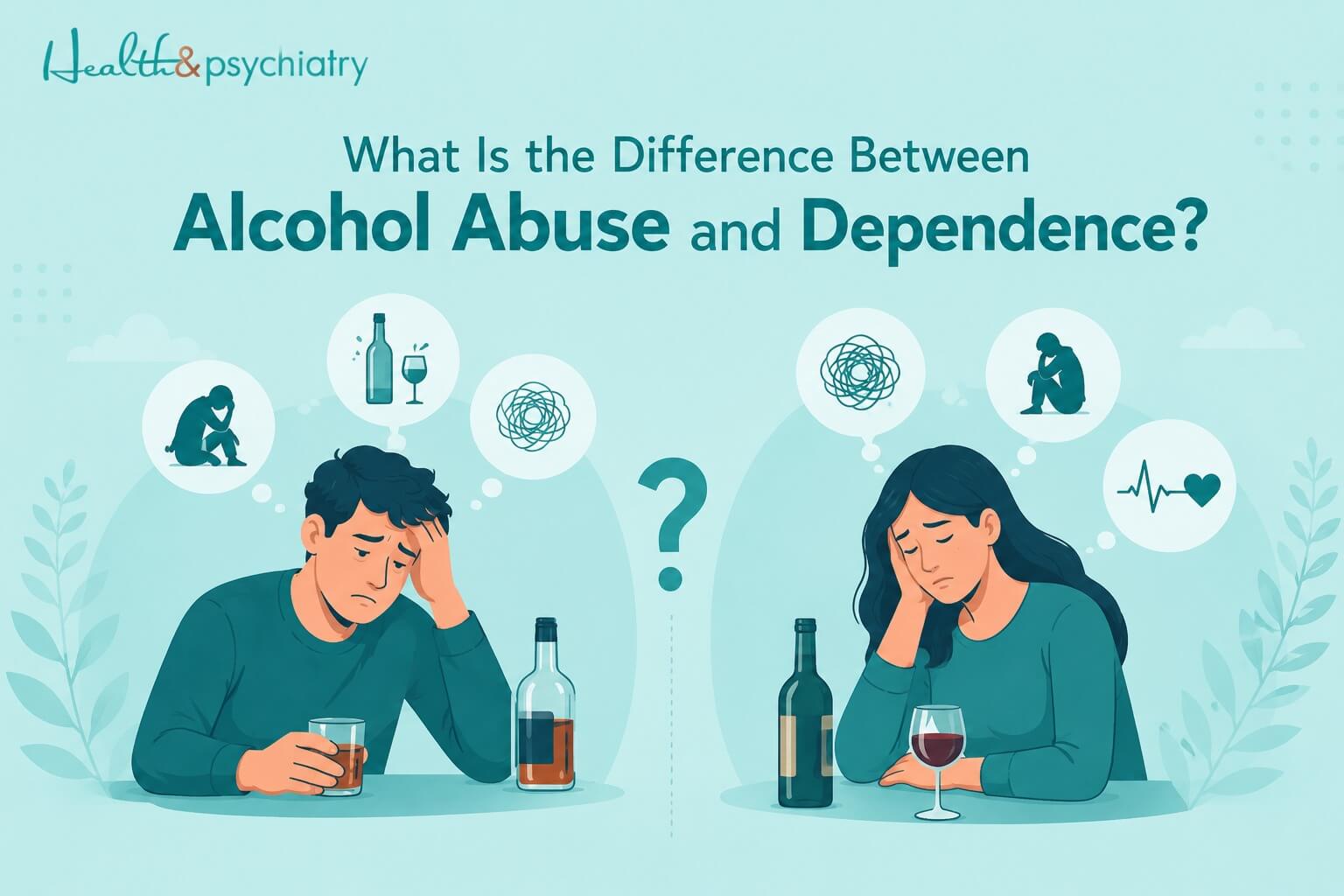
Alcohol use exists on a spectrum… It can be from occasional social drinking and can lead to alcohol abuse that is severe, life-altering addiction. Alcohol abuse and alcohol dependence are two commonly confused terms on this spectrum… They may seem similar - but they represent different stages. Whether you are dependent on alcohol, & also the severity of alcoholism.
Yes… It is that dangerous. Accounting for about 5% of all deaths worldwide…
So, it is very important to understand the difference between alcohol abuse and alcohol dependence. It is for early intervention, treatment, and long-term recovery. Get treated for alcohol abuse in Florida at Health & Psychiatry before it compromises both; your physical and mental health.
What Is Alcohol Use Disorder?

Alcohol abuse, classified under Alcohol Use Disorder (AUD), refers to a pattern of drinking. This involves dependence on alcohol. That can lead to negative consequences on both mental and physical health.
Alcohol abuse is now part of Alcohol Use Disorder (AUD). A condition defined in the DSM-5. The Diagnostic and Statistical Manual of Mental Disorders classifies it from mild to severe.
Characteristics of Alcohol Abuse
- Drinking more alcohol or longer than intended.
- Drinking causing repeated failure to fulfill responsibilities (work, school, home).
- Continued drinking: Despite social or interpersonal problems.
- Engaging in risky behaviors (e.g., drinking and driving).
- Legal or financial consequences because of drinking.
→ People with alcohol abuse still have some control over their drinking - but their behavior is already causing harm.
What Is Alcohol Dependence?
Alcohol dependence, or we say alcohol dependency, is a more severe condition than alcohol abuse. It represents a person who becomes physically and psychologically reliant and dependent on alcohol. This stage is often associated with what many call alcoholism.
Characteristics of Alcohol Dependence
- Strong cravings. With compulsion to drink.
- Tolerance (needing more alcohol for the same effect).
- Withdrawal symptoms (e.g., tremors, sweating, nausea, anxiety).
- Loss of control over drinking.
- Drinking again to avoid withdrawal symptoms of alcohol.
- Neglect of personal, social, or professional life.
→ Alcohol dependence is commonly considered as a severe form of Alcohol Use Disorder… often requiring medical treatment and structured recovery programs.
Alcohol Abuse vs Dependence: Key Differences
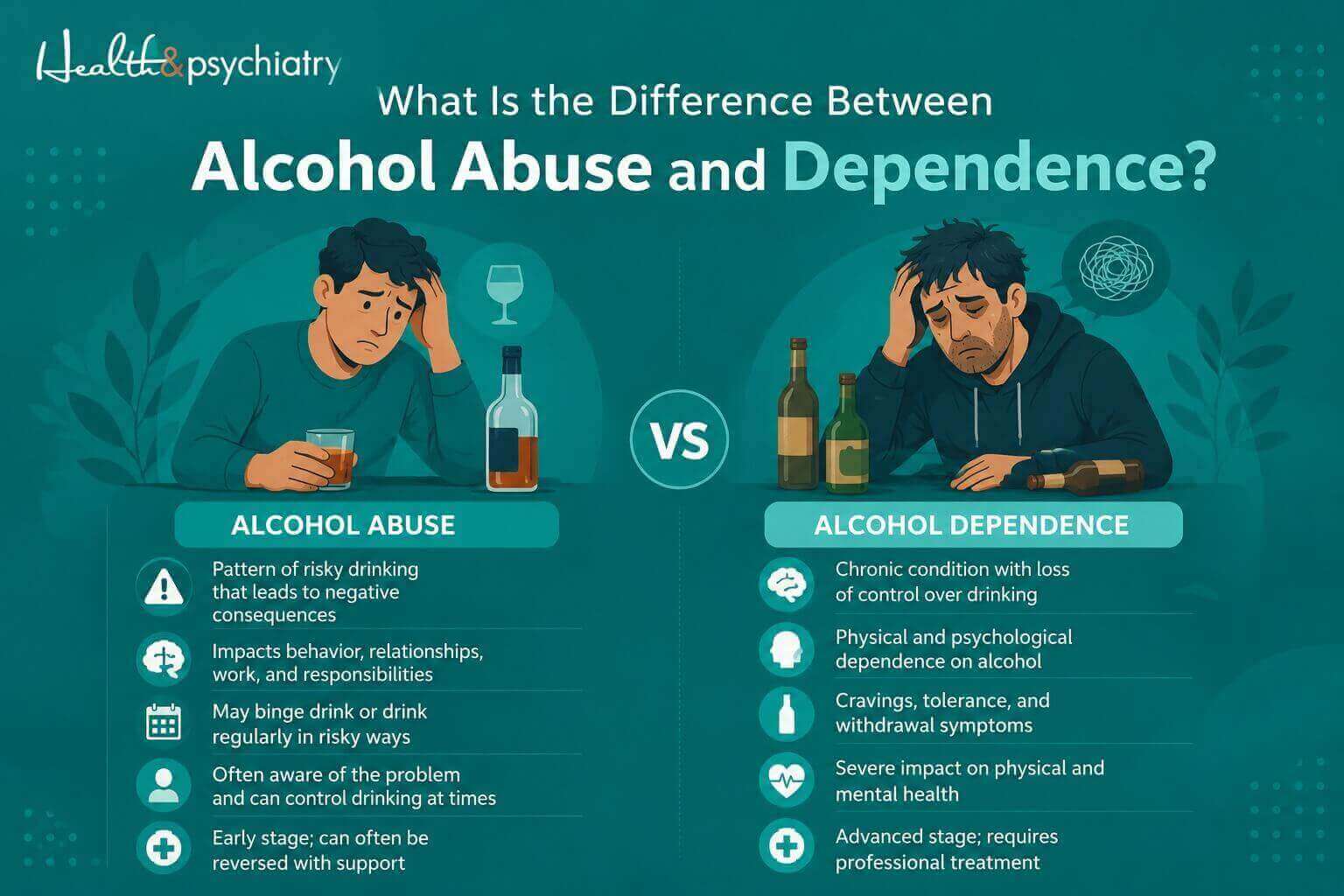
Alcohol-related disorders have evolved significantly… in how they are defined and diagnosed. APA; the American Psychiatric Association in May 2013, released the fifth edition of the Diagnostic and Statistical Manual of Mental Disorders (DSM-5). This introduces important changes to how alcohol problems are classified.
The commonly known alcohol abuse and alcohol dependence were treated as two separate disorders earlier in DSM-IV. Each is represented with its own diagnostic criteria.
In that, diagnosing alcohol abuse required a person to meet at least one of four criteria. All within 12 months. On the other hand, alcohol dependence is diagnosed when three or more criteria are met during the same period.
But things changed in DSM-5. It combined these previously distinct alcohol drinking conditions. Now it comes under a single diagnosis known as Alcohol Use Disorder (AUD).
You are diagnosed with AUD if you meet at least two of the eleven given criteria in DSM-V…all within a 12-month period.
But the AUD severity is categorized as:
- Mild Alcohol Use Disorder (2 to 3 symptoms)
- Moderate Alcohol Use Disorder (4 to 5 symptoms)
- Severe Alcohol Use Disorder (6 or more symptoms)
Still, the terms alcohol abuse and alcohol dependence remain widely used in clinical discussions and public understanding. Making it essential to clearly explain the difference between alcohol abuse and dependence.
Differences Between Alcohol Abuse & Dependence
|
Aspect |
Alcohol Abuse |
Alcohol Dependence |
|---|---|---|
|
Severity |
Mild to moderate |
Severe and chronic |
|
Control Over Drinking |
Partial control remains |
Loss of control; compulsive use |
|
Physical Addiction |
Typically absent |
Strong physical and psychological dependence |
|
Cravings |
Occasional urges |
Intense, persistent cravings |
|
Drinking Pattern |
Situational or binge drinking |
Daily or near-daily drinking |
|
Impact on Responsibilities |
Intermittent issues (missed work, conflicts) |
Severe neglect of work, family, and personal care |
|
Behavioral Changes |
Risky decisions (e.g., drinking and driving) |
Isolation, secrecy, and compulsive behaviors |
|
Brain & Neurochemistry |
Early changes in reward system |
Significant brain adaptation and dependency |
|
Health Risks |
Increased risk of accidents and early health issues |
High risk of liver disease, heart issues, neurological damage |
|
Diagnosis (DSM-5) |
Falls under mild to moderate Alcohol Use Disorder |
Falls under severe Alcohol Use Disorder |
|
Reversibility |
Often reversible with early intervention |
Requires long-term treatment and management |
|
Treatment Approach |
Counseling, lifestyle changes, outpatient support |
Medical detox, rehab, medication, long-term therapy |
You can say that alcohol abuse is your early warning stage. But when it comes to alcohol dependence - it represents a more advanced, medically serious condition.
Causes of Alcohol Abuse and Dependence
Both conditions arise from a combination of biological, psychological, and environmental factors:
→ Biological Factors
- Genetic predisposition (heritability 50–60%).
- Brain chemistry changes (dopamine reward system).
→ Psychological Factors
- Stress, anxiety, depression.
- Trauma or unresolved emotional issues.
→ Social & Environmental Factors
- Peer pressure.
- Cultural norms around drinking.
- Easy access to alcohol.
Symptoms of Alcohol Abuse and Dependence
It is essential to recognize the symptoms of both alcohol abuse and dependence. So that you can have early intervention. Depending on the stage, they represent differences and similarities.
→ Symptoms of Alcohol Abuse
Common symptoms include:
- Drinking more than intended. For longer periods.
- Repeatedly failing to meet responsibilities at work, school, or home.
- Engaging in risky behaviors (e.g., drinking and driving).
- Continuing to drink despite relationship problems.
- Legal or financial issues linked to alcohol use.
- Increased frequency of binge drinking episodes.
- Using alcohol to cope with stress or emotional discomfort.
This stage comes with the feeling of “in control” - but the negative consequences are already evident.
→ Symptoms of Alcohol Dependence
It is more severe & includes both physical and psychological symptoms of alcoholism... indicating addiction.
Common symptoms include:
- Compulsive urge to drink. Strong cravings to drink.
- No control on how much you drink & how often you drink.
- Needing more alcohol for the same effect (tolerance)
- Feling withdrawal symptoms - when not drinking, such as:
- Tremors (shaking)
- Sweating
- Nausea or vomiting
- Anxiety or irritability
- Insomnia
- Drinking again to relieve: to avoid withdrawal symptoms.
- Drinking causing poor attention to personal hygiene, work, or relationships.
- Time wasted on obtaining, drinking, or recovering from alcohol. Again & again!
- Neglecting health or psychological problems.
At this stage, a person is often dependent on alcohol to function normally, both physically and mentally.
→ Overlapping Symptoms of Alcohol Use & Dependence
Some symptoms can appear in both alcohol abuse and dependence, including:
- Increased alcohol consumption over time.
- Poor judgment and decision-making.
- Emotional instability or mood changes.
- Social withdrawal or conflict.
How Alcohol Abuse Progresses Into Dependence?
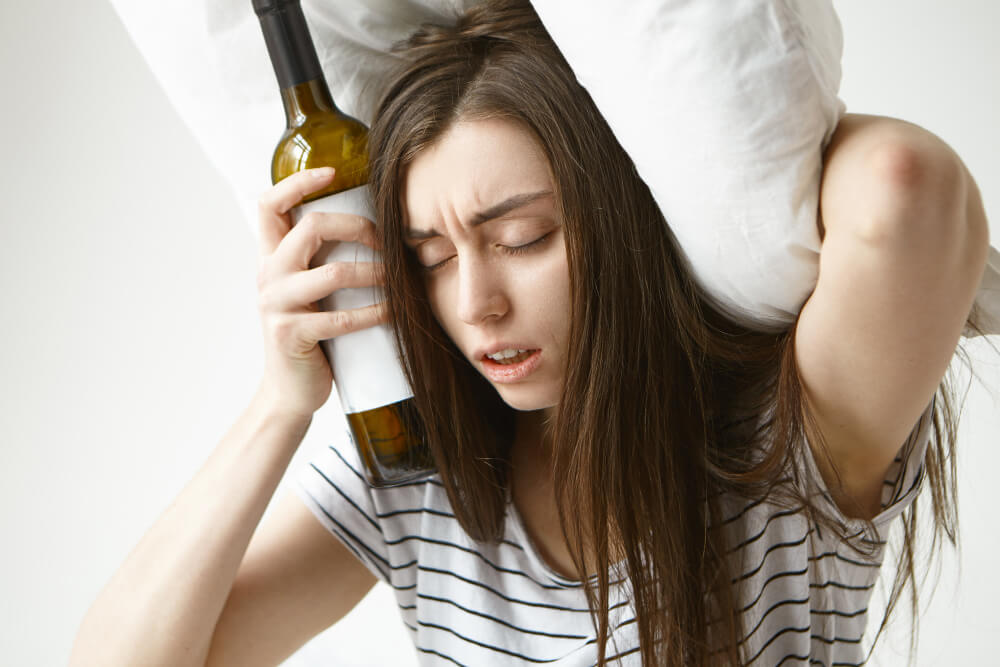
It is a fact taht Alcohol abuse doesn’t turn into dependence overnight. It’s a gradual! Repeated exposure causes biological and behavioral progression. Thus, alcohol continued to change in the brain’s reward and stress systems.
Alcohol directly affects the brain’s reward circuitry… particularly the release of dopamine; your “feel-good” neurotransmitter.
- Early drinking → Increased dopamine → Pleasure and relaxation.
- Repeated use → Brain reduces natural dopamine production.
- Long-term use → Alcohol becomes necessary to feel “normal”.
At the same time, alcohol disrupts GABA and glutamate balance… it regulates calmness and stimulation. It creates an imbalance. This then contributes to tolerance and withdrawal symptoms, hallmarks of dependence.
|
Stage |
Description |
|
1. Occasional / Social Use |
Drinking in social settings, no major consequences, full control over intake. |
|
2. Alcohol Abuse (Risky Use) |
Increased frequency or binge drinking, used for stress/emotions, early negative consequences. |
|
3. Tolerance Development |
Needs more alcohol for same effect, higher intake becomes normal. |
|
4. Psychological Dependence |
Cravings begin, emotional reliance, drinking feels “necessary”. |
|
5. Physical Dependence |
Withdrawal symptoms (shaking, anxiety, sweating, nausea), body adapts to alcohol. |
|
6. Alcohol Dependence (Severe Stage) |
Loss of control, compulsive use, daily drinking, major life and health impact (severe Alcohol Use Disorder). |
Can Alcohol Abuse Be Reversed Before It Becomes Dependence?

Yes… alcohol abuse can often be reversed. Especially when addressed early!
At this stage, most individuals have not yet developed physical addiction… it makes it significantly easier to regain control and also to prevent progression into severe Alcohol Use Disorder.
Why Early Intervention Works?
In the early phases of alcohol misuse:
- The brain has not fully adapted to alcohol
- Tolerance and withdrawal are minimal or absent
- Drinking patterns are still behavior-driven. Not compulsive!
This makes the body and brain recover more quickly. Once alcohol use is reduced or stopped…
Can Alcohol Dependence be Reversed?

Alcohol abuse can often be reversed. But someone who presents with alcohol dependence no longer has it fully reversible in the same way.
Because this point makes the condition develop into a more severe form of Alcohol Use Disorder… involving both physical and psychological dependence.
This happens because long-term alcohol use changes your brain chemistry. Affecting reward pathways. Your stress response and also the self-control. As a result, you may experience tolerance, withdrawal symptoms, and strong cravings, making it difficult to simply stop or reduce drinking without support.
However, alcohol dependence is manageable & somewhat treatable. Many individuals achieve long-term recovery with the right approach.
What’s Possible After Dependence Develops?
- Sustained abstinence from alcohol.
- Reduction or elimination of cravings.
- Improved physical and mental health.
- Restoration of daily functioning and relationships
Unlike alcohol abuse, dependence typically requires:
- Medical detoxification: It is to manage withdrawal safely.
- Therapy and counseling to address behavioral patterns.
- Medication (in some cases) to reduce cravings.
- Long-term support to prevent relapse.
Health Effects of Alcohol Abuse and Dependence

Alcohol abuse mainly causes early, often reversible damage… alcohol dependence leads to chronic, potentially irreversible health complications:
|
Category |
Alcohol Abuse (Early / Moderate) |
Alcohol Dependence (Severe / Chronic) |
|---|---|---|
|
Short-Term Effects |
|
|
|
Brain & Mental Health |
|
|
|
Liver Health |
|
|
|
Heart & Cardiovascular |
|
|
|
Digestive System |
|
|
|
Immune System |
|
|
|
Hormonal & Metabolic Effects |
|
|
|
Neurological Impact |
|
|
|
Behavioral & Social Impact |
|
|
|
Risk Level |
|
|
|
Overall Prognosis |
|
|
Get Alcohol Abuse and Dependence Treatment in Tampa at Health & Psychiatry!
Knowing about alcohol abuse vs dependence is essential. It helps you to recognize where you- or someone you care about - may fall on the spectrum of alcohol use.
The earlier the intervention, the better the outcome. With proper awareness, treatment, and support, recovery is not only possible… It’s sustainable.
Get help at an alcohol addiction treatment center in Florida, Health & Psychiatry - under the expert care of Dr. Dinar Sajan, MD.
We evaluate the level of alcohol dependence. Giving you complete alcohol abuse treatment according to your medical needs. We offer medication management, therapy & long-term recovery planning.
If travelling is a problem, we also offer online treatment for alcohol abuse, with our telepsychiatry services, for our patients’ ease!
Book your appointment today and get compassionate care!
FAQs
Is alcohol abuse the same as alcohol dependence?
No. Alcohol abuse involves harmful drinking patterns. But alcohol dependence represents a person too dependent on alcohol with physical addiction and loss of control.
Is alcohol dependence reversible?
It can be managed and treated. But not always fully “reversed.” Long-term recovery often requires ongoing support and lifestyle changes.
How long does it take for alcohol abuse to become dependence?
There’s no fixed timeline. It varies based on your frequency of drinking. Genetics & mental health, like depression or anxiety problems, or your lifestyle, also play a role. For some, it may take months, for others, years.