
Frontotemporal Dementia is a type of dementia that mainly affects the front and sides of the brain (the frontal and temporal lobes).
Though often overlooked, frontotemporal dementia affects around 250,000 people across the U.S., making it the top among dementia's that hit before old age. Affecting people hardest below age sixty-five, it tends to be confused with mental health struggles, exhaustion, or memory loss linked to aging.
From confusion to changes in behavior, signs show up differently at first. One moment, a person seems fine, next they struggle with words or act out of character. Over time, tasks like speaking or making decisions grow harder, day by day. There is no cure now, yet some approaches help manage symptoms gently.
Understanding Frontotemporal Dementia
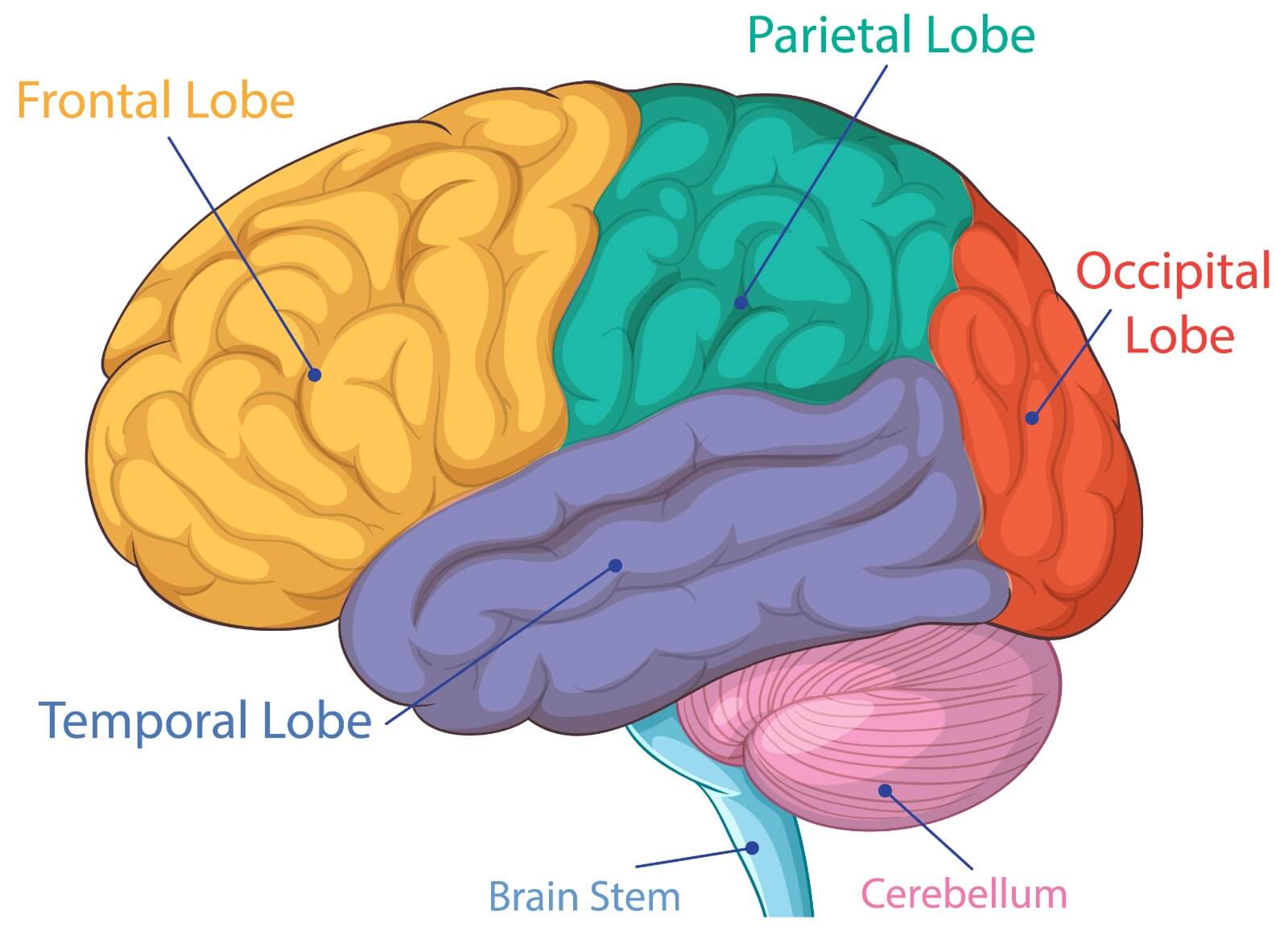
What begins as subtle shifts can grow into profound transformations. Damage of FTD builds slowly in the front and sides of the brain, especially where character, speech, choices, and self-control are shaped. Instead of fading memory, people lose pieces of themselves - their manner, reactions, words.
In FTD, it skips early memory loss, unlike Alzheimer’s. Instead of forgetting names or dates first, people might start acting on sudden urges or saying odd things in public.
One study from 2025 showed a rate of 2.28 new cases of FTD every year for every 100,000 people. Prevalence is around 9.17 per 100,000 across populations.
Younger people - below 65 - see about 1.84 diagnoses annually in that same group size, hinting this condition hits early more often than assumed.
Most people live around eight years after symptoms begin. Survival after diagnosis often lasts between four and five years.
Types of Frontotemporal Dementia
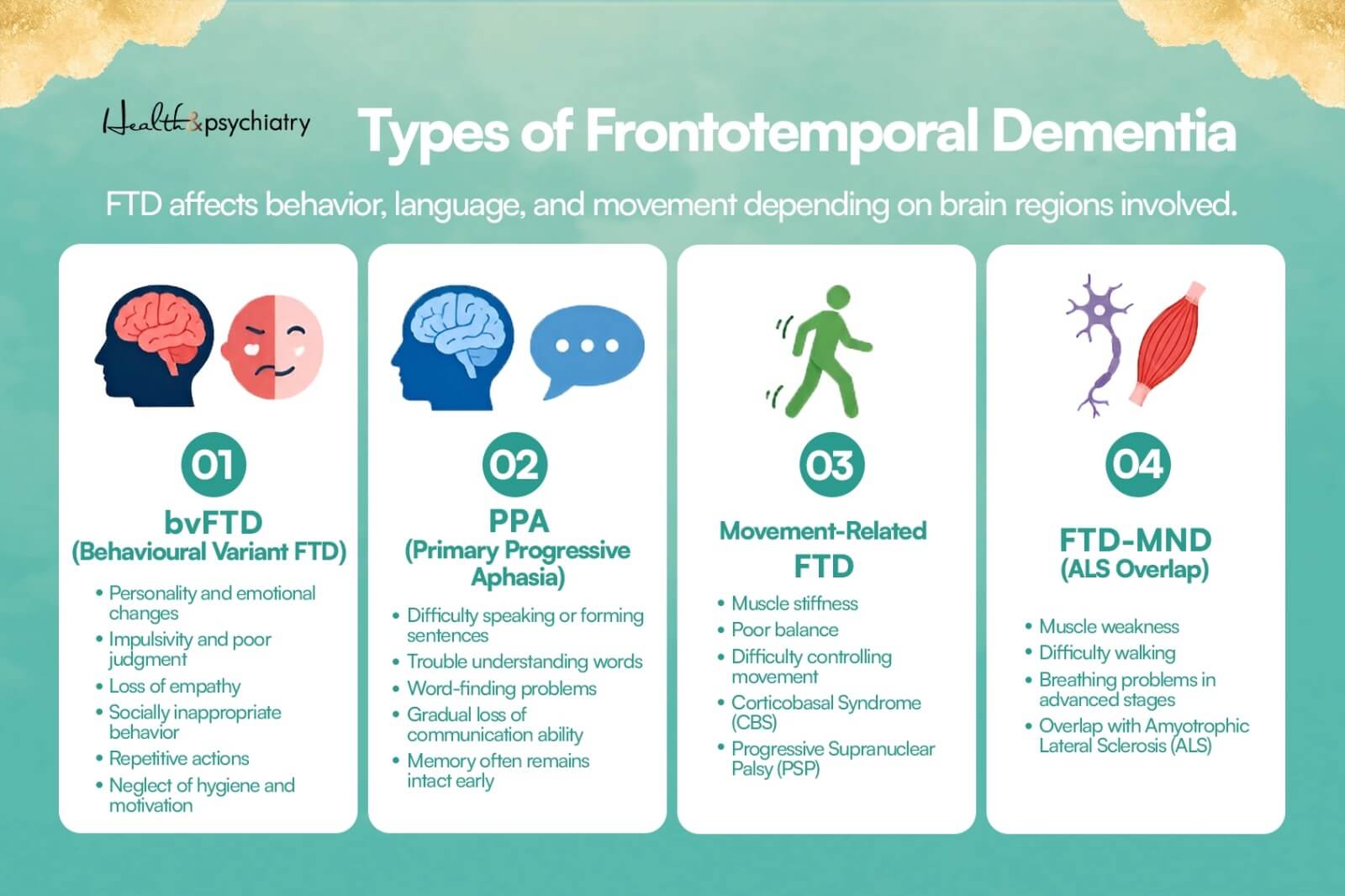
There are various subcategories of FTD.
The main forms of FTD are primary progressive aphasia, movement-related frontotemporal dementia and behavioral variant frontotemporal dementia.
→ bvFTD (Behavioural Variant Frontotemporal Dementia)
The most common is behavioural variant frontotemporal dementia (bvFTD). It primarily impacts personality, behavior, and emotional reactions. People who have bvFTD can be impulsive, disregard social boundaries, lack empathy, or exhibit repetitive behaviors.
They might have impaired judgment, as well as their personal hygiene or motivation might suffer. These personality changes are frequently seen by family members before the changes are cognitively apparent.
→ PPA (Primary Progressive Aphasia)
Primary progressive aphasia (PPA) affects mainly language and communication skills. There are two forms of this type:
- svPPA (semantic variant aphasia) and
- nonfluent variant PPA/ agrammatic variant.
In semantic variant PPA, the loss of understanding of words, object recognition, and recall in names occurs gradually.
In the nonfluent variant PPA there is a difficulty in producing speech, which causes it to be slow, effortful, and grammatically flawed. Memory may not be significantly impaired in the early stages, even though there are language problems.
There are different types of FTD that can be linked to movement disorders. These include corticobasal syndrome and progressive supranuclear palsy, which both interfere with muscle coordination, balance and control of movements.
→ FTD-MND
Some of the patients may also experience symptoms associated with Amyotrophic lateral sclerosis (ALS), which cause muscle weakness and make walking or breathing harder.
What Are the Symptoms of Frontotemporal Dementia?
|
Category |
Key Symptoms of FTD |
|
Behavioral |
|
|
Cognitive |
|
|
Speech & Language |
|
|
Physical |
|
What Causes Frontotemporal Dementia?
 → Genetic Mutations
There is a strong genetic component to FTD. In as many as 10-20% of all cases, one of the most common frontotemporal dementia causes is a mutation in a single gene.
→ Abnormal Brain Proteins
In the majority of FTD cases, damage occurs caused by the abnormal build-up of one of two proteins—tau or TDP43. Tau-related FTD involves the presence of misshapen tau which creates tangles that impair neuronal function.
→ Family History
FTD is often inherited. Studies of populations have indicated that in a significant number of cases, a hereditary factor can be detected. Of the 5 known genes associated with FTD, the disease penetrance (the likelihood of developing the disease if a person has one of the mutations) is 100% or nearly 100%.
→ Brain Cell Degeneration
Whatever the mutation involved or the protein affected, the one thing that is consistent is that the progressive death of neurons occurs in the frontal and anterior temporal lobes. That's why FTD selectively weakens certain cognitive functions like personality, social behaviour and language, while the cognitive and memory functions of Alzheimer's disease are less affected.
Diagnosis for Frontotemporal Dementia
There is no single test for FTD. A detailed evaluation is necessary for diagnosis, and usually involves:
- Clinical history and neuropsychological testing.
- Brain imaging
- Biomarkers in the blood and CSF such as neurofilament light chain (NfL) and TDP-43
- C9orf72, GRN and MAPT genetic testing.
Progression of Frontotemporal Dementia
The 7 stages of FTD are relatively familiar but may vary among individuals:
→ Stage 1: Preclinical (Asymptomatic): There are no apparent symptoms. Brain changes start, but there is no disability yet.
→ Stage 2: Prodromal Phase (Subtle Changes): There are subtle changes in behavior, personality or language that have been noticed. These frontal lobe dementia signs could be mild, like the loss of interest, impulsiveness or distractibility.
→ Stage 3: Mild Neurocognitive Disorder: Behaviour and personality changes are now obvious to the family (e.g., socially inapropriate, irritable) and/or changes in language skills (e.g., trouble finding words) or both.
→ Stage 4: Moderate Neurocognitive Disorder: There is moderate loss of cognitive function, with a significant impact on daily functioning, for example problems with money and planning. Social and work life is seriously affected and the need for frontotemporal dementia care becomes prominent.
→ Stage 5: Severe Neurocognitive Disorder: Can have profound personality changes and moodiness. Individuals can need lots of support with their basic activities of daily living (ADLs) such as dressing, personal hygiene etc.
→ Stage 6: Severe Neurocognitive Disorder: Noticeable problems in thinking and physical abilities. Very limited communication and there is noticeable memory loss and confusion.
→ Stage 7: Terminal Stage: Full dependence on carers for all needs. The last stage is when the person becomes completely physically and mentally unable to do anything, may have mobility issues and often may not be able to feed themselves or be completely incontinent.
The length of time from onset of signs of frontotemporal dementia until death is variable and typically about 8 years. If there is concurrent motor neuron disease, then the course of FTD is accelerated.
Treatment Options for Frontotemporal Dementia

There is currently no therapy that is specifically approved for the frontotemporal dementia treatment and there is no treatment that stops or reverses the condition.
But still, there are some treatments that can manage the symptoms and quality of life.
1. Medications
Selective serotonin reuptake inhibitors (SSRIs) are frequently used, and may help to decrease compulsive behaviours, irritability & disinhibition. In cases of serious behavioral disorders, second-generation anti-psychotics are administered with caution & in the more severe cases, anticonvulsants may be utilized.
2. Speech therapy
Speech-language pathologists can support patients with language variants of FTD in maximizing their ability to communicate through alternative and augmentative communication (AAC) strategies.
3. Occupational therapy
The therapy works for the patient's ability to live independently in daily functions for as long as possible.
4. Non-pharmacological interventions
These include structured routine, environment changes, and behaviour management prioritised with agitation/compulsive behaviours. Such methods can ease the pain experienced by the patient and caregiver.
Risk Factors
Knowing the risk factors can make you aware of the frontotemporal dementia prevention.
- FTD affects people in their middle ages, rather than their elderly years, and is most often seen between ages 45 and 65.
- Having a family history of a disease is a significant frontotemporal dementia risk factor, especially for first degree relatives.
- A near 100% likelihood of developing the disease is observed in individuals with mutations in C9orf72, GRN, and MAPT.
- FTD is found to have a nearly equal sex ratio in population studies, as opposed to Alzheimer's disease, where there is a female predominance.
Support and Care While Living with FTD!

Living With Frontotemporal Dementia is a project designed to provide support and care for people who suffer from frontotemporal dementia.
An FTD diagnosis affects entire families. As FTD presents early in life, and often while individuals are working and raising children, it presents specific practical and emotional challenges.
Moreover, palliative care teams are central to help manage comfort and prepare for end-of-life decisions and support families as FTD progresses.
Find Compassionate Dementia Care and Support at Health & Psychiatry in Florida!
The Health & Psychiatry licensed providers in Florida mental health care facilities show empathy and evidence-based assessment and confidential care of patients and their families in dealing with mental health issues such as anxiety, Phobias, ADHD, Anorexia Nervosa, Schizoaffective disorders, and neurodegenerative disorders related to dementia.
We realize that FTD is more than a diagnosis; it is a major life occurrence that not only demands clinical knowledge but also great humanity. Although frontotemporal dementia progresses over time, early diagnosis, supportive therapies, and compassionate care can significantly improve quality of life for patients and families...
→ Give us a call today! Get your same-week appointment with easy issuance support options. Discover clarity, connection, and complete care!
FAQs
What is Frontotemporal Dementia?
FTD is a collection of progressive neurodegenerative brain disorders resulting from the degeneration of the frontal and temporal lobes. It is much more likely to occur between ages 45-65 and leads to a change in personality, behavior or language rather than memory loss, unlike Alzheimer's.
Is FTD genetic?
Yes. In 10-20% of cases, a single mutation causes the disease. Genetic counselling is advised if FTD is in the family to determine your risk level.
What's the survival rate for frontotemporal dementia?
FTD is a faster-growing disease than Alzheimer's. The average survival period is about 8 years from symptom onset and 4-5 years from diagnosis. The course of FTD that is accompanied by motor neuron disease is the fastest decline..