
Mental health conditions often influence how individuals think, focus, and function in their everyday lives… and Attention-Deficit/Hyperactivity Disorder is one of the most commonly recognized among them.
It is typically characterized by a lack of focus or hyperawareness in the patient. Based on the symptoms profiles, it has three subtypes. These are inattentive ADHD, hyperactive/impulsive ADHD, and a combination of both.
The inattentive type of ADHD most commonly presents in children. Sometimes, the symptoms associated with the ADHD subtype are too subtle. Hard to notice until adulthood.
Understanding the signs, causes, and treatment options of ADHD. So it can help individuals manage symptoms effectively and improve daily life functions.
 What Is Inattentive ADHD?
Inattentive ADHD is the most common type of attention-deficit/hyperactivity disorder. The primary challenge of people with inattentive attention disorder is maintaining attention. Individuals suffering from this condition complain about focusing, staying organized, and following through with tasks.
It differs from the typical presentation of ADHD, which is struggling to control impulsive or hyperactive behavior.
Symptoms of Inattentive ADHD
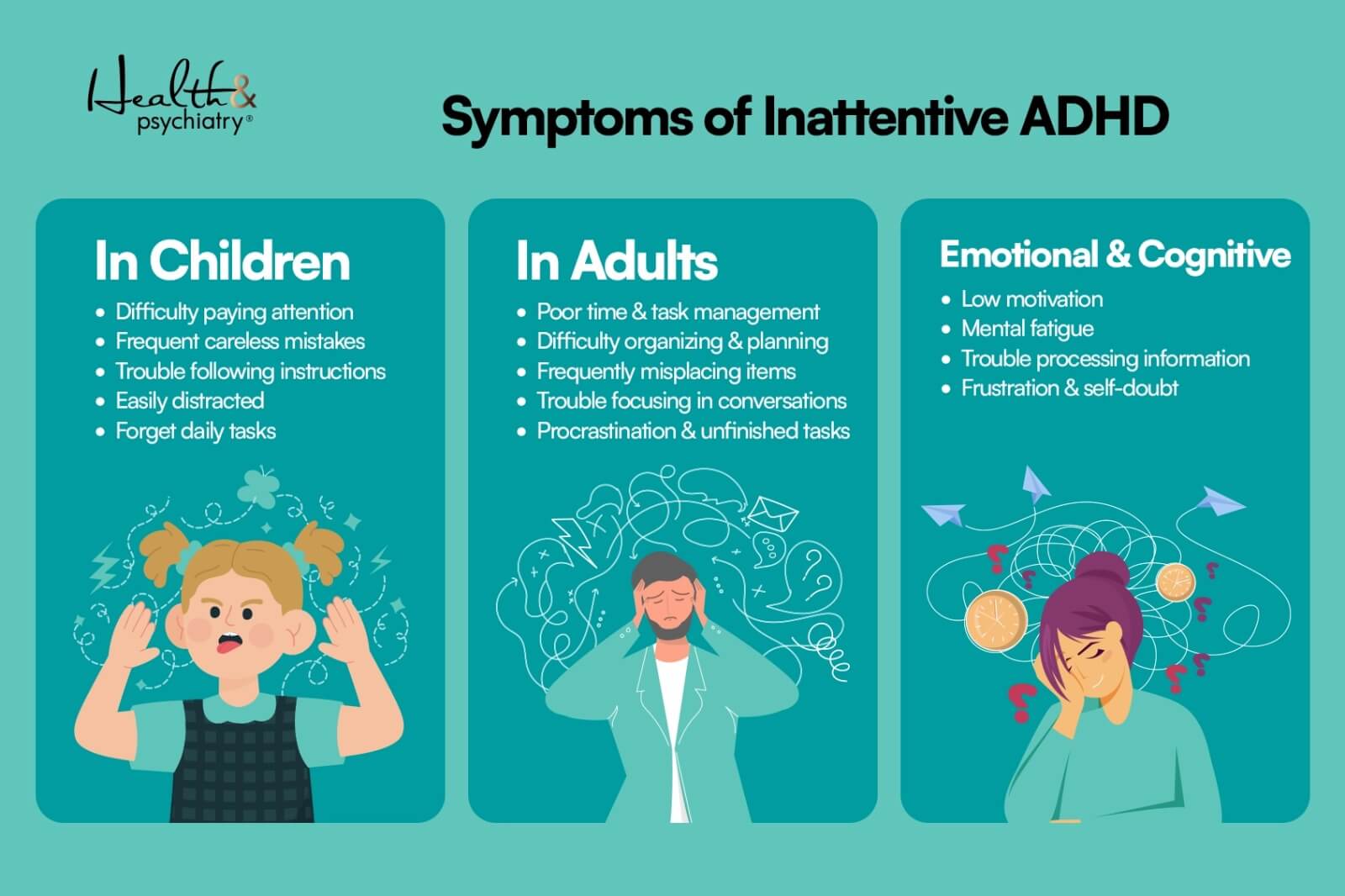
ADHD-I has an array of symptoms found in both children and adults.
Common Symptoms in Children
- Difficulty in paying attention.
- Making the same careless mistakes many times.
- Having issues when asked to follow instructions.
- Getting distracted by surroundings very easily.
- Daily activities and routine tasks are easily forgotten.
Common Symptoms in Adults
- Managing time and tasks is troublesome.
- Poor ability to organize and plan.
- Misplacing items is frequent due to poor attention.
- Conversations focusing is difficult to do.
- Procrastination and incomplete tasks.
Emotional and Cognitive Symptoms
Inattentive ADHD symptoms may also cause emotional issues within an individual. This leads to low motivation, mental fatigue, having a hard time processing information, and feelings of frustration or self-doubt.
Causes of Inattentive ADHD
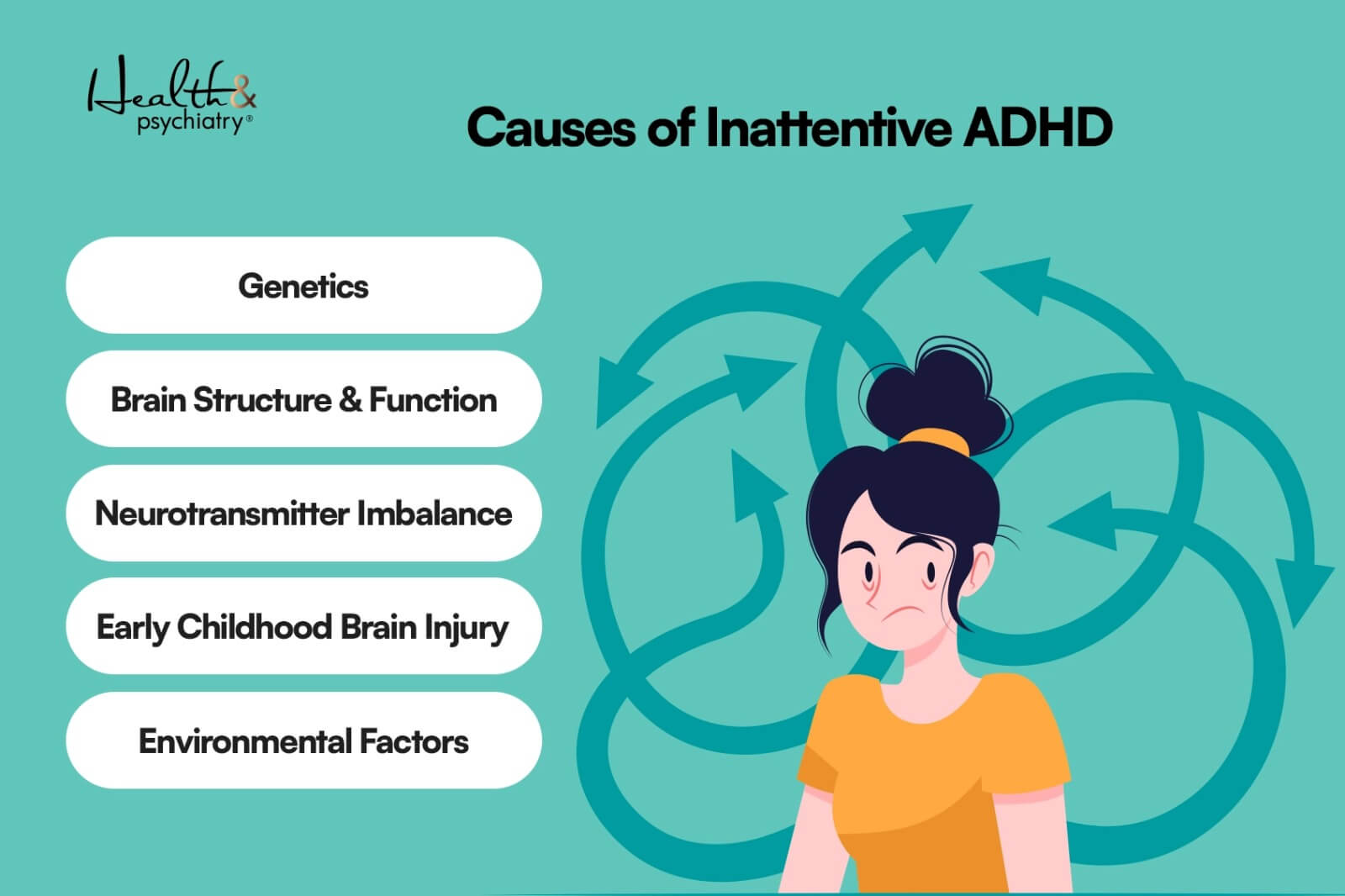
A combination of neurological and environmental factors may trigger the ADHD inattentive type in an individual.
These include:
1. Genetics
Individuals with a history of ADHD in the family can inherit the disease at birth.
2. Brain Structure and Function
Differences in brain areas responsible for attention, decision-making, and impulse control can contribute to ADHD inattentive symptoms.
3. Neurotransmitter Imbalance
One of the most common causes of mental health disorders, such as anxiety disorders & bipolar disorder, is the imbalances in brain chemicals, such as dopamine, which affect focus, motivation, and reward processing.
4. Early Childhood Brain Injury
In some cases, ADHD inattentive type can be triggered by head injuries or complications during early development.
5. Environmental Factors
Exposure to toxins, low birth weight, or prenatal factors (such as maternal stress or substance exposure) can increase the risk of a mental health disorder in the individual.
Inattentive ADHD vs. Hyperactive ADHD
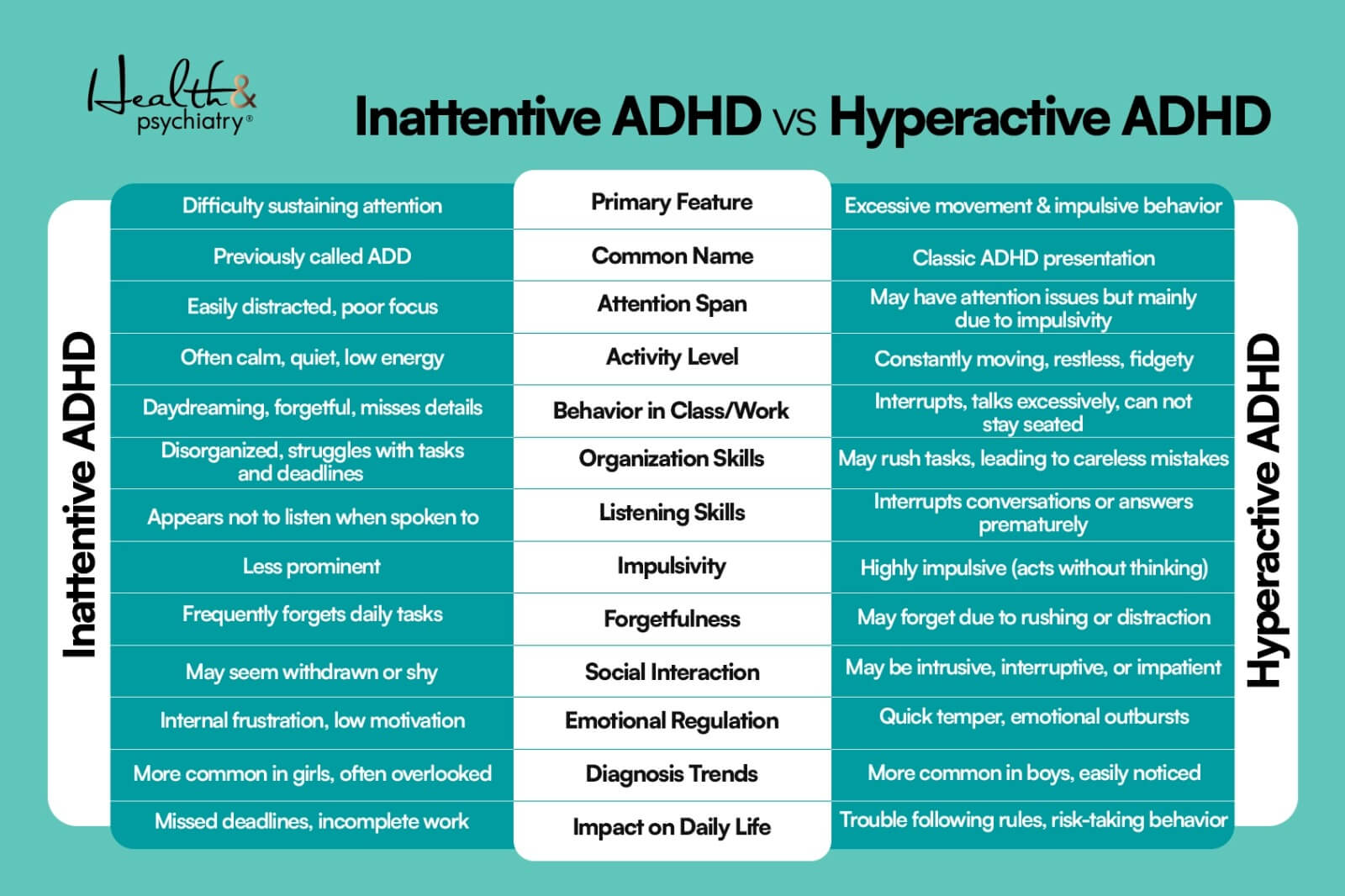
Inattentive ADHD type and Hyperactive ADHD are the two subtypes of ADHD. The difference between the two lies in the names themselves, i.e., the former is characterized by a struggle to focus, while the latter is when the patient struggles to stay still and control impulses.
|
Aspect |
Inattentive ADHD |
Hyperactive-Impulsive ADHD |
|---|---|---|
|
Primary Feature |
Difficulty sustaining attention. |
Excessive movement and impulsive behavior. |
|
Common Name |
Previously called ADD. |
Classic ADHD presentation. |
|
Attention Span |
Easily distracted, poor focus. |
May have attention issues but mainly due to impulsivity. |
|
Activity Level |
Often calm, quiet, low energy. |
Constantly moving, restless, fidgety. |
|
Behavior in Class/Work |
Daydreaming, forgetful, misses details. |
Interrupts, talks excessively, can not stay seated. |
|
Organization Skills |
Disorganized, struggles with tasks and deadlines.. |
May rush tasks, leading to careless mistakes. |
|
Listening Skills |
Appears not to listen when spoken to. |
Interrupts conversations or answers prematurely. |
|
Impulsivity |
Less prominent. |
Highly impulsive (acts without thinking). |
|
Forgetfulness |
Frequently forgets daily tasks. |
May forget due to rushing or distraction. |
|
Social Interaction |
May seem withdrawn or shy. |
May be intrusive, interruptive, or impatient. |
|
Emotional Regulation |
Internal frustration, low motivation. |
Quick temper, emotional outbursts. |
|
Diagnosis Trends |
More common in girls, often overlooked. |
More common in boys, easily noticed. |
|
Impact on Daily Life |
Missed deadlines, incomplete work. |
Trouble following rules, risk-taking behavior. |
Here is a rundown of the key differences between the two types.
 Core Symptoms
The common signs of ADHD inattentive are distraction, forgetfulness and disorganization. Meanwhile, hyperactive ADHD presents in restlessness, impulsivity, and excessive movement.
Behavior Pattern
Patients with inattentive ADHD subtype often appear quiet, withdrawn, or “daydreaming”. Meanwhile, hyperactive ADHD patients appear energetic or constantly active.
Attention Span
True to the name, inattentive ADHD patients struggle to maintain attention for detailed or lengthy tasks. On the other hand, patients presenting with hyperactive subtype of ADHD are flagbearers of starting the task and failing to focus on it.
Activity Level
Inattentive ADHD subtype patients may seem sluggish or mentally disengage. Hyperactive ADHD patients have higher levels of activity and require a constant need for movement or activity.
Social Interaction
Patients suffering from ADHD, predominantly inattentive type struggle to maintain conversations and are often forgetful. Hyperactive ADHD patients are the other side of extreme: they may interrupt, talk excessively, or struggle to wait their turn in conversations.
Impact on Daily Life
ADHD-I affects productivity, focus, and task completion. Hyperactive ADHD affects behavior control, relationships, and structured environments.
How Is Inattentive ADHD Diagnosed?
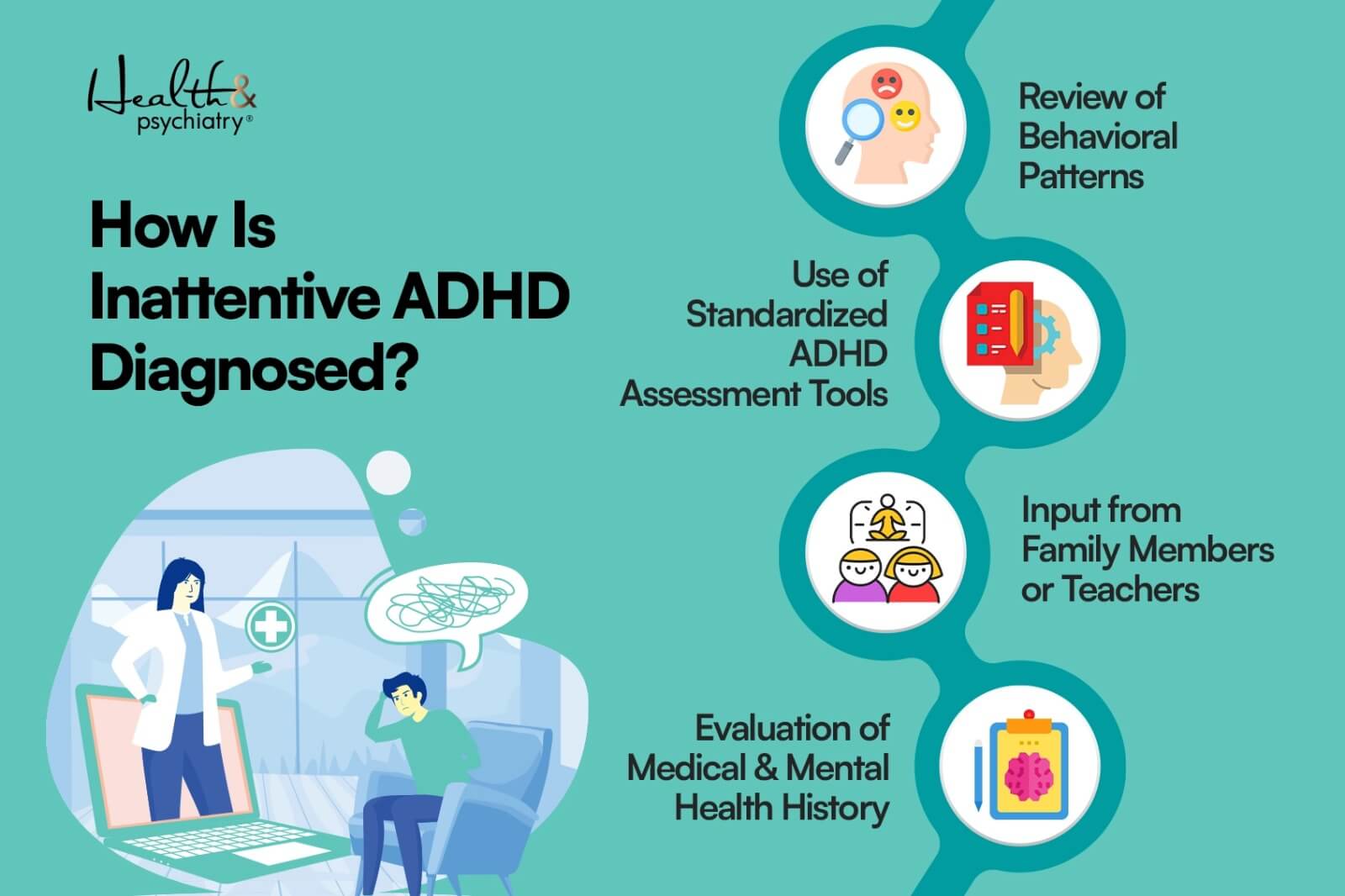
To diagnose a condition such as inattentive ADHD, a comprehensive evaluation by a healthcare professional is required. It includes ADHD testing & QB testing.
Here are the following steps taken by the provider to assess an individual for potential inattentive ADHD symptoms.
→ Review of Behavioral Patterns
The healthcare provider looks for symptoms like inattention, forgetfulness, or disorganization that may appear in their daily life and affect functioning.
→ Use of Standardized ADHD Assessment Tools
There is a set of questionnaires and rating scales (Qb Test for ADHD testing) that clinicians use to measure symptoms severity and compare them against diagnostic criteria.
→ Input from Family Members or Teachers
Your healthcare provider may also reach out to your loved ones to get a more accurate picture of behavior across different settings like home, school, or work.
→ Evaluation of Medical and Mental Health History
You might be asked to provide medical and mental health history as well as any previous diagnoses, to rule out other causes and confirm ADHD.
Treatment Options for Inattentive ADHD
Managing inattentive ADHD requires a multimodal approach, meaning no single treatment works alone… It takes a combination of approaches to effectively treat or manage symptoms of inattentive ADHD in patients.
Your healthcare provider may recommend the following treatment options for ADHD-I.
1. Medications
Medications for inattentive ADHD are often the first-line treatment because they directly affect brain chemicals responsible for attention and impulse control.
a. Stimulant Medications: These are the most commonly prescribed. Functions by increasing brain levels of dopamine and norepinephrine.
They help AHD patients to improve their attention span. Also reduces distractibility & enhances task completion.
b. Non-Stimulant Medications: Used when stimulants are ineffective.. or if they are not well tolerated sometimes. Benefits include a lower risk of dependency. Also, the longer-lasting effects throughout the day.
2. Therapy Approaches

a. Behavioral Therapy
- It is to reinforce positive behaviors.
- Reduce negative ones.
- Uses reward systems and structured routines.
b. Cognitive Behavioral Therapy (CBT)
- Used for recognition and changing negative thought patterns.
- Improves time management. Problem-solving & also the emotional regulation.
c. Mindfulness-Based Therapy
- Trains attention and awareness.
- Helps reduce mental wandering.
- Improves concentration.
d. Social Skills Training
- Helps individuals improve communication and interaction.
- Especially useful for those who appear disengaged.
- Also, for those who are inattentive in social settings.
3. Lifestyle Strategies

Daily habits play a major role in symptoms control.
- Regular exercise helps dopamine levels naturally increase. Improves focus and reduces mental fatigue.
- Consistent routines, such as structured daily schedules, reduce confusion and forgetfulness. Also, helps build predictability in tasks.
- Healthy sleep habits, as poor sleep worsens attention and memory. It aims for consistent sleep-wake cycles.
- Balanced nutrition to Stable blood sugar supports concentration. It should include protein-rich foods, whole grains, and omega-3 fatty acids.
4. Educational and Workplace Support
Environmental adjustments can significantly improve productivity. ADHD-I pupils are supported with extended deadlines for tasks. Quiet, distraction-free workspaces. Written instructions instead of verbal-only directions are also helpful.
These accommodations help reduce overwhelm and allow individuals to perform at their best.
5. Skill-Building Strategies
These are practical tools that empower long-term independence. They are trained with:
- Time management techniques to learn include breaking tasks into smaller steps. Can be done using timers or the Pomodoro technique.
- Organizational systems for keeping dedicated spaces for items.
- Goal-setting methods, along with setting realistic, short-term goals. Include tracking progress to build motivation.
Effect of ADHD-I on Daily Life

The impact of Inattentive ADHD on daily life can be subtle. Yet deeply disruptive across multiple areas.
In academic or work settings, individuals often struggle with maintaining focus. They are unable to complete tasks on time and follow detailed instructions. This all can lead to underperformance despite having the ability to succeed.
Time management becomes a persistent challenge… as tasks may be delayed, forgotten, or left unfinished. Ultimately, it reduces productivity.
Inattentiveness due to ADHD-I can be misinterpreted as disinterest or lack of effort in relationships… affecting communication due to poor emotional connection with others.
These ongoing difficulties can take a toll over time on self-esteem and confidence. ADHD people may start to feel that they internalize criticism. Or they usually feel they are not meeting expectations.
Because the symptoms are less outwardly visible compared to hyperactive forms of ADHD, people with inattentive ADHD are often misunderstood as careless, lazy, or unmotivated, when in reality they are dealing with genuine neurological challenges that affect their ability to function consistently.
Risk Factors for Inattentive ADHD

Certain factors increase the likelihood of developing inattentive ADHD:
- Family history of ADHD.
- Premature birth or low birth weight.
- Exposure to environmental toxins.
- Prenatal health factors.
- Early developmental challenges.
When to Seek Professional Help?
 You should consider seeking help or going for ADHD testing if:
- You or any other loved ones are consistently struggling to focus. Daily tasks at school, work, or daily activities are difficult to do?
- Do unfinished tasks, forgetfulness, or disorganization frequently interfere with daily functioning?
- Are these symptoms affecting academic performance? Your job productivity is poor despite your effort!
- Do others often describe you as inattentive? Saying you're careless or poor at listening?
- Are relationship or communication issues arising? All have difficulty in paying attention?
- Do you feel overwhelmed? Simple tasks are difficult for you that others seem to manage easily!
- Is there a noticeable decline in self-esteem? Your confidence or motivation is on low level?
- Are you facing these symptoms that have been persistent for several months or longer?
- You are trying coping strategies or lifestyle changes. But they are not improving your situation?
- Do these challenges significantly impact your quality of life or mental well-being?
Early intervention can significantly improve outcomes.
Living with Inattentive ADHD?
 People, if living with inattentive ADHD need awareness. They need a structured life and support.
Here come the helpful strategies by expert therapists. Include breaking your tasks into smaller steps. Also, try using planners or digital tools. Start with setting reminders and routines.
But the most important thing is seeking professional guidance, consulting with an ADHD psychiatrist or therapist.
With the right support, individuals with inattentive ADHD can manage symptoms effectively and thrive in their personal and professional lives.
Your mental health deserves expert attention.
At Health & Psychiatry, providers of ADHD treatment in Florida, our team of licensed professionals offers evidence-based treatments for depression, schizoaffective disorder, eating disorders & other mental health issues, challenging the normal daily life…
All with confidential care. We provide continuous support to help you regain focus, confidence, and control.
Schedule your in-house or telepsychiatry appointment today and start your path to better mental health.
FAQs
Is inattentive ADHD the same as ADD?
Yes. ADD is an outdated term that is now classified as inattentive ADHD.
What are the signs of inattentive ADHD?
Common signs include difficulty focusing, forgetfulness, disorganization, and trouble completing tasks.
What happens if inattentive ADHD is left untreated?
It can lead to ongoing issues with productivity, relationships, self-esteem, and overall daily functioning.