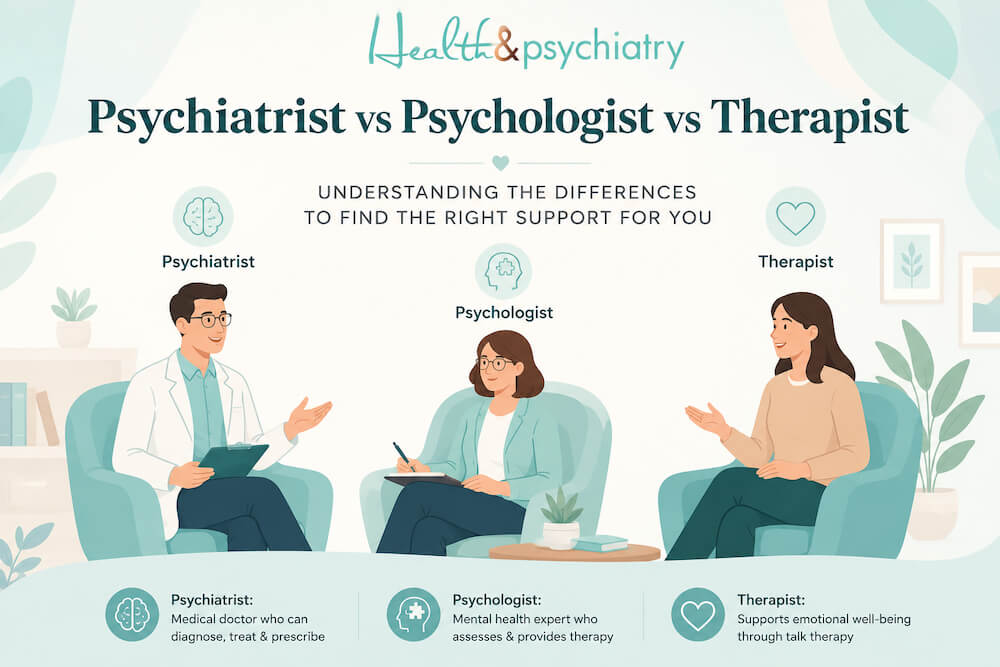
If you're comparing psychiatrist vs psychologist vs therapist, the right choice depends on your needs. A psychiatrist is a medical doctor who can diagnose mental health conditions, prescribe medication, and manage complex psychiatric disorders. A psychologist specializes in psychological testing and evidence-based therapy but generally cannot prescribe medication. A therapist provides counseling and psychotherapy to help people manage emotional, behavioral, and relationship challenges. If you're unsure where to start, a comprehensive psychiatric evaluation can help determine the most appropriate treatment plan.
Introduction
Finding the right mental health professional can feel overwhelming, especially when you're already coping with anxiety, depression, ADHD, trauma, or another emotional challenge. Many patients searching for care in Tampa Bay, FL ask the same question: "What's the difference between a psychiatrist, psychologist, and therapist?"
Understanding the answer can save you time, reduce frustration, and help you receive the treatment that best fits your situation. While all three professionals support mental wellness, their education, clinical responsibilities, and treatment approaches are very different.
If you're comparing psychiatrist vs psychologist vs therapist because you or a loved one needs help, this guide explains each role in simple terms. You'll learn who diagnoses mental health conditions, who prescribes medication, who provides therapy, and when you should see each specialist. We'll also explain how psychiatric care works for patients throughout Tampa Bay and surrounding communities.
📌 Key Takeaways
✅ A psychiatrist is a medical doctor who can diagnose mental illnesses and prescribe medication.
✅ A psychologist specializes in psychological evaluations, testing, and evidence-based therapy.
✅ Therapists provide counseling and psychotherapy for emotional, behavioral, and relationship concerns.
✅ Many patients benefit from a team approach that includes medication management and therapy.
✅ A psychiatric evaluation helps determine which type of mental health professional is right for you.
Need Help Choosing the Right Mental Health Professional?
If you're unsure where to begin, scheduling a professional psychiatric evaluation can provide clarity. A licensed psychiatric provider can assess your symptoms, discuss your goals, and recommend the most appropriate treatment—whether that includes medication, therapy, or both.
Why Choosing the Right Mental Health Professional Matters
Mental health conditions affect everyone differently. Two people experiencing anxiety, for example, may require completely different treatment plans.
One person might benefit from weekly therapy sessions alone, while another may need medication combined with psychotherapy. Someone with ADHD may require specialized diagnostic testing before treatment even begins.
Choosing the appropriate provider can help you:
- Receive an accurate diagnosis
- Start effective treatment sooner
- Avoid unnecessary appointments
- Improve long-term outcomes
- Build a personalized treatment plan
For residents throughout Tampa Bay, FL, understanding these differences makes it easier to seek care with confidence.
Psychiatrist vs Psychologist vs Therapist: At a Glance
| Feature | Psychiatrist | Psychologist | Therapist |
|---|---|---|---|
| Medical Doctor (MD/DO) | ✅ Yes | ❌ No | ❌ No |
| Diagnose Mental Health Disorders | ✅ Yes | ✅ Yes | Limited (depends on license and state regulations) |
| Prescribe Medication | ✅ Yes | Usually No | ❌ No |
| Provide Psychotherapy | Sometimes | ✅ Yes | ✅ Yes |
| Psychological Testing | Sometimes | ✅ Yes | Rarely |
| Treat Severe Mental Illness | ✅ Yes | Often with psychiatrist | Often alongside psychiatrist |
| Best For | Complex conditions, medication management | Testing, behavioral therapy | Counseling and emotional support |
Although each professional plays an important role, many patients achieve the best results when these providers work together.
What Does a Psychiatrist Do?
A psychiatrist is a licensed medical doctor who specializes in diagnosing, treating, and preventing mental health disorders. After completing medical school, psychiatrists undergo several years of specialized residency training in psychiatry.
Unlike other mental health professionals, psychiatrists understand how mental health conditions affect both the brain and the body. This medical training allows them to evaluate physical illnesses, medications, neurological conditions, and other medical factors that may contribute to psychiatric symptoms.
Conditions Psychiatrists Commonly Treat
Psychiatrists diagnose and treat a wide variety of conditions, including:
- Depression
- Anxiety disorders
- Bipolar disorder
- ADHD
- PTSD
- Obsessive-Compulsive Disorder (OCD)
- Panic disorder
- Schizophrenia
- Mood disorders
- Sleep disorders related to mental health
Because they are physicians, psychiatrists can order laboratory tests, review medical histories, and rule out physical conditions that may mimic psychiatric symptoms.
When Should You See a Psychiatrist?
Seeing a psychiatrist is often the best option if:
You think medication may help.
Many mental health conditions respond well to carefully monitored prescription medication. A psychiatrist can determine whether medication is appropriate based on your symptoms, medical history, and treatment goals.
Your symptoms are significantly affecting daily life.
If anxiety, depression, mood changes, or attention problems interfere with work, school, or relationships, a psychiatrist can perform a comprehensive assessment and recommend evidence-based treatment.
You have multiple mental health conditions.
Many patients experience more than one condition at the same time, such as anxiety with depression or ADHD with mood disorders. A psychiatrist can evaluate these overlapping symptoms and create an integrated treatment plan.
Previous treatment hasn't worked.
If counseling alone hasn't improved your symptoms, or you've tried medication without success, a psychiatrist can reassess your diagnosis and adjust your treatment approach.
What Happens During a Psychiatric Evaluation?
One of the most common concerns patients have is not knowing what to expect during their first appointment.
A psychiatric evaluation typically includes:
- A discussion of your current symptoms
- Your medical history
- Family mental health history
- Previous treatments
- Current medications
- Lifestyle and stress factors
- Safety assessment when appropriate
- Development of a personalized treatment plan
The goal isn't simply to assign a diagnosis. It's to understand the whole person and identify the most effective path toward better mental health.
Patients who live in Tampa Bay, FL, and surrounding communities can begin this process by scheduling an evaluation with an experienced psychiatric provider.
Can a Psychiatrist Also Provide Therapy?
Yes—but not always.
Some psychiatrists provide psychotherapy in addition to medication management. Others focus primarily on diagnosis and medication while collaborating with psychologists or therapists who provide ongoing counseling.
This collaborative approach often gives patients the benefits of both medical treatment and evidence-based therapy, ensuring comprehensive mental health care tailored to their needs.
What Does a Psychologist Do?
A psychologist is a mental health professional who studies how thoughts, emotions, and behaviors affect a person’s well-being. Clinical psychologists usually hold a doctoral degree, such as a PhD or PsyD, and complete supervised clinical training before becoming licensed.
Psychologists commonly provide psychotherapy, conduct psychological assessments, and help patients understand patterns that may contribute to emotional or behavioral problems.
They may work with people experiencing:
- Anxiety and panic attacks
- Depression
- Trauma and PTSD
- Relationship problems
- Grief and major life changes
- Behavioral concerns
- Learning difficulties
- Personality-related challenges
- Stress and emotional regulation problems
Psychologists often use evidence-based approaches such as cognitive behavioral therapy, commonly called CBT. Therapy may help patients recognize unhelpful thought patterns, develop healthier coping skills, and improve daily functioning.
Can a Psychologist Prescribe Medication?
In most states, including Florida, psychologists generally do not prescribe psychiatric medication. Their work usually centers on psychotherapy, behavioral treatment, and psychological testing.
A psychologist may coordinate with a psychiatrist, primary care physician, or another qualified prescribing provider when medication could be part of the treatment plan.
When Should You See a Psychologist?
A psychologist may be a good starting point when:
- You want structured, ongoing psychotherapy
- You need psychological or cognitive testing
- You are coping with trauma, grief, anxiety, or relationship concerns
- You want to understand recurring emotional or behavioral patterns
- You need help developing coping and communication skills
- Your psychiatrist recommends therapy alongside medication
Psychologists can also help patients track progress and adjust therapy strategies as their needs change.
What Does a Therapist Do?
“Therapist” is a broad term rather than one specific professional title. It can describe several licensed professionals who provide counseling or psychotherapy.
A therapist may be a:
- Licensed mental health counselor
- Licensed clinical social worker
- Licensed marriage and family therapist
- Licensed professional counselor
- Psychologist
- Psychiatric nurse with psychotherapy training
- Psychiatrist who provides talk therapy
Because training and specialties differ, review a therapist’s license, credentials, treatment approach, and experience before beginning care.
The National Institute of Mental Health recommends asking prospective therapists about their qualifications, specialties, therapeutic approach, treatment goals, confidentiality practices, and experience with your specific condition.
What Problems Can a Therapist Help With?
Therapists frequently support patients with:
- Stress and burnout
- Relationship conflicts
- Grief and loss
- Low self-esteem
- Mild or moderate anxiety
- Depressive symptoms
- Family challenges
- Life transitions
- Trauma recovery
- Anger management
- Workplace concerns
Therapy is not limited to people with a diagnosed mental health condition. You can also seek therapy when you need guidance, emotional support, or practical strategies for handling a difficult situation.
Psychiatrist vs Psychologist vs Therapist: The Main Differences
The simplest way to understand the difference is to consider the type of support each professional typically provides.
Choose a psychiatrist when you may need:
- A medical assessment
- A psychiatric diagnosis
- Prescription medication
- Medication monitoring
- Treatment for complex or severe symptoms
- Evaluation of overlapping medical and mental health concerns
Choose a psychologist when you may need:
- Psychological testing
- Diagnostic clarification
- Structured psychotherapy
- Behavioral assessments
- Treatment for complex emotional or behavioral patterns
Choose a therapist when you may need:
- Regular counseling
- Emotional support
- Coping strategies
- Relationship or family counseling
- Help managing stress or life transitions
However, these roles can overlap. A psychologist is also a type of therapist when providing psychotherapy, and some psychiatrists offer therapy in addition to medical treatment.
Do You Need Medication, Therapy, or Both?
You do not always have to choose between medication and therapy. Many patients benefit from a combined treatment plan.
Psychotherapy may be used alone or alongside medication, depending on the person’s symptoms, diagnosis, health history, preferences, and response to previous treatment.
For example:
- A person with mild situational anxiety may begin with therapy.
- A person with persistent depression may benefit from therapy and medication.
- A patient with ADHD may need a psychiatric evaluation and medication management.
- Someone coping with grief may need counseling without medication.
- A patient with bipolar disorder may need psychiatric treatment alongside supportive therapy.
Treatment should always be personalized. A qualified mental health professional can explain the benefits, limitations, and possible risks of each option.
Get Clarity Before Choosing a Provider
If you are uncertain whether your symptoms require medication, therapy, or a combination of both, an initial psychiatric evaluation can help identify an appropriate next step.
Book an evaluation with Health & Psychiatry and receive personalized guidance based on your symptoms, history, and treatment goals.
Which Mental Health Professional Is Right for Your Situation?
Use the following decision pathway as a starting point.
1. Are your symptoms severe, persistent, or disrupting daily life?
Consider starting with a psychiatrist if your symptoms affect your ability to work, study, sleep, maintain relationships, or complete everyday responsibilities.
You should also consider psychiatric care if you experience major mood changes, recurring panic attacks, significant attention problems, hallucinations, severe agitation, or symptoms that have not improved with previous treatment.
2. Do you mainly want to talk through emotional or relationship concerns?
A therapist may be the right fit if you want help with stress, grief, communication difficulties, life transitions, or coping skills.
3. Do you need formal psychological testing?
A psychologist may be the best choice when you need detailed cognitive, behavioral, personality, or learning assessments.
4. Are you considering psychiatric medication?
Begin with a psychiatrist or another qualified medical prescriber who can assess your symptoms, medical history, current medications, and potential treatment risks.
5. Are you still unsure?
Start with a psychiatric evaluation. The provider can assess your concerns and recommend therapy, medication management, testing, or coordinated care.
Mental Health Care for Tampa Bay Patients
Patients in Tampa Bay may encounter long travel times, busy schedules, transportation barriers, or difficulty finding a provider with suitable availability. Telepsychiatry can make psychiatric care more accessible by allowing eligible patients to meet with a provider through a secure virtual appointment.
Digital mental health care can help connect patients with professionals when in-person services are difficult to access. However, virtual treatment should still be delivered by an appropriately qualified provider and may not suit every clinical situation.
Health & Psychiatry offers telepsychiatry services for eligible patients seeking convenient psychiatric support.
Whether you live in Tampa, Clearwater, Oldsmar, Palm Harbor, St. Petersburg, or another Tampa Bay community, the most important step is choosing care based on your clinical needs—not simply the closest provider title.
Choosing Between a Psychiatrist, Psychologist, and Therapist in Tampa Bay
Understanding psychiatrist vs psychologist vs therapist roles can help you make a more confident care decision.
A psychiatrist offers medical evaluation, diagnosis, and medication management. A psychologist commonly provides psychological testing and psychotherapy. A therapist helps patients address emotional, behavioral, relationship, and life challenges through counseling.
You may need one professional or a coordinated team. The best choice depends on your symptoms, their severity, your treatment history, and whether medication or formal testing may be necessary.
Health & Psychiatry helps Tampa Bay patients take the first step through personalized psychiatric evaluations and treatment planning.
Medical Disclaimer
This article provides general educational information and does not replace professional medical advice, diagnosis, or treatment. Do not begin, stop, or change psychiatric medication without consulting a qualified healthcare professional.
If you or someone else is experiencing suicidal thoughts, psychosis, an overdose, or immediate danger, call 911 or go to the nearest emergency department. In the United States, you may also call or text 988 to reach the Suicide & Crisis Lifeline.
Frequently Asked Questions
1. Is a psychiatrist better than a psychologist?
Neither is universally better. A psychiatrist may be more appropriate when you need medical evaluation or medication. A psychologist may be more appropriate when you need psychological testing or ongoing psychotherapy. Some patients benefit from both.
2. Is a psychologist the same as a therapist?
A psychologist can be a therapist, but not every therapist is a psychologist. “Therapist” may refer to psychologists, counselors, clinical social workers, marriage and family therapists, and other licensed professionals who provide psychotherapy.
3. Who should I see first for anxiety?
You may begin with a therapist when anxiety is mild or linked to stress and life circumstances. Consider a psychiatrist when anxiety is persistent, severe, causes panic attacks, disrupts daily functioning, or may require medication.
4. Who should I see for depression?
A therapist or psychologist may help through psychotherapy. A psychiatrist may be appropriate when depression is persistent, significantly affects functioning, includes safety concerns, or may require medication. Many patients receive both psychiatric and therapeutic care.
5. Can a therapist diagnose a mental health condition?
Some licensed therapists can diagnose mental health conditions within the scope of their training and license. However, their authority and services differ by profession and state. Ask the provider directly about their credentials and diagnostic role.
6. Can I see a psychiatrist and therapist at the same time?
Yes. Coordinated treatment is common. A psychiatrist may manage diagnosis and medication, while a therapist provides regular psychotherapy and coping support.
7. Can telepsychiatry provide the same services as an office visit?
Telepsychiatry can support psychiatric evaluations, follow-up appointments, and medication management for many eligible patients. However, the provider must decide whether virtual care is clinically appropriate for your needs.
8. What should I do if I do not know which provider I need?
Schedule a psychiatric evaluation or speak with a qualified mental health professional. An initial assessment can clarify your symptoms and help determine whether you need psychiatry, psychology, therapy, testing, or coordinated care.