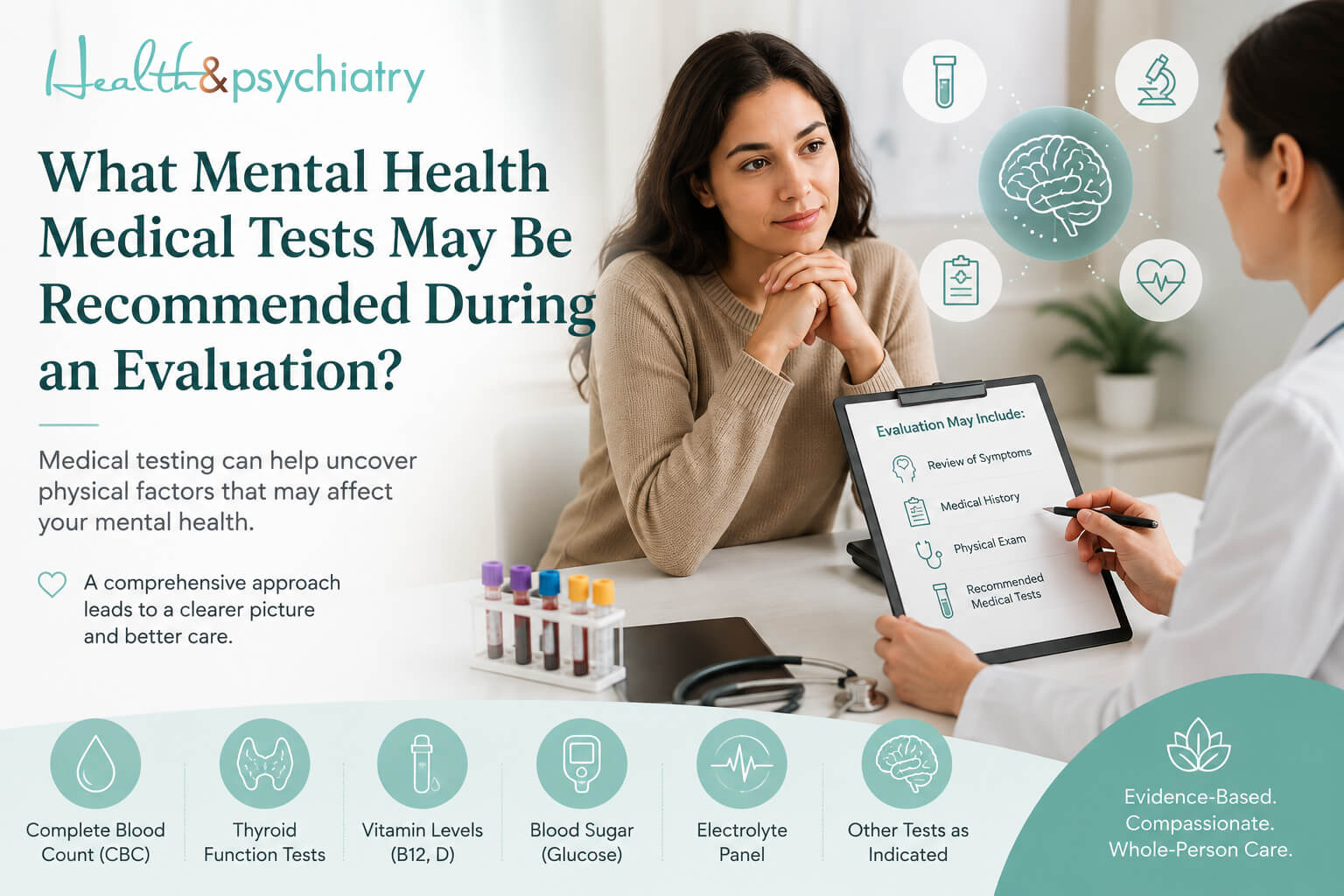
Mental health medical tests may include bloodwork, a physical examination, medication or substance screening, and—less commonly—neurological testing or imaging. These tests generally do not diagnose depression, anxiety, ADHD, or another psychiatric disorder. Instead, a clinician may use them to identify physical conditions that could cause similar symptoms, establish a medical baseline, or support safe treatment planning.
If changes in your mood, sleep, concentration, or behavior are affecting daily life, a comprehensive psychiatric evaluation can help determine which assessment steps are appropriate for you.
Key Takeaways
✅ No single blood test can diagnose most mental health conditions.
✅ Medical testing is ordered according to your symptoms, history, medications, and risk factors.
✅ Thyroid problems, anemia, nutrient deficiencies, metabolic changes, and medication effects can sometimes resemble psychiatric symptoms.
✅ A psychiatric evaluation also includes a detailed interview, mental status examination, and, when appropriate, screening questionnaires.
✅ Brain scans and genetic tests are not routine for most initial evaluations.
✅ Tampa Bay patients can begin with a personalized evaluation at Health & Psychiatry’s Oldsmar clinic.
Why Might Medical Tests Be Part of a Mental Health Evaluation?
A mental health evaluation is not limited to checking whether your symptoms match a diagnostic list. Your psychiatrist considers your emotional symptoms, physical health, medications, sleep, family history, and changes in daily functioning.
This broader approach matters because fatigue, poor concentration, sleep disruption, irritability, and mood changes can have psychiatric, medical, medication-related, or overlapping causes.
The National Library of Medicine’s mental health screening guidance explains that medical tests cannot diagnose most mental disorders. However, selected blood tests may help identify conditions such as thyroid disease or electrolyte abnormalities that can contribute to mental health symptoms.
Testing may therefore help your clinician:
- Investigate possible medical contributors
- Establish baseline health information
- Assess whether a medication may be appropriate
- Monitor potential medication effects
- Decide whether another healthcare professional should be involved
- Develop a more informed treatment plan
Testing should be targeted rather than automatic. Two people reporting anxiety, for example, may need different evaluations based on their age, symptoms, medical history, medications, and recent health changes.
Which Mental Health Medical Tests May Be Recommended?
The following tests are examples, not a universal psychiatric laboratory panel. Your clinician may recommend some, none, or different tests.
| Test or assessment | What it may help evaluate | When it may be considered |
|---|---|---|
| Physical examination and vital signs | General health and possible physical contributors | New symptoms, medication planning, or limited recent medical care |
| Complete blood count | Anemia, infection, or other blood-related findings | Fatigue, weakness, cognitive complaints, or medical concerns |
| Comprehensive metabolic panel | Electrolytes, liver and kidney function, glucose | Baseline assessment or medication-related considerations |
| Thyroid tests | Overactive or underactive thyroid function | Mood, anxiety, energy, sleep, or concentration changes |
| Vitamin or nutrient tests | Possible B12, folate, iron, or other deficiencies | Dietary risk, fatigue, neurological symptoms, or anemia concerns |
| Pregnancy test | Pregnancy status relevant to treatment decisions | When clinically appropriate and with informed discussion |
| Toxicology screening | Recent substance exposure | When substance effects, safety, or medication interactions are relevant |
| Medication levels | Concentration of certain prescribed medicines | Selected medications requiring therapeutic monitoring |
| Neurological exam or imaging | Possible neurological causes | New neurological findings, head injury, seizures, or sudden cognitive changes |
Complete Blood Count
A complete blood count, or CBC, measures different components of the blood. A clinician may consider it when symptoms include persistent fatigue, weakness, dizziness, or concentration problems.
For example, anemia can affect energy and cognitive performance. A CBC does not determine whether someone has depression or ADHD, but it may reveal a physical issue that deserves further evaluation.
Comprehensive Metabolic Panel
A comprehensive metabolic panel, commonly called a CMP, provides information about electrolytes, blood glucose, liver function, and kidney function.
These results may help identify metabolic problems that can affect mental functioning. They may also establish a baseline before certain medications are started or help monitor treatment when clinically necessary.
Thyroid Function Tests
Both an overactive and an underactive thyroid can affect energy, sleep, mood, heart rate, and concentration. Thyroid testing may therefore be considered when symptoms could overlap with a thyroid condition.
The National Library of Medicine notes that thyroid hormones influence many body functions, including mood. TSH is often the first thyroid blood test ordered, although additional testing depends on the clinical situation. Learn more about thyroid testing from MedlinePlus.
Vitamin and Nutrient Testing
Vitamin B12, folate, iron, ferritin, or other nutrient tests may be considered when a person has relevant symptoms or risk factors. These could include:
- Persistent fatigue
- Restricted dietary intake
- Gastrointestinal conditions
- Neurological symptoms
- Anemia
- A history suggesting malabsorption
Broad nutrient testing is not necessary for every psychiatric patient. Your provider should base the decision on your history and clinical presentation.
Substance or Medication Screening
Alcohol, cannabis, stimulants, sedatives, and other substances can affect mood, anxiety, sleep, perception, and concentration. A toxicology test may sometimes clarify whether recent exposure could be contributing to symptoms or creating a medication safety concern.
A screening result should be interpreted carefully and in context. It should support an honest, nonjudgmental clinical conversation—not replace one.
Can a Blood Test Diagnose a Mental Health Condition?
No routine blood test can independently diagnose depression, anxiety, bipolar disorder, ADHD, PTSD, or OCD.
A psychiatric diagnosis usually depends on several forms of information:
- Your current symptoms
- How long the symptoms have lasted
- Their effect on work, relationships, sleep, and daily functioning
- Your medical and psychiatric history
- Current medications
- Family history
- A mental status examination
- Standardized questionnaires, when appropriate
- Medical testing when the history suggests it may be useful
Questionnaires may help measure symptom patterns or severity, but they are screening tools rather than stand-alone diagnoses. Your clinician interprets them within the full evaluation.
Are Brain Scans Used During Psychiatric Evaluations?
CT scans, MRI scans, and other neurological tests are not routine components of most initial psychiatric evaluations.
A clinician may consider neurological testing when symptoms include:
- A recent head injury
- Seizures
- Sudden confusion
- New weakness, numbness, or coordination problems
- Significant, unexplained cognitive changes
- An unusual or rapidly changing clinical presentation
If these concerns arise, your psychiatric provider may coordinate with primary care, neurology, or emergency services. Imaging should answer a specific clinical question rather than serve as a general mental health screening tool.
What Else Happens During a Psychiatric Evaluation?
Medical tests are only one possible part of the process. During an initial psychiatric evaluation in Tampa Bay, your provider may ask about:
- The symptoms bringing you to the appointment
- When those symptoms began
- Sleep, appetite, energy, and concentration
- Stress, trauma, and recent life changes
- Previous diagnoses and treatments
- Prescription medicines, supplements
- Medical conditions and surgeries
- Family mental-health and medical history
- Current safety concerns
- Your treatment goals
Your provider may also complete a mental status examination. This is a structured clinical assessment of areas such as appearance, behavior, speech, mood, thought patterns, attention, memory, judgment, and insight.
The goal is not to “pass” a test. It is to develop an accurate picture of what you are experiencing and what type of support may be appropriate.
Need clarity about persistent mental-health symptoms?
Health & Psychiatry offers personalized psychiatric evaluations for Tampa Bay residents at its Oldsmar clinic. Book a psychiatric evaluation to discuss your symptoms, medical history, and appropriate next steps.
How Should You Prepare for Possible Mental Health Medical Tests?
Most people do not need laboratory testing completed before their first psychiatry appointment unless the clinic specifically requests it.
You can still prepare by bringing:
- A list of current prescriptions and supplements
- Medication doses, if known
- Relevant recent laboratory results
- Your primary-care provider’s information
- A brief symptom timeline
- Past psychiatric diagnoses or treatment records
- Information about medication allergies or previous side effects
- Your insurance information
- Questions you want to discuss
Do not stop medications, fast, or change your routine solely because you expect testing. Follow the specific instructions given by the professional ordering the test.
Mental Health Medical Tests in Tampa Bay: What Patients Should Expect
Health & Psychiatry serves Tampa Bay from its physical clinic at 3919 Tampa Road, First Floor, Oldsmar, Florida. The clinic is convenient for patients from Oldsmar, Clearwater, Palm Harbor, Safety Harbor, Westchase, and surrounding communities.
Your psychiatric provider may review existing records, recommend coordination with primary care, or discuss targeted testing when your symptoms or treatment plan make it clinically relevant. Not every person needs bloodwork, imaging, or another medical procedure.
The central purpose of the evaluation is to understand your concerns as a whole person—not to order the largest number of tests.
Questions to Ask Your Psychiatric Provider
If testing is recommended, consider asking:
- What question will this test help answer?
- Is the test intended to rule out a medical contributor?
- Do I need to fast or change any medication beforehand?
- Who will order and interpret the results?
- Will my primary-care provider receive the findings?
- Could the results affect my treatment plan?
- Are there costs or insurance requirements I should confirm?
- When and how will the results be discussed?
These questions can help you take an active role in your care and understand why each step is being recommended.
Get Clarity About Your Symptoms
Medical testing may provide useful information, but it is only one part of understanding your mental health. A thoughtful evaluation connects your symptoms with your medical history, medications, daily functioning, and personal goals.
If you are experiencing persistent changes in mood, sleep, concentration, behavior, or motivation, you do not have to determine the cause alone. Health & Psychiatry offers personalized evaluations for Tampa Bay patients at its Oldsmar clinic.
Crisis Support
If you or someone else may be in immediate danger, call 911 or go to the nearest emergency room. In the United States, call or text 988 to reach the Suicide & Crisis Lifeline.
Medical Disclaimer
This article is for educational purposes only. It does not provide a diagnosis or replace advice from a qualified healthcare professional. Recommended tests vary according to individual symptoms, history, medications, physical health, and clinical judgment.