Quick Answer
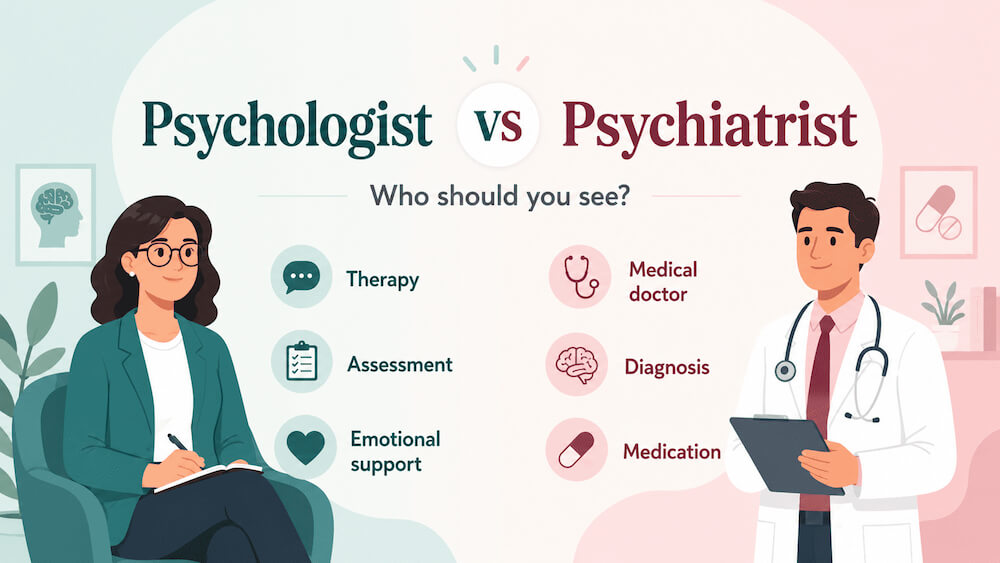
A psychiatrist is a medical doctor who can diagnose mental health conditions, evaluate medical factors, and prescribe medication when appropriate. A psychologist usually focuses on therapy, behavior change, emotional support, and psychological testing. Many people benefit from both: a psychiatrist for diagnosis and medication management, and a psychologist or therapist for ongoing talk therapy.
Key Takeaways
- A psychiatrist is a medical doctor trained to diagnose and treat mental, emotional, and behavioral disordp>
- A psychologist is trained in psychology, psychotherapy, behavior, emotions, and psychological assessment.
- See a psychiatrist if you may need medication, diagnosis, psychiatric evaluation, complex symptoms, or medical review.
- See a psychologist or therapist if you primarily want talk therapy, coping skills, testing, or behavioral support.
- Many patients do best with a combined care plan that includes psychiatric care and therapy.
- In Tampa Bay and across Florida, starting with a psychiatric evaluation can help clarify what type of care you need.
Introduction
If you have searched “psychiatrist vs psychologist,” you are probably trying to answer a very personal question: Who should I talk to first? Maybe you are feeling anxious, depressed, overwhelmed, distracted, emotionally stuck, or unsure whether your symptoms are “serious enough” for professional help.
You are not alone. Many adults in Tampa Bay, Oldsmar, Clearwater, St. Petersburg, Palm Harbor, and across Florida feel confused by mental health titles. Psychiatrist, psychologist, therapist, counselor, psychiatric nurse practitioner, social worker — the options can feel overwhelming, especially when you are already struggling.
The good news is that you do not need to figure everything out perfectly before asking for help. Understanding the difference between a psychiatrist and psychologist can help you take the next right step.
At Health & Psychiatry, many patients begin with an initial psychiatric evaluation to better understand their symptoms, diagnosis, and treatment options.
What Is a Psychiatrist?
A psychiatrist is a medical doctor — usually an MD or DO — who specializes in mental health, including emotional, behavioral, psychiatric conditions. The American Psychiatric Association defines psychiatry as the branch of medicine focused on the diagnosis, treatment, and prevention of mental, emotional, and behavioral disorders. Psychiatrists are qualified to assess both the mental and physical aspects of psychological problems.
Because psychiatrists are physicians, they can evaluate whether symptoms may be related to medical conditions, medications, sleep issues, hormonal changes, neurological concerns, or other health factors. They can also prescribe and manage psychiatric medications when clinically appropriate.
Psychiatrists may help with:
- Depression
- Anxiety disorders
- Panic attacks
- ADHD
- Bipolar disorder
- PTSD
- OCD
- Sleep-related psychiatric concerns
- Mood swings
- Irritability or emotional dysregulation
- Psychosis or hallucinations
- Medication side effects
- Complex or unclear symptoms
- Psychiatric evaluation and diagnosis
Psychiatrists may use several treatment approaches, including medication, psychotherapy, psychosocial interventions, and other psychiatric treatments depending on the patient’s needs. Psychiatric medications are often monitored over time for effectiveness and side effects.
What Is a Psychologist?
A psychologist is a mental health professional trained in psychology, behavior, emotions, thinking patterns, assessment, and psychotherapy. Many psychologists hold a PhD or PsyD and provide therapy, psychological testing, behavioral interventions, and coping strategies.
Psychologists often help people understand how thoughts, feelings, behaviors, relationships, trauma, stress, and life patterns affect mental health. They may use evidence-based therapy approaches such as cognitive behavioral therapy, exposure therapy, supportive counseling, or other forms of psychotherapy.
NIMH explains that psychotherapy, also called talk therapy, includes treatments that help a person identify and change troubling emotions, thoughts, and behaviors. Psychotherapy can help relieve symptoms, improve daily functioning, and support quality of life.
Psychologists may help with:
- Talk therapy
- Coping skills
- Stress management
- Trauma processing
- Anxiety and depression therapy
- Relationship concerns
- Behavioral change
- Grief support
- Psychological testing
- Learning or cognitive assessments
- Emotional regulation skills
- Long-term personal growth
In most U.S. settings, psychologists do not prescribe medication, though prescribing rules can vary by jurisdiction and specialized training. In Florida, most patients seeking medication evaluation typically see a psychiatrist, psychiatric nurse practitioner, or another licensed prescriber.
Psychiatrist vs Psychologist: Main Differences
| Category | Psychiatrist | Psychologist |
|---|---|---|
| Medical training | Medical doctor, MD or DO | Doctoral-level psychology training, usually PhD or PsyD |
| Can diagnose mental health conditions? | Yes | Yes, depending on license and role |
| Can prescribe medication? | Yes | Usually no in most states/settings |
| Main focus | Diagnosis, medical evaluation, medication management, psychiatric treatment | Therapy, behavior change, emotional support, psychological testing |
| Best for | Medication questions, complex symptoms, psychiatric diagnosis, severe impairment | Talk therapy, coping skills, testing, behavioral strategies |
| May provide therapy? | Some do, but many focus on evaluation and medication management | Yes, often a central part of care |
| Medical rule-outs | Can consider medical, psychiatric, and medication-related factors | May refer to medical providers when physical causes need evaluation |
| Common care model | Evaluation + treatment plan + medication monitoring when needed | Therapy sessions + assessment + coping strategies |
Which One Do You Need?
The best choice depends on your symptoms, goals, severity, and whether medication or diagnosis may be part of your care.
| Your Situation | Start With |
|---|---|
| You think you may need medication for anxiety, depression, ADHD, or mood symptoms | Psychiatrist |
| You want a formal psychiatric diagnosis or diagnostic clarification | Psychiatrist |
| You are having panic attacks, hallucinations, severe mood swings, or suicidal thoughts | Psychiatrist or urgent crisis care |
| You want weekly talk therapy and coping skills | Psychologist or therapist |
| You want psychological testing for attention, learning, personality, or cognitive concerns | Psychologist or testing specialist |
| Therapy helped, but symptoms are still interfering with daily life | Psychiatrist |
| Medication helped, but you still need coping skills and emotional support | Psychologist or therapist |
| You are unsure what type of care you need | Psychiatric evaluation |
When to See a Psychiatrist
You may want to see a psychiatrist if your symptoms are persistent, worsening, medically complex, or interfering with your daily life. A psychiatrist can help determine whether a psychiatric diagnosis is present and whether treatment may include medication, therapy, lifestyle changes, additional testing, or coordinated care.
Consider seeing a psychiatrist if you experience:
- Symptoms lasting more than a few weeks
- Anxiety or depression affecting work, school, relationships, or sleep
- Panic attacks that feel difficult to control
- ADHD symptoms interfering with focus, organization, or responsibilities
- Mood swings that feel extreme or unpredictable
- Irritability, anger, or emotional outbursts that are affecting relationships
- Thoughts of self-harm or suicide
- Hallucinations, paranoia, or feeling disconnected from reality
- Trouble functioning despite therapy or self-help efforts
- Concerns about psychiatric medication or side effects
- Multiple diagnoses or unclear symptoms
If someone may harm themselves or others, call 911, go to the nearest emergency room, or contact emergency services immediately. In the U.S., the 988 Suicide & Crisis Lifeline is available for mental health crisis support.
When to See a Psychologist
A psychologist may be a good fit if you are looking for talk therapy, emotional support, behavioral tools, or psychological testing. Therapy can help you understand patterns, build coping skills, process trauma, improve relationships, and manage stress.
Consider seeing a psychologist if you want help with:
- Stress, burnout, or life transitions
- Relationship or family issues
- Grief or loss
- Trauma recovery
- Coping skills for anxiety or depression
- Behavioral change
- Self-esteem or confidence
- Emotional regulation
- Psychological testing or assessment
- Long-term personal growth
NIMH notes that therapy can be used alone or alongside medication, and the right treatment plan should be based on the person’s needs and medical situation under professional guidance.
Can You See Both a Psychiatrist and a Psychologist?
Yes. In fact, many people benefit from both.
A psychiatrist may evaluate symptoms, diagnose a condition, prescribe medication if appropriate, and monitor progress. A psychologist or therapist may provide regular therapy to help with coping skills, thought patterns, trauma, relationships, and behavior change.
This combined model can be especially helpful for:
- Major depression
- Anxiety disorders
- ADHD
- Bipolar disorder
- PTSD
- OCD
- Panic disorder
- Complex stress or trauma
- Medication plus therapy treatment plans
NIMH notes that medication and psychotherapy are among the most common forms of mental health treatment, and medications are often used in combination with treatments such as psychotherapy.
Do Psychiatrists Provide Therapy?
Some psychiatrists provide psychotherapy, but many focus primarily on psychiatric evaluation, diagnosis, medication management, and treatment planning. This does not mean the care is less personal. A good psychiatric appointment should still include listening, understanding your symptoms, reviewing your history, answering questions, and helping you make informed decisions.
In many care models, the psychiatrist and therapist work together. The psychiatrist manages the medical and medication side of treatment, while the therapist provides ongoing counseling or psychotherapy.
Do Psychologists Prescribe Medication?
In most cases, psychologists do not prescribe medication. Their main role is therapy, assessment, and behavioral treatment. Some U.S. jurisdictions allow specially trained psychologists to prescribe under specific rules, but this is not the standard pathway for most patients.
If you live in Florida and you are wondering whether medication may help with anxiety, depression, ADHD, mood instability, or sleep-related psychiatric symptoms, a psychiatric evaluation is usually the more direct starting point.
What Happens During a Psychiatric Evaluation?
An initial psychiatric evaluation is not about labeling you. It is about understanding what you are experiencing and building a care plan that fits your life.
During an evaluation, a psychiatry provider may ask about:
- Current symptoms
- When symptoms started
- Sleep, appetite, energy, and concentration
- Mood changes
- Anxiety or panic symptoms
- Trauma history
- Medical history
- Current medications
- Family mental health history
- Work, school, and relationship functioning
- Safety concerns
- Past therapy or medication experiences
The goal is to understand the whole picture — not just one symptom.
At Health & Psychiatry, adults in Tampa Bay and Florida can begin with an initial psychiatric evaluation to get clarity on diagnosis, treatment options, and whether medication, therapy, or combined care may be appropriate.
Psychiatrist vs Psychologist for Common Conditions
Anxiety
For mild to moderate anxiety, therapy may be a strong starting point. If anxiety includes panic attacks, sleep disruption, severe avoidance, physical symptoms, or major impairment, a psychiatrist can evaluate whether medication or a combined care plan may help.
Depression
Therapy can help with coping, negative thought patterns, grief, stress, and relationship issues. A psychiatrist may be especially helpful if depression is persistent, severe, recurring, associated with suicidal thoughts, or not improving with therapy alone.
ADHD
A psychiatrist can evaluate ADHD symptoms, rule out overlapping conditions, and discuss medication options when appropriate. A psychologist may provide testing, behavioral strategies, executive functioning support, and therapy.
Bipolar Disorder
A psychiatrist is usually essential for bipolar disorder because diagnosis and medication management can be complex. Therapy can also help with routines, relapse prevention, coping skills, and relationship support.
PTSD and Trauma
A psychologist or therapist may provide trauma-focused therapy. A psychiatrist may help if symptoms include severe sleep disturbance, panic, depression, mood instability, or medication needs.
OCD
Therapy, especially exposure and response prevention, is often important for OCD. A psychiatrist may help when symptoms are severe, disabling, or medication is being considered.
How to Choose the Right Mental Health Professional
Before booking, ask yourself:
- Am I mainly looking for therapy and coping skills?
- Do I think medication might be needed?
- Are my symptoms affecting work, sleep, relationships, or daily functioning?
- Have I tried therapy but still feel stuck?
- Do I need diagnosis or treatment clarification?
- Do I have complex symptoms or multiple concerns?
- Do I want a provider who can evaluate both mental and medical factors?
If medication, diagnosis, or complex symptoms are part of the question, starting with a psychiatrist may save time and provide clarity. If your main goal is regular talk therapy, a psychologist or therapist may be the best first step.
Local Florida Care: Why Starting With the Right Provider Matters
In Tampa Bay, many people delay care because they are unsure who to call. Some people spend months in therapy before realizing medication evaluation may be helpful. Others start medication but never receive the therapy support they need. Some are told they have anxiety when ADHD, trauma, depression, or bipolar symptoms may also be part of the picture.
The right professional can help you avoid confusion and move toward a clearer plan.
Health & Psychiatry serves patients in Tampa Bay, Oldsmar, Clearwater, Palm Harbor, Safety Harbor, Dunedin, Largo, St. Petersburg, Pinellas County, Hillsborough County, Pasco County, and across Florida through appropriate psychiatric care options.
How Health & Psychiatry Can Help
Health & Psychiatry provides mental health care focused on clarity, compassion, and personalized treatment planning. For patients who are unsure whether they need a psychiatrist vs psychologist, an initial psychiatric evaluation can help answer important questions:
- What might be causing these symptoms?
- Is there a psychiatric diagnosis?
- Could therapy help?
- Could medication be appropriate?
- Are there medical or lifestyle factors to consider?
- What should the next step be?
Educational disclaimer: This article is for educational purposes only and is not a substitute for professional medical advice, diagnosis, or treatment. If you are experiencing a medical or mental health emergency, call 911, contact local emergency services, or go to the nearest emergency room.
FAQ: Psychiatrist vs Psychologist
1. What is the main difference between a psychiatrist and psychologist?
The main difference is medical training and prescribing authority. A psychiatrist is a medical doctor who can diagnose mental health conditions and prescribe medication. A psychologist focuses mainly on therapy, behavior, emotions, and psychological assessment.
2. Should I see a psychiatrist or psychologist for anxiety?
It depends on severity. If anxiety is mild to moderate and you want coping skills, therapy with a psychologist or therapist may help. If anxiety causes panic attacks, sleep problems, severe impairment, or you are considering medication, a psychiatrist may be a better starting point.
3. Should I see a psychiatrist or psychologist for depression?
A psychologist can help with therapy, coping skills, and emotional support. A psychiatrist may be important if depression is severe, long-lasting, recurrent, connected to suicidal thoughts, or not improving with therapy alone.
4. Can a psychiatrist diagnose ADHD?
Yes. Psychiatrists can evaluate ADHD symptoms, consider overlapping conditions such as anxiety or depression, and discuss treatment options, including medication when appropriate.
5. Can a psychologist prescribe medication in Florida?
In most cases, psychologists in Florida do not prescribe psychiatric medication. Patients who need medication evaluation usually see a psychiatrist, psychiatric nurse practitioner, or another licensed medical prescriber.
6. Is therapy better than medication?
Neither is automatically “better.” The right treatment depends on the person, diagnosis, severity, medical history, and goals. Some people benefit from therapy alone, some from medication, and many from both.
7. Do I need a referral to see a psychiatrist?
Referral requirements depend on your insurance plan and the clinic’s policies. Many patients can request psychiatric care directly, but it is always wise to check your insurance benefits.
8. What if I choose the wrong provider first?
That is common and not a failure. Mental health care is collaborative. A psychologist may refer you to a psychiatrist if medication or diagnosis is needed, and a psychiatrist may recommend therapy if ongoing counseling would help.
9. When should I seek urgent help?
Seek urgent help if you may harm yourself or someone else, feel unsafe, are experiencing hallucinations or severe confusion, or cannot function safely. Call 911, contact local emergency services, go to the nearest emergency room, or call/text 988 in the U.S.
10. Where can I start in Tampa Bay?
If you are unsure whether you need a psychiatrist, psychologist, or both, you can start with an initial psychiatric evaluation at Health & Psychiatry. The evaluation can help clarify your symptoms, diagnosis, and next steps.