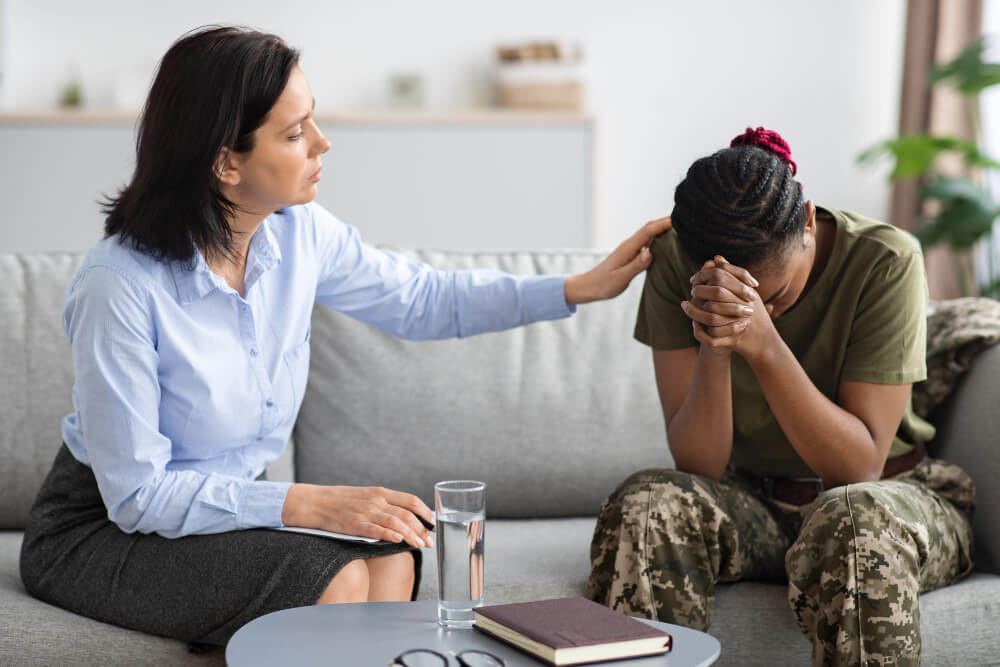
“A battle fought inside the mind” ... it is how post-traumatic stress disorder is often described… But anyone who has a loved one with PTSD knows the truth: trauma never stays inside one person. The PTSD effects on relationships ripple outwards. It somehow keeps touching partners, children, parents, and close friends. It affects in ways that are often invisible, misunderstood, but deeply painful.
According to the National Center for PTSD, about 6% of U.S. adults, at some point, will experience PTSD throughout their lives. Adding to it, approximately 13 million Americans are living with PTSD during any given year.
Research consistently shows that untreated trauma significantly increases the risk of marital conflict, emotional withdrawal, parenting difficulties, depression, and family instability.
For many Florida families, especially veterans, first responders, survivors of abuse, accident victims, and hurricane survivors, trauma imprints become one of the most painful parts of the condition.
The good news is this: PTSD is treatable…
Relationships can heal, and evidence-based psychiatric care in Florida for you and your loved ones can restore an emotional connection that once felt impossible to regain.
What Is PTSD? A Quick Clinical Overview
PTSD (Post-Traumatic Stress Disorder) is a psychiatric condition, triggered by experiencing or witnessing a terrifying event. Those terrifying events may include military combat, sexual assault, serious accidents, natural disasters, childhood abuse, sudden loss, and more.
Contrary to popular belief, PTSD is not a sign of weakness. It is a neurobiological response in which the brain's threat-detection systems, particularly the amygdala and prefrontal cortex, become dysregulated after trauma.
PTSD symptoms include:
- Intrusive memories and flashbacks.
- Persistent avoidance of trauma-related triggers.
- Negative shifts in mood and cognition.
- Hyperarousal (hypervigilance, irritability, difficulty sleeping).
How PTSD Shows Up in Everyday Relationships?
Often subtle at first, but may begin with emotional distance. Then irritability, canceled plans, or difficulty communicating start growing. PTSD effects are proven to worsen over time. Those small moments accumulate into chronic tension and disconnection.
Here are the most common ways trauma impacts relationships clinically and emotionally.
1. Emotional Numbing Creates Distance Between Loved Ones
One of the most recognized PTSD effects on relationships is emotional numbing!
This feeling of “shutdown” is often found in trauma survivors. This is because the nervous system suppresses emotional responsiveness. It is done as a survival mechanism after going through a trauma. This all makes it difficult to feel joy, closeness, affection, or even emotional safety.
Partners often say:
- “They don’t seem present anymore.”
- “I feel emotionally alone.”
- “It feels like I lost the person I knew.”
2. Hypervigilance and Anger Affect Family Stability
Trauma keeps the brain in survival mode. This means someone with PTSD may constantly keep scanning for danger. They may react strongly to noise. Become easily startled and thus may experience explosive anger during situations that are relatively otherwise manageable.
These symptoms create major PTSD effects on relationships, especially inside the home.
Children and partners may begin walking on eggshells. Avoiding conversations and hiding emotions becomes a solution. A feeling of chronic anxiousness around the affected individual badly affects their normal relationships, creating problems.
3. PTSD Often Damages Communication
It is a fact that every healthy relationship is dependent on emotional communication. PTSD disrupts this process.
Trauma survivors frequently struggle to express emotions verbally. They may not tolerate conflict. They are hesitant to discuss painful memories. This leads to communication cycles such as:
- Stonewalling.
- Sudden emotional shutdown.
- Defensiveness.
- Explosive arguments.
- Emotional withdrawal after conflict.
Over time, these patterns deepen because both partners begin feeling unheard and emotionally unsafe.
4. Intimacy and Physical Affection May Feel Unsafe
Research consistently confirms that PTSD can significantly impact intimacy. Majorly disturbing sexual relationships.
Trauma survivors may:
- Pull away from touch.
- Avoid physical affection.
- Experience fear during intimacy.
- Feel emotionally disconnected during closeness.
For survivors of assault or relational trauma, physical closeness itself may trigger fear responses.
This is one of the most misunderstood PTSD effects on relationships, as partners may wrongly interpret avoidance as rejection or loss of love.
5. Trust Problems Can Become Overwhelming
Trauma often changes the way people perceive safety. When PTSD develops after betrayal, abuse, violence, or abandonment, the survivor’s nervous system may remain constantly guarded, even with loving partners.
This can lead to suspicion. It creates emotional distancing. Fear of vulnerability, difficulty believing reassurance & constant fear of abandonment are among the noticeable PTSD symptoms.
6. PTSD Effects on Relationships With Children and Families
The impact of PTSD extends beyond romantic relationships.
Research shows that children raised in homes affected by PTSD have elevated risks of anxiety disorders. They may suffer from depression, emotional dysregulation & behavioral difficulties.
Children who become victims of secondary traumatic stress may begin adapting to the household unpredictability by:
- Becoming overly quiet.
- Suppressing emotions.
- Taking on caretaker roles.
- Becoming hyperaware of mood changes.
For veterans and first responders, these family patterns are especially common.
The U.S. Department of Veterans Affairs confirms that PTSD-related family strain contributes significantly to marital instability. Adding parenting stress and emotional distress among military families.
Health & Psychiatry’s trauma-informed psychiatric team in Florida offers confidential, compassionate care for individuals and families navigating PTSD.
Why PTSD Effects on Relationships Are So Often Misunderstood?
One of the greatest barriers to healing is misinterpretation. Loved ones frequently read PTSD symptoms as personal failures or character flaws:
- Avoidance → “They don’t care.”
- Emotional numbness → “They stopped loving me.”
- Hypervigilance → “They’re controlling.”
- Anger → “They’re abusive.”
- Withdrawal → “They’re rejecting me.”
One can imagine that without education and professional support, how much these misattributions can cause real damage in relationships and family terms.
Partners feel unloved. The trauma survivor feels misunderstood and shamed. Distance grows. Resentment builds. And what could be repaired begins to feel irreparable...
Understanding this distinction is the first step toward healing.
The Florida Context: PTSD and Relationships in Our Communities
Florida proudly own second largest veteran population in the United States. With over 1.5 million veterans calling the state home. Many of these individuals, along with first responders, hurricane survivors, domestic violence survivors, and trauma-exposed residents, live daily with PTSD and its impact on their relationships and families.
Prevalence of post-traumatic stress disorder is evident! Although access to qualified, trauma-informed psychiatric care remains inconsistent.
Many Floridians travel hours for appointments, face long wait times, or simply don't know where to turn. This is why specialized PTSD treatment and telepsychiatry services are offered by Health & Psychiatry, offering remote access to expert psychiatric care.
What Evidence-Based PTSD Treatment Can Do for Relationships?
Effective PTSD treatment creates the conditions for relationships to heal. Here are the primary evidence-based approaches that make a measurable difference:
1. Prolonged Exposure (PE) Therapy
PE conducted by a PTSD therapist helps trauma survivors confront trauma-related memories. But gradually. This exposure includes the situations that they've been avoiding.
When avoidance decreases… the post-traumatic stress disorder survivor becomes more emotionally present in relationships. It makes an improvement in communication, and intimacy can be gradually rebuilt.
2. Cognitive Processing Therapy (CPT)
Highly effective for healing PTSD. During CPT sessions, the therapist targets the disturbing beliefs that PTSD creates.
Such as "I am broken”... "I can't trust anyone”... "The world is completely dangerous."
When these beliefs shift, they heal the PTSD effects, creating problems in relationships. Giving a direct and positive impact as partners can connect around truth rather than trauma-driven distortion.
3. EMDR (Eye Movement Desensitization and Reprocessing)
EMDR for trauma treatment is an especially effective modality. It is for processing traumatic memories. It makes the emotional charge around traumatic events decrease. PTSD patients often find they can engage more openly. Without fear… in their closest relationships.
4. Medication Management
Psychiatric medications, including SSRIs and SNRIs approved as medications for PTSD by the FDA. Prescribed by a licensed psychiatrist after evaluating one’s condition via a thorough psychiatric evaluation.
They can reduce the intensity of hyperarousal, emotional reactivity, and intrusive symptoms. Thus, creating a neurological environment where therapy and relationship repair can take root.
5. Couples Therapy with a Trauma Lens
Traditional couples therapy is often not enough when PTSD is present.
Trauma-informed couples therapy for PTSD, such as Emotionally Focused Therapy (EFT) adapted for trauma are essential when PTSD effects on the relationship are evidently creating problems.
It helps both partners as it focuses on developing compassionate communication skills and rebuilding emotional safety together.
6. Telepsychiatry for PTSD
For many Florida residents, particularly those in rural areas, those with mobility challenges, or veterans uncomfortable with in-person settings, telepsychiatry in Florida has opened access to expert psychiatric care.
That would otherwise be out of reach.
Remote appointments allow consistent, confidential PTSD treatment without transportation barriers or scheduling conflicts.
Health & Psychiatry offers special care for Veterans with PTSD.
Veterans; You’ve Earned This Care | Learn About our VA Program
What Family Members Can Do Right Now?
If someone you love has PTSD, your well-being matters too.
Clinically Recommended Steps:
- Learn about PTSD and trauma responses.
- Avoid personalizing symptoms.
- Encourage professional treatment gently.
- Seek your own therapy or support group.
- Maintain healthy emotional boundaries.
- Create predictable home routines.
- Recognize caregiver burnout early.
Remember: supporting someone with PTSD does not mean sacrificing your own mental health.
Trauma-Informed Psychiatric Care with Dr. Sajan!
Effective post-traumatic stress disorder care begins with a psychiatrist who truly understands your trauma... not just its symptoms, but its neurological, emotional, and relational dimensions.
At Health & Psychiatry, Dr. Sajan Dinar, MD, is a board-certified psychiatrist specializing in trauma and PTSD who brings a deeply compassionate, evidence-based approach to every patient.
Care at Health & Psychiatry encompasses the whole person, their family system, and their long-term wellbeing.
Whether you're a veteran, a trauma survivor, or a family member trying to hold things together, we offer confidential, non-judgmental support that meets you where you are.
Florida patients can access care through in-person consultations at our mental healthcare facilities in Florida. As well as our comprehensive telepsychiatry program, bringing expert trauma-informed psychiatric support directly to you… wherever you are in the state.
FAQs
Can PTSD ruin a relationship?
Yes. if untreated. Post-traumatic stress disorder's effects on relationships are severe. However, evidence-based treatment significantly improves emotional connection, communication, and long-term relationship outcomes.
How common are PTSD effects on relationships?
Very common. Studies consistently show that PTSD symptoms are strongly associated with relationship dissatisfaction, emotional disconnection, and family stress.
Does PTSD treatment actually help couples?
Yes. Research shows that treating PTSD often improves relationship quality alongside symptom reduction.
Is telepsychiatry effective for PTSD?
Yes. Telepsychiatry has been shown to provide effective PTSD care comparable to in-person treatment for many patients.
Can children be affected by a parent’s PTSD?
Absolutely. Children living in highly dysregulated environments may develop anxiety, emotional distress, or secondary trauma responses themselves.
How long does PTSD treatment take?
Many patients experience meaningful improvement within 8 to 15 therapy sessions with a PTSD therapist. Though timelines vary. Depending on trauma severity and co-occurring conditions.
What if my partner refuses treatment?
Focus first on your own support and education. Compassionate encouragement works better than pressure or ultimatums. Even one consultation can sometimes open the door to care.