
Bipolar I Disorder is the worst of all since it is full of mania. This mood disorder is a leading cause of disability in the world, and it is estimated that there are 37 million people (0.5 of the population) who live with it.
The symptoms of bipolar I disorder have been identified to begin normally in late teenage or early adulthood, at an age of 15 to 25. The bipolar disorder type I treatment can also result in heightened risk of suicide, and reduced life expectancy (untreated).
What Is Bipolar I Disorder?

Bipolar I Disorder is a serious mental health condition. It is classified under mood disorders.
In it, a patient has a manic episode (at least 1) with a depressive episode. The condition of excessively and unnaturally high or moody state is known as mania and requires at least a week and in most instances, is so intense that it warrants hospitalization.
According to the DSM-5, Bipolar I Disorder is diagnosed when an individual experiences:
- A manic episode lasting at least 7 days (or any duration if hospitalization is required),
- With symptoms severe enough to cause marked impairment in social or occupational functioning.
What is a Manic Episode?
A manic episode is a period of abnormally elevated, expansive, or irritable mood. It is associated with increased energy or activity.
Common features of a manic episode include:
- Inflated self-esteem or grandiosity.
- Lower the need for sleep.
- Excessive talking. with racing thoughts.
- Distractibility.
- Risky or impulsive behaviors (e.g., spending sprees, reckless decisions)...
Role of Depression
Many individuals with Bipolar I Disorder may experience depression symptoms. Similar to MDD, major depressive episodes are characterized by:
- Persistent sadness or emptiness.
- Loss of interest in activities.
- Fatigue.
- Changes in appetite or sleep.
- Feelings of worthlessness.
Bipolar disorder type I can be referred as maniac depressive bipolar disorder type I, is characterized by full-blown mania, unlike Bipolar II Disorder, which is a less severe type of mania, characterized by some cases of psychosis (loss of contact with reality).
Such episodes are capable of severely impairing functioning and disrupting relationships, work and daily life.
Symptoms of Bipolar I Disorder

|
Category |
Symptoms |
|
Manic Symptoms |
|
|
Depressive Symptoms |
|
Bipolar I Disorder Causes
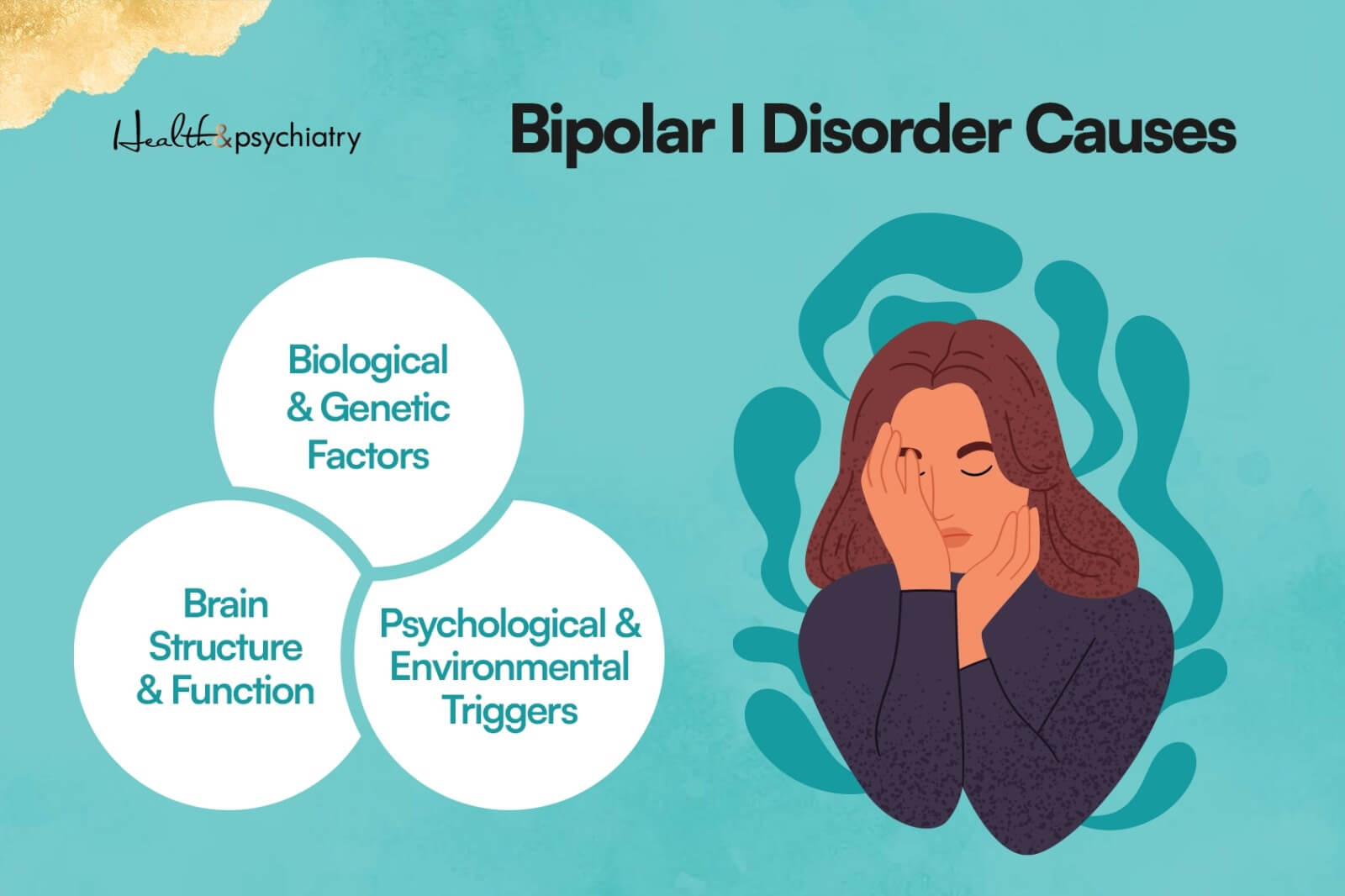
Like many other mental disorders, there is no one universal cause of bipolar disorder I.
→ Biological & Genetic Factors
Bipolar I Disorder is characterized by a high genetic factor. There is a high risk in people whose families have a history of bipolar disorder. Research indicates that the condition could be linked with a number of genes, as opposed to a single genetic factor.
→ Brain Structure and Function
Manic depressive bipolar disorder type I is also associated with differences in brain structure and neurotransmitter activity. The imbalance of chemicals like dopamine and serotonin may affect the mood.
Structural and functional differences in regions involved in emotional control and decision-making are demonstrated by neuroimaging.
→ Psychological & Environmental Triggers
Although biology is a significant cause, the environmental factors may trigger or aggravate bipolar I disorder symptoms. Episodes may be caused by stressful life events like trauma, loss, or significant life transitions. Other triggers include disruption of sleep and chronic stress.
The condition can best be explained as a combination of genetic susceptibility and environmental stressors.
Diagnosis of Bipolar Disorder Type I

The Bipolar I Disorder diagnosis is not done based on a single test, but a clinical assessment. There are mental health criteria that are based on diagnostic manuals like the DSM-5.
- A diagnosis involves the presence of at least one manic episode, which can comprise such signs of bipolar I disorder as mood elevation, sleep reduction, grandiosity, and danger of self-injury.
- Clinicians also determine the occurrence of episodes of depression, the length of symptoms of bipolar I disorder, and functional effects.
- Other factors involved in the diagnostic process are medical history, family history, and ruling out other conditions.
The diagnosis of bipolar disorder I should be done early and correctly because poor diagnosis will lead to the case not being treated as it should be.
Treatment Options for Bipolar 1 Disorder
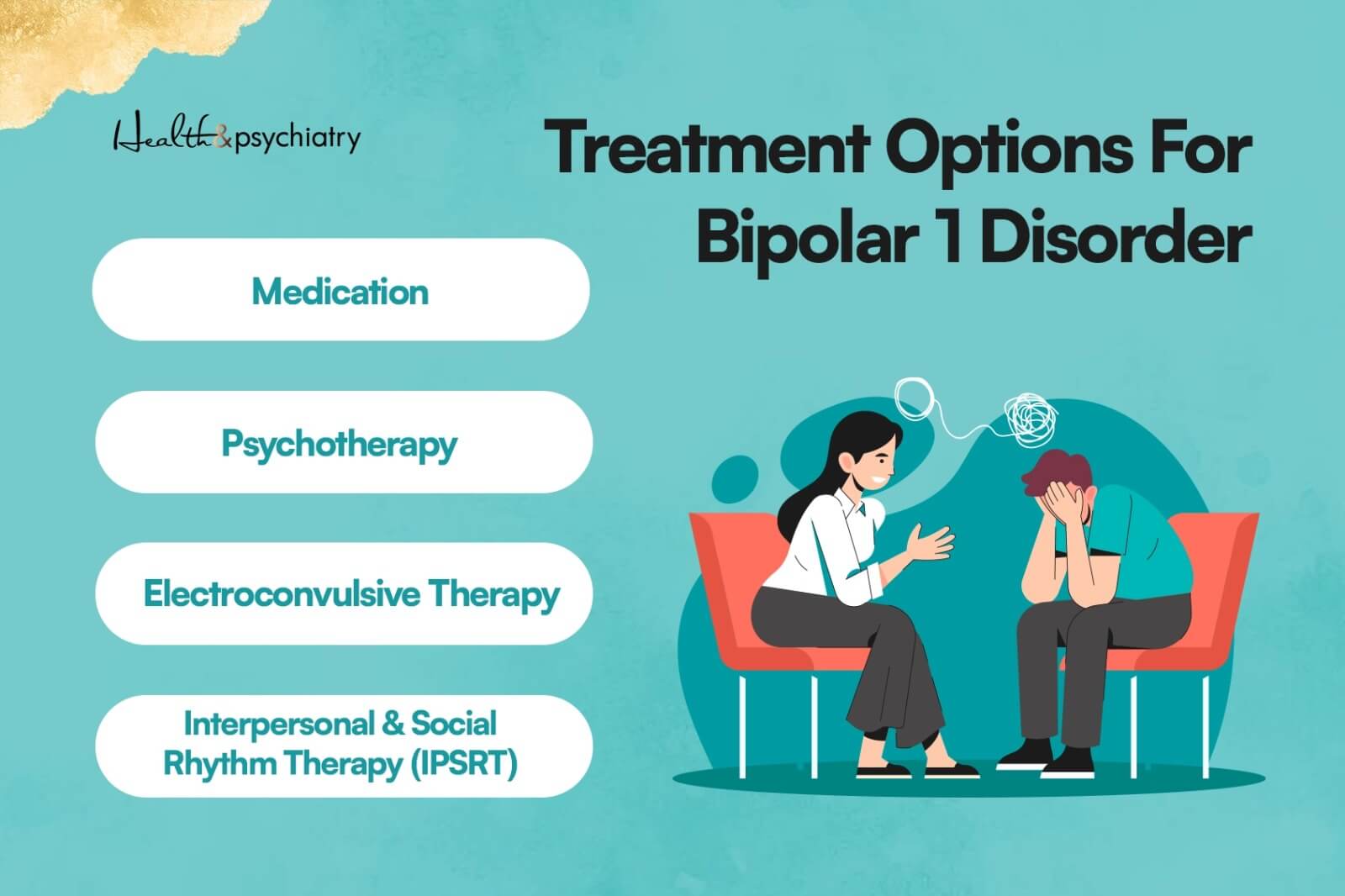
There is a combination of treatments that can work for Bipolar Type I.
→ Medication
Mood stabilizers are used to control mood swings, and anticonvulsants may be used to treat acute mania.
Antipsychotic drugs are used to treat acute mania as well. In other instances, antidepressants can be used cautiously with mood stabilizers.
→ Psychotherapy
Psychotherapy is critical in managing in the long term. CBT, psychoeducation and interpersonal therapy help individuals to recognize triggers, stress management, and coping skills.
Including a therapy focused on the family can also help.
→ Electroconvulsive Therapy
ECT is also a highly effective method of treatment, particularly in severe or treatment-resistant cases. It is a procedure of electrical stimulation of the brain that is carried out under anesthesia and is especially helpful in severe depression, psychosis, or suicidal potential.
→ Interpersonal and Social Rhythm Therapy (IPSRT)
IPSRT particularly aims at the interference of routine and interpersonal stress. It integrates aspects of interpersonal treatment with behavioral interventions to normalize circadian rhythms.
→ TMS Therapy for Bipolar Disorder
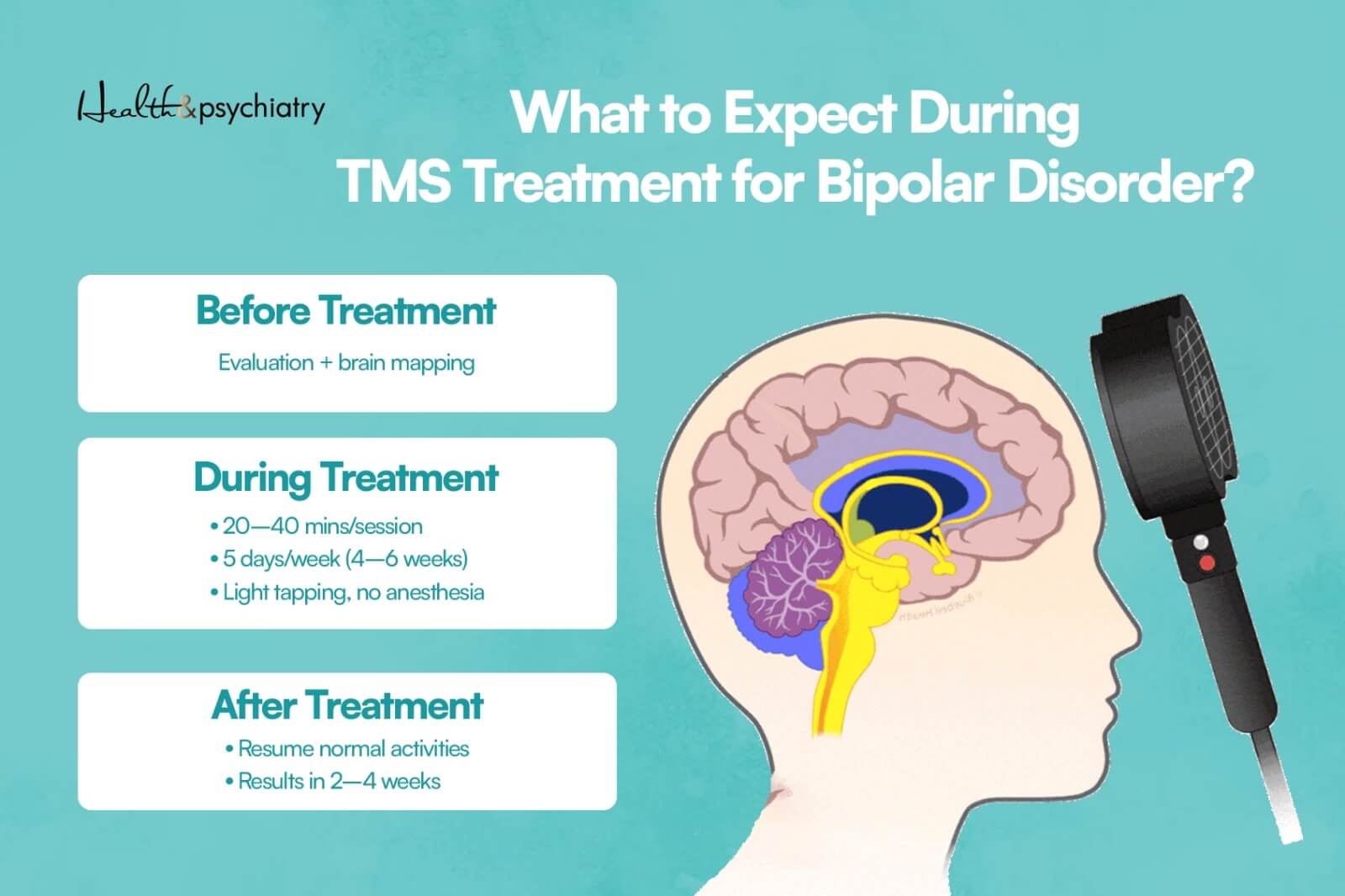
TMS is mainly off-label in bipolar disorder to treat depression, but not mania. Evidence indicates that it can potentially be used to stabilize mood by enhancing the activity in underactive brain areas, especially the dorsolateral prefrontal cortex (DLPFC), an area involved in emotional regulation.
Transcranial Magnetic Stimulation (TMS) is a non-invasive technique. Involves stimulation the brain, which uses a magnetic pulse in particular parts of the brain, which are involved in mood control. For depression and TMS therapy for bipolar disorder does not require anesthesia, unlike electroconvulsive therapy (ECT).
Risk Factors Before Seeking Bipolar I Disorder Treatment
There are a number of factors that predispose the development of Bipolar I Disorder. A family history of mood disorders is one of the best predictors. Early life trauma, and long-term stress also increase the risk.
Life with Bipolar I Disorder!

Bipolar I Disorder can be a hard disorder to live with, yet it is controllable. Most individuals lead normal and healthy lives through proper prescription of drugs, therapy and lifestyle changes.
Stability is valued and involves routines of sleep, reducing stress, alcohol and drug consumption, and taking treatment options for bipolar I disorder. Family, friends, or support groups are other social supports that are critical in the recovery process.
Work and organized everyday activities have the capacity to boost self-worth and overall functionality to ensure that people gain a normal life back.
When Professional Help is Needed?

If you’re feeling that the symptoms are getting out of hand and are now affecting your normal routine, it is a sign.
At work, you’re not able to focus. In school, you’re not studying as you should. All these are pointing to the need for professional help.
Experts can help you identify and manage the signs and symptoms. They can also provide you with long-term care.
FAQs
Can I cure Bipolar type I disorder?
No, there is no cure as of yet. But it is controllable with the help of medication and professionals.
Is Bipolar I different from Bipolar 2?
Type I is the most severe with manic episodes. On the other hand, type 2 has less intense mania, like hypomania. In type I, patients are usually admitted to the hospital.
Is bipolar I disorder related to genes?
Yes, genes are a factor in getting the disorder. But genetics alone are not to blame. Other factors like brain structure and environment also matter.
Can I live healthily with Bipolar I?
Yes, the condition is manageable with care and medication. But you need to make sure that you’re consistent with the treatment.