
Quick Answer
The early signs of depression may include persistent sadness, loss of interest, low energy, sleep changes, irritability, difficulty concentrating, appetite changes, social withdrawal, unexplained physical discomfort, and feelings of hopelessness or worthlessness. One symptom alone does not confirm depression. However, symptoms that persist, intensify, or interfere with daily life deserve professional evaluation.
Need clarity about symptoms affecting your daily life?
Explore compassionate psychiatric care in Tampa Bay and discuss your concerns with a qualified provider.
Key Takeaways
✅ Depression can appear as irritability, exhaustion, numbness, or physical discomfort—not only sadness.
✅ Persistent loss of interest is one of the most important warning signs.
✅ Changes in sleep, appetite, concentration, and social behavior should not be dismissed.
✅ Symptoms become more concerning when they disrupt work, relationships, school, or self-care.
✅ A psychiatric evaluation can identify depression and rule out other possible causes.
✅ Depression is treatable, and seeking support early can help you regain stability.
Recognizing the Early Signs of Depression
Everyone experiences difficult days, emotional stress, and periods of sadness. However, depression usually involves a broader pattern that persists and begins to affect how you think, feel, behave, sleep, work, or connect with others.
For residents of Tampa Bay, a busy schedule can make these changes easy to explain away. You may blame exhaustion on work, reduced interest on stress, or irritability on poor sleep. Yet when several changes appear together or do not improve, they may be warning signs of depression.
The National Institute of Mental Health explains that depression can involve emotional, behavioral, cognitive, and physical symptoms. Not everyone experiences every symptom, and the intensity can vary significantly from person to person.
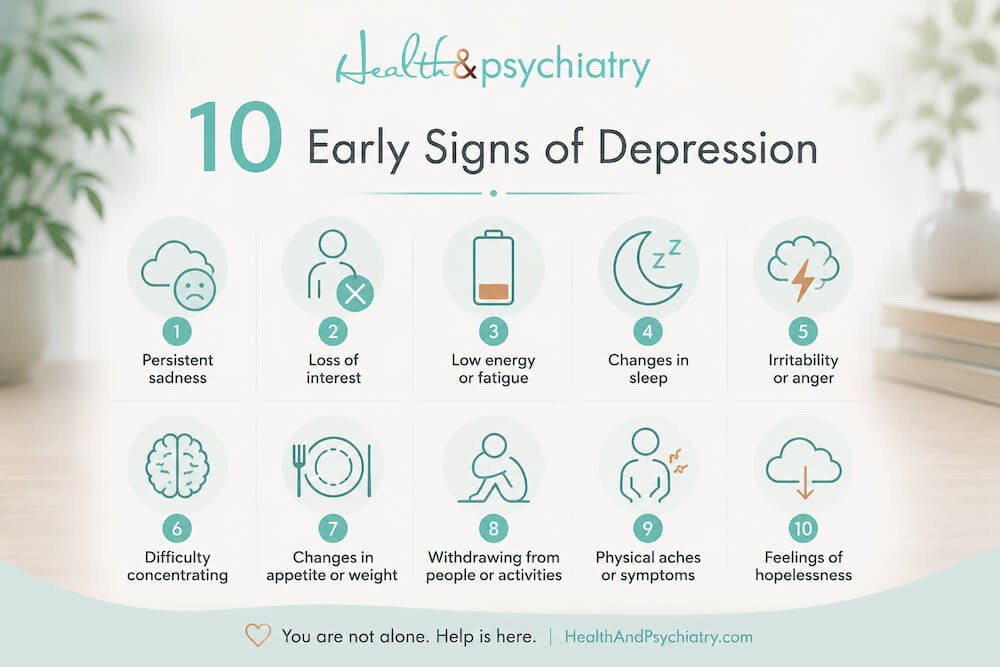
The following signs do not automatically mean you have depression. They do indicate that it may be time to pause, monitor what is happening, and consider speaking with a healthcare professional.
1. Persistent Sadness, Emptiness, or Emotional Numbness
A low mood that continues day after day is one of the most recognized early signs of depression. However, depression does not always feel like intense sadness.
You may instead feel:
- Emotionally empty
- Detached from your surroundings
- Unable to cry despite feeling distressed
- Disconnected from positive experiences
- As though you are simply going through the motions
Temporary sadness usually relates to a specific situation and gradually becomes more manageable. Depression may feel more constant, difficult to explain, or resistant to positive changes.
NIMH identifies a persistent sad, anxious, or empty mood as a common depression symptom.
2. Losing Interest in Activities You Once Enjoyed
A loss of interest or pleasure is sometimes called anhedonia. It may appear before you recognize that your mood has changed.
You might stop enjoying:
- Hobbies
- Exercise
- Social gatherings
- Intimacy
- Music or entertainment
- Time with friends or family
- Activities you previously anticipated
You may still participate but feel emotionally absent. Alternatively, you may avoid the activity because it seems exhausting or pointless.
Loss of interest is a central depression symptom and may affect most or all normal activities.
3. Unusual Fatigue or a Noticeable Drop in Energy
Depression-related fatigue can feel different from ordinary tiredness. Rest may not fully restore your energy, and simple tasks may begin to require unusual effort.
Possible examples include:
- Struggling to get out of bed
- Postponing basic household tasks
- Feeling mentally and physically slowed down
- Needing more breaks at work
- Losing motivation to cook, exercise, or shower
- Feeling exhausted despite adequate sleep
Fatigue can have many causes, including sleep problems, stress, medication effects, anemia, thyroid conditions, or other medical concerns. Therefore, a provider may evaluate both mental and physical explanations rather than assuming depression is the only cause.
4. Significant Changes in Sleep
Depression can affect sleep in opposite ways. Some people struggle to fall asleep or wake repeatedly. Others sleep much longer than usual but still feel tired.
Watch for patterns such as:
- Insomnia
- Waking much earlier than intended
- Sleeping late whenever possible
- Frequent nighttime waking
- Staying in bed to avoid the day
- Feeling unrefreshed after sleep
Sleep changes become more concerning when they continue for several days or weeks and occur alongside mood, energy, or concentration problems. NIMH and Mayo Clinic both identify insomnia, early waking, and oversleeping as common depression symptoms.
5. Increased Irritability, Anger, or Frustration
Depression does not always look quiet or withdrawn. It can appear as irritability, impatience, anger, or a lower tolerance for everyday problems.
You may notice that you:
- React strongly to minor inconveniences
- Feel constantly on edge
- Snap at family members or coworkers
- Become frustrated more quickly
- Feel guilty after emotional outbursts
- Interpret neutral comments negatively
Irritability can be especially easy to miss because it may look like stress, personality conflict, or burnout. However, both NIMH and Mayo Clinic include irritability and angry outbursts among possible signs of depression.
6. Trouble Concentrating or Making Decisions
Depression can affect attention, memory, mental speed, and decision-making. This may cause problems at work, school, or home before you recognize an emotional change.
Examples include:
- Rereading the same paragraph
- Forgetting appointments
- Losing track of conversations
- Taking longer to complete routine tasks
- Feeling overwhelmed by simple decisions
- Making more mistakes than usual
- Struggling to organize your thoughts
These cognitive changes are not laziness or a lack of intelligence. They may reflect how mood symptoms affect mental functioning.
7. Changes in Appetite or Weight
Some people lose interest in food during depression. Others experience stronger cravings, emotional eating, or frequent snacking.
Possible warning signs include:
- Skipping meals without noticing
- Eating much less than usual
- Relying heavily on comfort foods
- Eating to numb difficult emotions
- Unplanned weight loss
- Unplanned weight gain
Appetite changes can also result from medications, medical conditions, hormonal changes, stress, and other factors. A healthcare provider can assess the full pattern rather than judging one symptom in isolation.
8. Pulling Away From Friends, Family, or Responsibilities
Social withdrawal may begin gradually. You may cancel plans because you feel tired, stop replying to messages, or avoid people because conversation feels difficult.
Other examples include:
- Spending increasing amounts of time alone
- Ignoring calls and texts
- Missing work or school
- Avoiding family activities
- Neglecting bills, chores, or personal care
- Feeling like a burden to others
NIMH notes that depression may involve isolation, detachment, and difficulty meeting responsibilities.
Withdrawal can create a difficult cycle. The less connected you feel, the harder it may become to reach out. A trusted person or mental health professional can help interrupt that pattern.
You do not have to determine the cause alone.
9. Unexplained Aches, Headaches, or Digestive Problems
Depression can have physical effects. Some people first seek care for headaches, stomach discomfort, muscle pain, back pain, or other symptoms without realizing that mood may also be involved.
Physical symptoms that deserve attention include:
- Persistent headaches
- Digestive discomfort
- General body aches
- Back or muscle pain
- A heavy or slowed feeling
- Physical complaints that do not improve as expected
These symptoms should never be automatically attributed to depression. A medical evaluation may be needed to investigate physical causes. However, NIMH and Mayo Clinic recognize persistent aches, headaches, cramps, digestive problems, and other unexplained pain as possible depression symptoms.
10. Hopelessness, Worthlessness, or Excessive Guilt
Negative thoughts can gradually become more rigid during depression. You may judge yourself harshly, focus on past mistakes, or believe that circumstances will never improve.
Watch for thoughts such as:
- Nothing will get better.
- I disappoint everyone.
- I cannot do anything right.
- Everyone would be better without me.
- There is no point in trying.
Feelings of hopelessness, guilt, helplessness, or worthlessness are recognized depression symptoms.
Thoughts about death, suicide, or self-harm require immediate attention. In the United States, call or text 988 for the Suicide & Crisis Lifeline. Call 911 or go to the nearest emergency room when there is immediate danger.
Early Signs of Depression vs. Temporary Stress
| Experience | May Reflect Temporary Stress | May Need Professional Evaluation |
|---|---|---|
| Low mood | Improves after rest, support, or resolution of a problem | Persists or returns most days |
| Low energy | Follows a demanding period and improves with recovery | Continues despite rest and disrupts basic tasks |
| Reduced interest | Limited to one activity | Affects many previously enjoyable activities |
| Sleep changes | Occasional or short-lived | Ongoing insomnia, early waking, or oversleeping |
| Concentration problems | Occur during a brief stressful event | Continue and impair work, school, or daily decisions |
| Social withdrawal | Temporary need for personal space | Repeated avoidance and growing isolation |
| Negative thinking | Flexible and situation-specific | Persistent hopelessness, worthlessness, or self-blame |
This table cannot diagnose depression. Duration, severity, frequency, medical history, and impact on functioning all matter.
When Should You Seek Help for Early Signs of Depression?
Consider talking with a healthcare professional when symptoms:
- Continue for roughly two weeks or longer
- Occur most days
- Become increasingly intense
- Affect work, school, relationships, or self-care
- Make it difficult to perform routine responsibilities
- Include thoughts of death, self-harm, or suicide
For a major depression diagnosis, symptoms generally occur most of the day, nearly every day, for at least two weeks, and include either depressed mood or loss of interest. However, NIMH emphasizes that people with fewer symptoms may still benefit from treatment.
You do not need to wait until your life feels unmanageable. Early evaluation can provide clarity and identify whether your symptoms relate to depression, another mental health condition, a medical issue, medication effects, or several contributing factors.
What Happens During a Depression Evaluation?
A psychiatric evaluation is a structured conversation, not a test you can pass or fail.
Your provider may ask about:
- When your symptoms started
- How often they occur
- Sleep and appetite patterns
- Energy and motivation
- Work or school performance
- Medical conditions and medications
- Alcohol or other lifestyle habits
- Previous mental health symptoms
- Family psychiatric history
- Current safety concerns
A provider may also use a validated screening questionnaire. Depending on your symptoms, they may recommend medical testing or coordination with a primary care clinician because thyroid problems, certain medications, and other medical conditions can resemble depression.
How Depression May Be Treated
Treatment depends on your symptoms, preferences, medical history, diagnosis, and level of impairment.
A personalized plan may include:
- Psychotherapy
- Medication management
- A combination of therapy and medication
- Sleep and routine support
- Stress-management strategies
- Treatment for related anxiety or other conditions
- Closer monitoring when symptoms are severe
Depression is not a personal failure. It is a recognized health condition, and many people improve with appropriate care. Mayo Clinic notes that treatment may involve psychotherapy, medication, or both.
Finding Depression Support in Tampa Bay, FL
People throughout Tampa, Oldsmar, Clearwater, Palm Harbor, Safety Harbor, St. Petersburg, and nearby communities may delay care because they are unsure whether their symptoms are “serious enough.”
You do not need absolute certainty before requesting an evaluation. The purpose of an appointment is to understand what you are experiencing and discuss appropriate next steps.
Health & Psychiatry provides a pathway for Tampa Bay residents who want professional guidance regarding persistent sadness, low motivation, sleep disruption, anxiety, concentration problems, or other possible depression symptoms.
Medical disclaimer: This article provides general educational information and does not diagnose depression or replace advice from a qualified healthcare professional.
Frequently Asked Questions
1. What is usually the first noticeable sign of depression?
The first noticeable sign varies. Some people recognize sadness, while others first notice fatigue, irritability, poor sleep, reduced motivation, or a loss of interest in activities.
2. Can you have depression without feeling sad?
Yes. Depression may feel like numbness, emptiness, irritability, detachment, exhaustion, or inability to enjoy life. A qualified provider must evaluate the full pattern.
3. How long should depression symptoms last before I seek help?
You can seek help whenever symptoms concern you. Symptoms lasting around two weeks, worsening, or impairing daily functioning particularly deserve evaluation.
4. Can depression cause physical pain?
Depression may occur with headaches, digestive problems, body aches, or other physical discomfort. However, physical symptoms also require appropriate medical assessment to rule out other causes.
5. Is irritability an early sign of depression?
It can be. Irritability, frustration, anger, and restlessness may accompany depression, especially when they occur with sleep, energy, interest, or concentration changes.
6. How do psychiatrists diagnose depression?
Psychiatrists review symptoms, duration, severity, daily functioning, medical history, medications, and safety. They may use a screening tool and consider medical conditions that can produce similar symptoms.
7. Can early depression improve without medication?
Some people may improve with psychotherapy, behavioral changes, social support, or treatment of contributing problems. Others benefit from medication or combined care. Treatment should be individualized.
8. When is depression an emergency?
Seek immediate help when someone has thoughts of suicide or self-harm, has a plan or access to lethal means, cannot remain safe, or shows severe behavioral changes. In the United States, call or text 988. Call 911 for immediate danger.
Get Clarity About Depression Symptoms in Tampa Bay
The early signs of depression are not always obvious. They may appear as exhaustion, irritability, withdrawal, disrupted sleep, physical discomfort, or a gradual loss of interest in everyday life.
What matters is the overall pattern: how long the symptoms last, how often they occur, and how strongly they affect your ability to function.
You do not have to wait for symptoms to become severe or figure everything out by yourself. Health & Psychiatry can help you better understand what you are experiencing and discuss appropriate care options.