Seasonal Affective Disorder, aka SAD, is commonly known as seasonal depression. It is clinically recognized. A subtype of major depressive disorder with a seasonal pattern, as categorized in the Diagnostic and Statistical Manual of Mental Disorders (DSM-5-TR).
It is not your simple mood fluctuation or ‘winter blues’ that you may feel during seasonal changes in colder months. It is a recurrent depressive condition. Driven by biological and environmental changes. Up to 5% of adults in the United States experience SAD each year.
What Is Seasonal Affective Disorder (SAD)?
Seasonal Affective Disorder is a recurrent depressive episode tied to seasonal changes. It is a subtype of depression (MDD). It is formally classified under major depressive disorder with seasonal pattern.
Most cases are winter-pattern SAD. But a less common summer-pattern SAD also exists.
Recent clinical insights and psychiatric data show the seasonal affective disorder statistics. That is:
- Up to 5% of American adults go through seasonal affective disorder symptoms each year.
- Symptoms may persist for up to 40% of the year. Particularly during fall and winter.
- Younger adults (18–30 years) suffer the most. Significantly more prevalent in women.
- SAD risk increases in people living at a distance from the equator. It is due to reduced daylight hours.
- The most severe symptoms often occur in mid-winter months. When sunlight exposure is at its lowest.
Key Symptoms of Depression Seasonal Affective Disorder
A person putting up with seasonal change-related depressive episodes endures the following emotional, psychological, and physical symptoms:
→ Emotional and Psychological Symptoms 
- Continued low mood or feeling of sadness.
- Experiencing unexplained hopelessness or worthlessness.
- Daily activities become less attractive.
- Concentrating on daily chores becomes difficult.
- Irritability.
→ Physical Symptoms
- Feeling tiredness, fatigue, and lack of energy.
- Changes in sleep (especially oversleeping in winter SAD).
- Appetite changes (often craving carbohydrates).
- Weight gain or loss.
→ Behavioral Changes
- Social withdrawal.
- Reduced productivity.
- Decreased motivation.
- Avoidance of responsibilities
How Do Symptoms Differ in Winter vs Summer SAD?
Like other mental issues, your seasonal affective disorder symptoms will not present the same way. They are different in different individuals.
When comparing winter SAD vs summer SAD, they are almost opposites. They differ in how they affect someone’s mood, energy, sleep, and behavior.
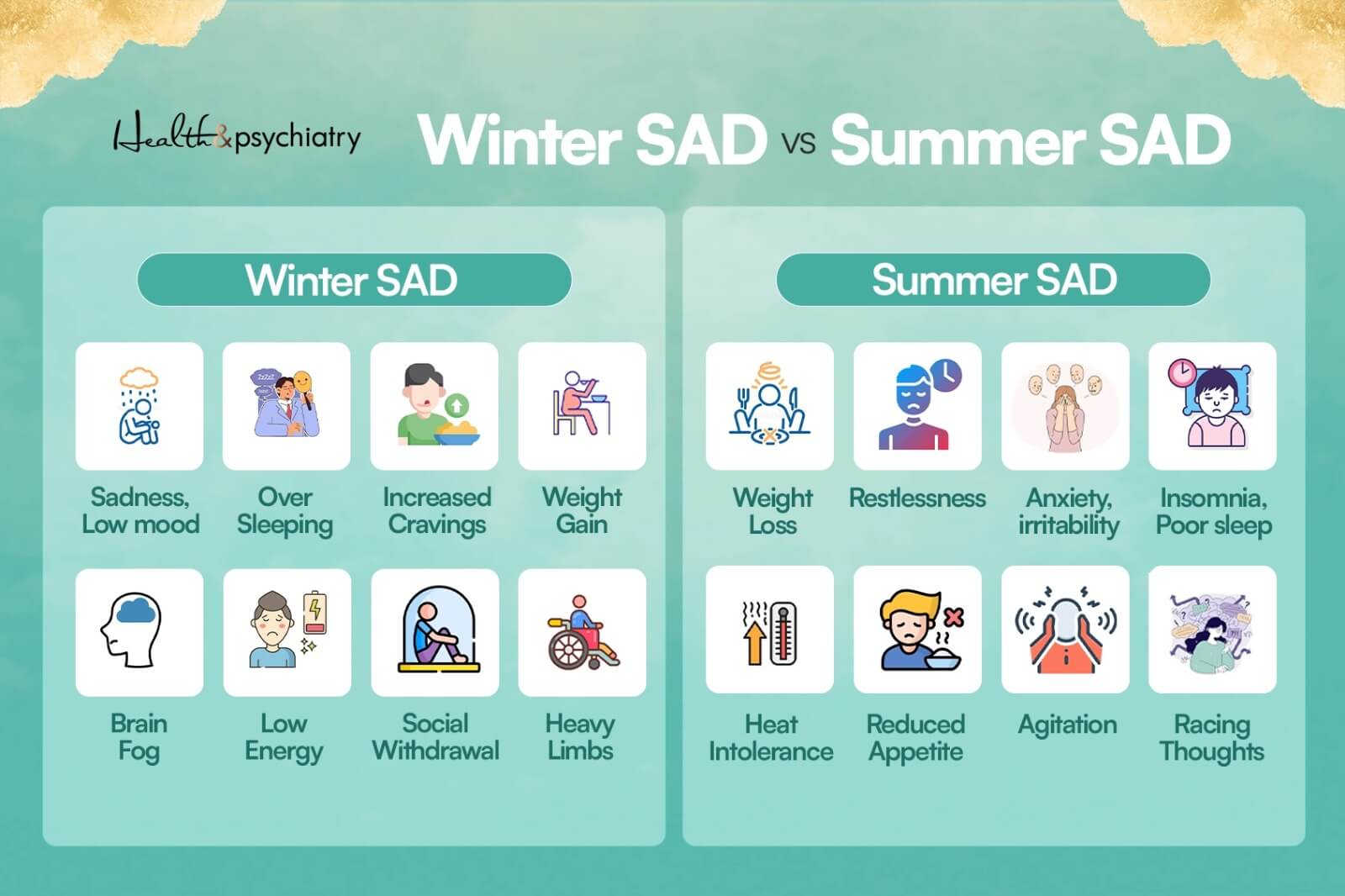
Your winter SAD is strongly linked to reduced sunlight exposure. As it disrupts circadian rhythms. Thus lowering serotonin levels. Leading to symptoms like fatigue, oversleeping, and increased appetite. Essentially, a depressive slowdown of both body and mind.
On the other hand, summer SAD is less understood. It is thought to be associated with excess heat, longer daylight hours, and circadian misalignment.
These factors may overstimulate the nervous system, leading to anxiety, irritability, and sleep disturbances rather than fatigue.
Detailed Symptom Comparison
|
Feature |
Winter SAD |
Summer SAD |
|
Mood |
Sadness. Emotional heaviness. |
Anxiety, irritability, mood swings. |
|
Sleep Patterns |
Hypersomnia. Sleeping longer than usual. Difficulty waking up. |
Difficulty falling or staying asleep. Poor sleep quality. |
|
Appetite Changes |
Increased appetite. Carbs cravings. |
Decreased appetite. |
|
Energy Levels |
Low energy. Reduced physical activeness. |
Restlessness. Inability to relax. |
|
Weight Changes |
Weight gain due to overeating. |
Weight loss due to decreased appetite. |
|
Behavioral Patterns |
Social withdrawal. Reduced motivation. |
Agitation. Increased irritability. |
|
Cognitive Effects |
Brain fog. Slow thinking. |
Racing thoughts, distractibility. |
|
Physical Sensations |
Heavy limbs (“leaden paralysis”), low stamina. |
Heat intolerance. Discomfort in warm environments. |
What Causes Seasonal Affective Disorder?
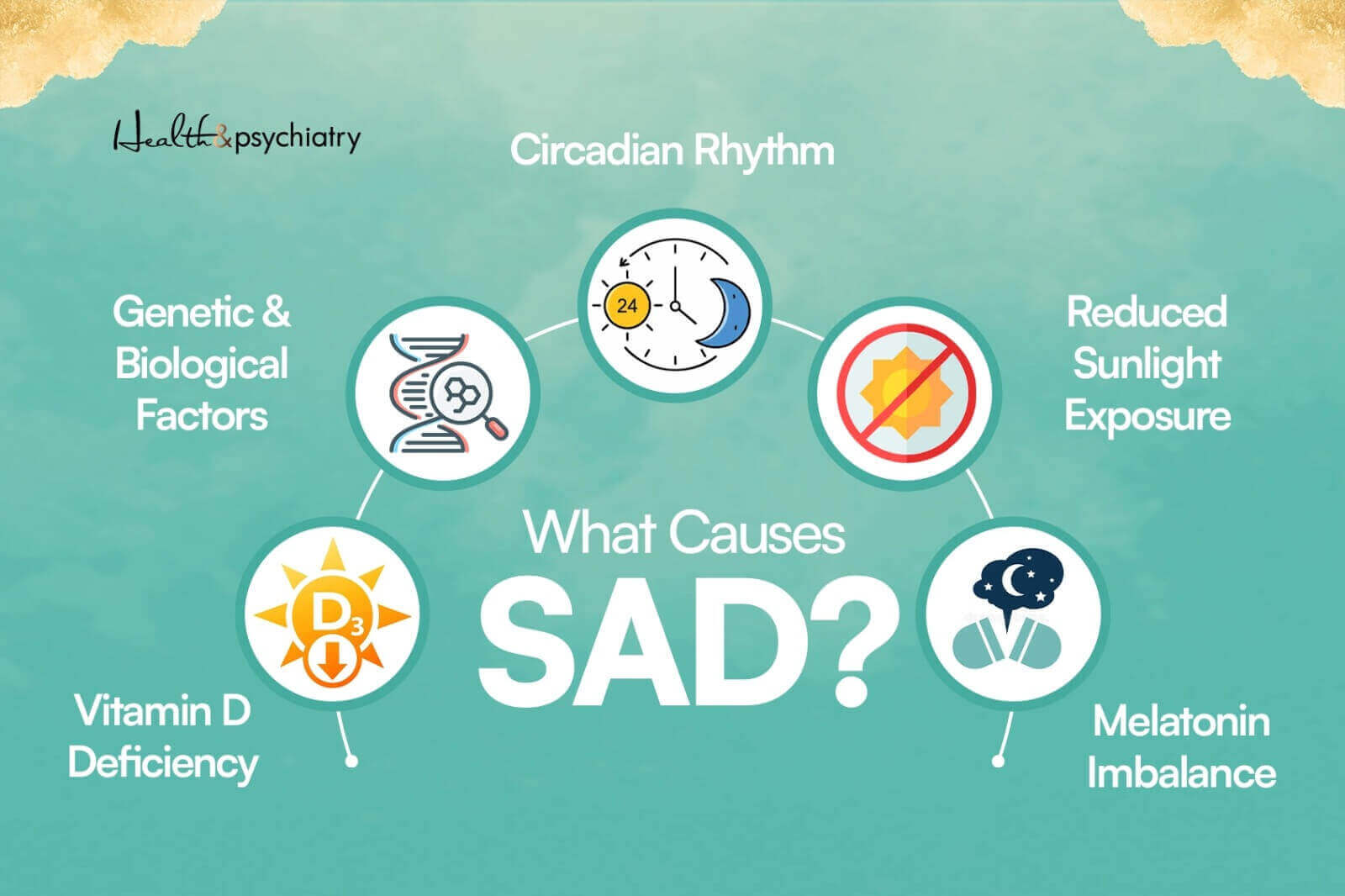
Seasonal Affective Disorder (SAD) is multifactorial. Meaning? It develops due to a combination of biological, environmental, and genetic influences. Rather than a single cause.
1. Reduced Sunlight Exposure
→ Shorter daylight hours in fall and winter reduce your natural light exposure. This affects the brain’s production of serotonin (your key mood-regulating neurotransmitter)!
→ Lower serotonin levels = depression, fatigue, and low motivation.
2. Disruption of the Body’s Internal Clock (Circadian Rhythm)
The body relies on light to regulate its sleep–wake cycle. But seasonal changes can cause a “phase delay”... making it harder to wake up in the morning.
→ This misalignment leads to:
- Daytime fatigue.
- Poor concentration.
- Mood instability.
Essentially, the body becomes out of sync with the external environment.
3. Melatonin Imbalance
→ Melatonin is the hormone that controls the sleep and darkness response.
→ Longer nights increase melatonin production for extended periods.
This results in:
- Excessive sleepiness (hypersomnia).
- Low energy levels.
- “Heavy” or sluggish feeling throughout the day.
4. Vitamin D Deficiency
Sunlight is required for the skin to produce vitamin D. But during winter, levels often drop significantly.
Vitamin D plays a role in Serotonin synthesis, affecting brain function and mood regulation.
→ Low levels are associated with increased depressive symptoms.
5. Genetic and Biological Factors
Individuals with a family history of depression or major depressive disorder with a seasonal pattern have a higher risk. According to research, certain genes may increase vulnerability. especially those regulating circadian rhythms and neurotransmitters)...
→ People with existing mental health conditions (e.g., depression or bipolar disorder) are at greater risk of seasonal depression.
How Is Seasonal Affective Disorder Diagnosed?

Diagnosis of seasonal depression is based on clinical criteria, including:
- Depressive episodes occurring in specific seasons for at least two consecutive years.
- Symptoms resolve in the off-season (lasts for 4-5 months).
- If someone is already dealing with depression, their seasonal affective disorder episodes are more severe.
- Depressive symptoms are significant impact on daily functioning.
Mental health professionals may use structured interviews and standardized tools like the Patient Health Questionnaire PHQ-9.
What Is the Difference Between SAD and Regular Depression?
Predictability and cause are the main differences between SAD and your normal depression. SAD is strongly influenced by environmental light changes. Making its onset and recovery relatively consistent each year.
On the other hand, major depression is more complex. Can be triggered by a wide range of factors. Making it less predictable. As it is more variable in presentation and duration.
Difference Between SAD and Major Depression
|
Feature |
SAD (Seasonal Affective Disorder) |
Major Depression |
|
Timing |
Occurs during specific seasons. (Summer SAD, or Winter-pattern SAD) |
Presents any time of the year. Without a seasonal pattern. |
|
Trigger |
Linked to reduced sunlight. Circadian rhythm disruption. Mainly seasonal changes. |
A combination of biological, psychological, and environmental factors (stress, trauma, genetics, etc.) is involved. |
|
Pattern |
Predictable and recurring. episodes observed at the same time each year. (for at least 2 consecutive years) |
Less predictable. Episodes may occur randomly or be triggered by life events. |
|
Symptoms Profile |
Oversleeping. Appetite changes. Carbohydrate cravings. weight gain (especially in winter SAD). |
Symptoms vary. Sleep and appetite may increase or decrease. No consistent pattern. |
|
Treatment Approach |
Responds well to light therapy. Along with psychotherapy and sometimes medication. |
Primarily treated with psychotherapy. Antidepressant medication by a depression treatment clinic. |
|
Course of Illness |
Symptoms tend to resolve when the season changes. Though they often return annually… |
May be episodic or chronic depression. With symptoms lasting weeks to months or longer. |
Treatment Options for Seasonal Affective Disorder
The following are Seasonal Affective Disorder treatment options. Your psychiatrist suggests what is best for you after a mental health evaluation.
 1. Light Therapy (Phototherapy)
A primary treatment for SAD is Bright light therapy. Involving exposure to a 10,000-lux light box for 20 to 30 minutes daily.
It will:
- Mimics natural sunlight.
- Regulates circadian rhythm.
- Improves serotonin levels.
2. Psychotherapy (Talk Therapy)
CBT is one of the most effective seasonal affective depression therapies.
Goal-focused Cognitive Behavioural Therapy:
- Helps change negative thought patterns.
- Builds coping strategies.
3. Medication Options
Doctors may prescribe seasonal affective disorder medications, such as SSRIs, along with therapy if other primary options are not enough for an individual.

4. Seasonal Depression Lamp
A seasonal depression lamp or SAD Lamp (light therapy box) is specifically designed with UV-free lights. It lowers seasonal blues and helps with other SAD treatment options.
Key features include:
- High-intensity light (10,000 lux).
- UV-filtered for safety.
- Used in the morning for best results.
Studies show up to 60–70% improvement rates in patients using light therapy.
5. Lifestyle and Self-Care Strategies
Lifestyle changes are efficient to get rid of SAD symptoms. Deal with your seasonal blues with regular physical activity.
Stay active. Get a balanced diet. As your consistent sleep schedule and increased exposure to natural daylight can help to avoid seasonal depression!
6. Vitamin D Supplementation
Supplementation may help individuals with a deficiency. Though it works best alongside other treatments.
Ways to Manage Seasonal Affective Disorder Naturally!
- Spend time outdoors during daylight. It will increase your natural light exposure. Thus improve your mood.
- Exercise regularly. Especially in the morning. It will then increase energy and regulate sleep cycles.
- Practice mindfulness. Meditation or relaxation techniques let you cope with and reduce stress and emotional overwhelm.
- Maintain social connections. Never isolate. Staying in touch with friends, family, or support groups will help!
- Optimize indoor lighting. Use light lamps or other ways to keep your space bright during the day.
- Use warm & well-lit environments. It then create a more uplifting and comfortable atmosphere for you, decreasing seasonal depression.
Risk Factors of Seasonal Affective Disorder (SAD)
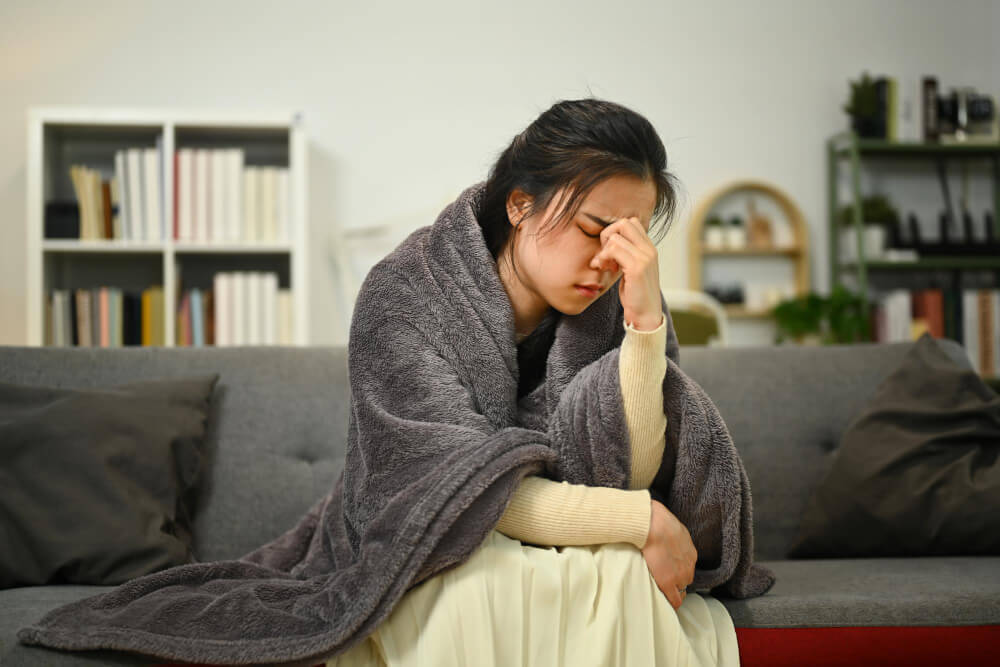
Several factors can make you prone to developing Seasonal Affective Disorder.
If you are living farther from the equator. You are at higher risk! It is due to reduced sunlight during the winter months.
Women are diagnosed with seasonal depression more frequently than men. Suggesting a possible hormonal or biological influence.
A family history of depression or SAD also raises susceptibility. This indicating a genetic component.
In addition to it, seasonal affective disorder is more commonly seen in younger adults, particularly those between 18 and 30 years old.
Major depression or bipolar disorder patients are also more vulnerable to SAD. As seasonal changes can intensify underlying symptoms.
Get Seasonal Affective Disorder Treatment in Florida!

Are you or a loved one having the above-mentioned symptoms of Seasonal Affective Disorder? Professional help can make a real difference!
At Health & Psychiatry, we provide comprehensive mental health treatment. It is tailored to your needs… from accurate diagnosis to personalized therapy and medication management.
We understand how seasonal depression can affect your daily life, energy, and emotional well-being.
Offering evidence-based treatments, including online therapy (telepsychiatry), medication support, and lifestyle guidance to help you regain balance and feel like yourself again.
You don’t have to wait for the seasons to change to feel better. Get the support you need… when you need it.
FAQs
What is the difference between seasonal depression and general depression?
Seasonal depression occurs at specific times of the year. Usually winter. Sometimes summer SAD also happens! Your general depression can occur at any time without a seasonal pattern.
Is Seasonal Affective Disorder serious?
Yes. It is. SAD can significantly impact your daily functioning. Challenging your relationships and quality of life. In severe cases, it may lead to suicidal thoughts if untreated.
Can Seasonal Affective Disorder go away on its own?
Symptoms may improve as seasons change. But recurrence is common. Seasonal affective disorder treatment is recommended to manage symptoms effectively.