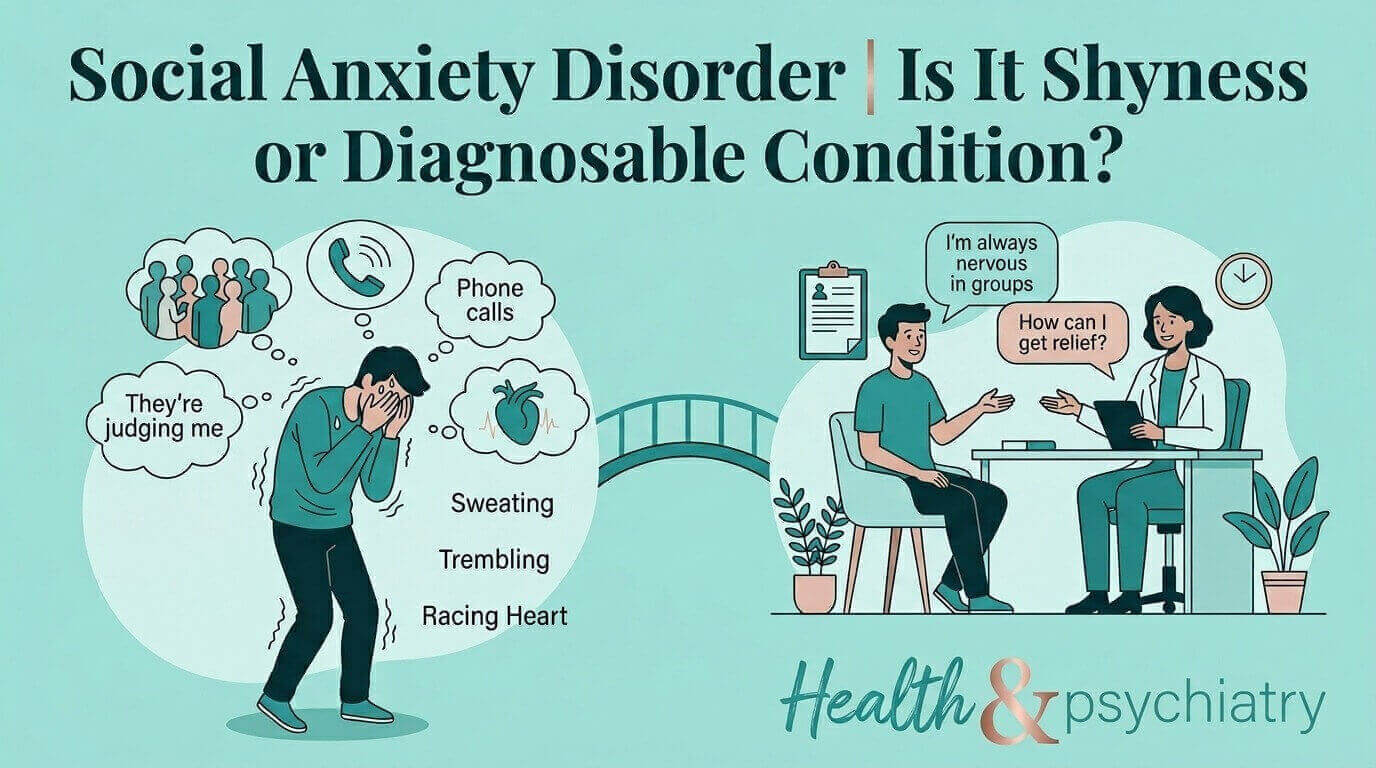
Most people feel nervous in certain social situations. You may rehearse what to say before a meeting, feel awkward walking into a crowded room, or worry about making a good impression. These moments are common and usually pass quickly. But for some people, fear goes far beyond occasional nervousness.
Everyday interactions like speaking in class, answering a phone call, attending social gatherings, or even ordering food can feel overwhelming and emotionally exhausting. The fear of being judged, embarrassed, or criticized becomes so intense that it starts affecting relationships, work, education, and overall quality of life. This is where social anxiety disorder becomes different from simple shyness.
SAD is a real and treatable mental health condition that affects millions of adults in the United States. According to the National Institute of Mental Health (NIMH), social anxiety impacts both emotional well-being and daily functioning, often causing people to avoid situations they once enjoyed.
Growing awareness around anxiety disorders is helping more people recognize that persistent social fear is not a personality flaw or weakness. Understanding the difference between shyness and a diagnosable condition is often the first step toward recovery, confidence, and emotional wellness through professional social anxiety disorder treatment.
Social Anxiety Disorder: What is it?
SAD, formerly called social phobia, is a chronic mental disorder that involves an overwhelming fear of being judged, embarrassed, or negatively evaluated in social situations. The National Institute of Mental Health (NIMH) reports that social anxiety is estimated to affect 12.1% of people at some time in their lives.
It is not shyness or occasional nervousness. While temporary nervousness does not significantly affect work, school, and relationships, social phobia can cause serious changes in these areas as well as ordinary interactions.
People can be too frightened and conscious of themselves to speak up in meetings, go to social events, go out to eat, or even place a phone call. As described by Mayo Clinic, SAD can start in adolescence and may get worse if left untreated.
Shyness vs. Social Anxiety Disorder
Remember! Shyness is a personality characteristic…. Social phobia is a psychiatric illness.
A shy person might feel uncomfortable at first, but will eventually "warm up" to a crowd.
Someone with SAD experiences severe, long-lasting distress that often triggers a survival "freeze" response.
|
Feature |
Everyday Shyness |
SAD |
|
Daily Impact |
Don't stop you from achieving goals or working. |
Frequently interferes with work, school, and relationships. |
|
Duration |
Fades as you get more comfortable with a group. |
Lasts for 6 months or more, even with familiar people. |
|
Physical Toll |
Mild butterflies or quietness. |
Sweating, shaking, rapid heart rate, or panic symptoms. |
|
Behavior |
Reluctant to participate at first. |
Active, intense avoidance of social situations. |
Whart are Social Anxiety Disorder Symptoms?
Get a clear picture, you may have a social phobia if you feel the following SAD symptoms:
- Intense fear of social situations.
- Embarrassment and humiliation.
- Avoiding eye contact.
- Too much anxiety prior to social occasions.
- Shivering, sweating, and/or a fast pulse (heartbeat).
- Difficulty speaking in groups.
- Avoiding going out or being around others.
- Overanalyzing conversations afterward.
These symptoms may get so bad for some that they hinder their advancement in their careers, further education, relationships, and quality of life.
You do not have to keep struggling silently with fear, overthinking, or avoiding everyday situations.
Looking for social anxiety disorder treatment in Florida? Our Professional support can help you feel more confident, connected, and emotionally at ease…
Book a Consultation | Same Week Appointments Available | No Referral Needed
Why is SAD often Underdiagnosed?
Part of the reason for social phobia being underdiagnosed is that individuals may think it is their personality being affected, or they think they should just “get over it.” A large number of people experience their symptoms for years without knowing it before seeking social anxiety disorder treatment.
According to research published by NIMH, individuals with social anxiety might not get treatment since this disorder itself makes it hard for them to communicate or open up.
When to Seek Professional Help for SAD?
It is important to recognize when you need help for your social phobia and related anxiety.
You should search for a social anxiety therapist near you when:
- Social fears get in the way of work or relationships.
- You start regularly avoiding social situations.
- Anxiety is too dominating or too hard to manage.
- You have had anxiety symptoms for 6 months or more.
- Your anxiety symptoms started creating sleep problems.
- You fear that you may get panic attack symptoms in public or in social situations.
Mental health problems are treatable, and seeking help is not a sign of failure but of strength.
Don't let anxiety run your life | Book an online consultation for help!
What If You Left Your Social Phobia Untreated?
Untreated symptoms can impact pretty much every aspect of life. There are several health risks to untreated social anxiety, which include:
- Isolation and loneliness
- Low self-esteem
- Depression
- Substance misuse
- Academic/Workplace challenges
- Relationship difficulties
A high percentage of people with SAD also experience sleep issues. Chronic anxiety and racing thoughts may be linked to a range of issues, including insomnia and emotional fatigue.
What are Social Anxiety Disorder Treatment Options ?
The good news is that you can manage your anxiety disorder, and recovery is possible with the right support and social anxiety disorder treatment plans.
1. Professional Psychiatric Evaluations
A psychiatric examination is to be conducted while starting social anxiety disorder treatment. It is done by a professional to see if the symptoms fit the criteria for anxiety disorder or another mental health disorder.
When providers are making an evaluation, they will routinely evaluate:
- How long and how bad the symptoms are.
- Avoidance patterns and triggers.
- Mental/Physical indicators of anxiety.
- Causes a disturbance in daily functioning.
- Depression or sleep problems.
The Mayo Clinic treatment guidelines state that a proper diagnosis is crucial as psychiatric treatment depends on the severity of the symptoms and the needs of the patient.
Early intervention for your anxiety symptoms can greatly improve emotional well-being, confidence, and everyday functioning.
If symptoms are affecting your work, relationships, or opportunities, book a confidential psychiatric consultation today to begin your recovery journey…
No Referral Needed | Insurance Support Available
2. Psychotherapy for SAD
For many people, therapy for social phobia can help ease symptoms. One of the best therapy treatments for social anxiety disorder is “Cognitive Behavioral Therapy” (CBT).
This therapy assists people in identifying distorted thinking, disrupting negative thinking, and slowly growing more confident in social circumstances.
3. Medication Management
Medical treatment with select serotonin reuptake inhibitors (SSRIs) or other anti-anxiety drugs can be recommended for some patients, as prescribed by a qualified psychiatric practitioner.
Medications for social anxiety disorder are best used with therapy and lifestyle treatment for recovery.
4. Telepsychiatry Services
Telepsychiatry services are making mental healthcare more accessible. These remote services enable Floridians and people across the United States to get timely psychiatric evaluations and mental health treatment from the comfort of home and confidentially.
Online social anxiety treatment may be particularly beneficial as it helps to eliminate anxiety about making and waiting in a clinic.
Dr. Sajan’s Expertise in Social Anxiety Treatment in Florida
Dr. Sajan at Health & Psychiatry provides compassionate psychiatric care for individuals struggling with anxiety disorders. Every patient experiences anxiety differently, which is why we offer personalized treatment plans, tailored to each person’s emotional needs, symptom severity, and lifestyle challenges.
Through comprehensive psychiatric evaluations, medication management, and ongoing emotional support, patients can work toward improved confidence, emotional wellness, healthier relationships, and better daily functioning.
Get Social Anxiety Treatment in Florida at Health & Psychiatry!
If fear and anxiety are causing you to not live a full life, professional support is available at Health & Psychiatry. You can get comprehensive psychiatric evaluations and personalized treatment options for social anxiety disorder in our mental health care facilities in Florida.
Offering secure telepsychiatry services, patients across Florida and other parts of the United States can also access our care in a private, comfortable setting without unnecessary barriers.
From treating anxiety to insomnia treatment, from psychiatric evaluations to continued medication management, early intervention will benefit both your emotional health and your ability to live life to the fullest.
You can schedule a confidential consultation to get started with professional psychiatric care.
Book your appointment now | Make your journey to emotional wellness a lifelong one.
FAQs
Is being shy a type of social anxiety disorder?
No – shyness is a personality trait, whereas social anxiety disorder is a diagnosable mental health disorder that has a clear impact on the lives of those diagnosed and upon functioning.
What is the cause of social anxiety disorder?
Researchers believe social anxiety disorder could be caused by a combination of genes, chemicals in the brain, events in a person's environment, being bullied or experiencing trauma, and negative social experiences.
Does social anxiety disorder get better?
With treatment, some people get better over time, but untreated social anxiety can last and get worse. Effective treatment for social phobia can significantly enhance the results.
What is the best social phobia treatment?
Psychotherapy such as CBT, medication management, lifestyle support, and ongoing sessions in-house or via telepsychiatry services based on the person's needs are among the best treatments.
Does social anxiety disorder prevent you from sleeping?
Yes. People often suffer from anxiety with insomnia, frenzied thoughts, or late-night worry that prevents getting into a deep sleep.
What is the diagnosis for social anxiety disorder?
Psycho evaluations are conducted by a licensed mental health provider to evaluate symptoms, emotional patterns, functional impairments, or medical history.
Does telepsychiatry work for treating anxiety?
Yes. Telepsychiatry gives patients easy, private psychiatric services and proves beneficial in treating anxiety in Florida.