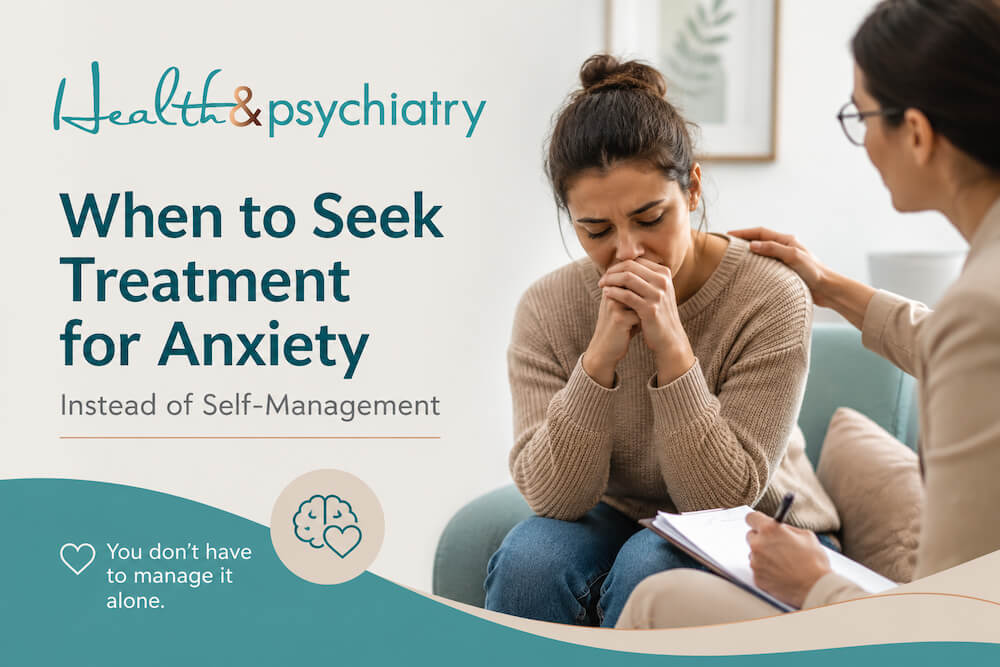
Anxiety is a normal response to stress, uncertainty, and perceived danger. A difficult week at work, financial pressure, relationship changes, or a health concern can make almost anyone feel worried. However, anxiety may require professional care when it becomes difficult to control, lasts longer than the situation causing it, or begins limiting your daily life.
Knowing when to seek treatment for anxiety can help you avoid months or years of unnecessary distress. For people in Tampa Bay, Florida, the key question is not whether your anxiety is “bad enough.” The more useful question is whether anxiety is affecting your sleep, work, relationships, physical health, decisions, or ability to enjoy life.
The National Institute of Mental Health explains that anxiety disorders involve more than occasional worry. Symptoms may persist, appear across several situations, worsen over time, and interfere with work, school, relationships, or routine activities.
This guide explains which symptoms may respond to self-management, which warning signs deserve professional attention, what an anxiety evaluation involves, and what treatment options may help.
Quick Answer: You should consider professional anxiety treatment when worry feels difficult to control, persists for weeks, causes physical symptoms, leads to avoidance, disrupts sleep or concentration, or interferes with work and relationships. You do not need to wait for anxiety to become severe before requesting an evaluation.
Take the next step: If anxiety is changing how you live, schedule a confidential mental health evaluation with Health & Psychiatry.
Key Takeaways
✅ Occasional anxiety can often improve with rest, healthy routines, social support, and stress-management skills.
✅ Professional help may be appropriate when anxiety is persistent, excessive, difficult to control, or disruptive.
✅ Avoiding people, places, responsibilities, or opportunities is an important warning sign.
✅ Anxiety can cause physical symptoms, including a rapid heartbeat, sweating, digestive problems, fatigue, and sleep disruption.
✅ A psychiatric evaluation can identify anxiety disorders, related mental health concerns, medical contributors, and appropriate treatment options.
✅ You can seek help before symptoms reach a crisis level.
When Is Anxiety Normal?
Normal anxiety usually has a recognizable cause and decreases when the stressful event passes. For example, you might feel nervous before a presentation, medical appointment, job interview, flight, or important conversation.
Self-management may be reasonable when:
- Your worry is connected to a temporary situation.
- You can still complete your daily responsibilities.
- Your sleep and appetite remain mostly stable.
- Anxiety improves after exercise, rest, relaxation, or talking with someone.
- You are not regularly avoiding important activities.
- Symptoms are uncomfortable but manageable.
- Your usual coping strategies continue to work.
Healthy self-management can include consistent sleep, physical activity, balanced meals, reduced caffeine, breathing exercises, mindfulness, journaling, and support from trusted friends or family.
However, self-care should not become a test of willpower. If you are using several coping methods and still struggling, professional support may be the more effective next step.
When to Seek Treatment for Anxiety: 10 Warning Signs
There is no single symptom that automatically confirms an anxiety disorder. Instead, clinicians consider the intensity, frequency, duration, context, and effect of your symptoms.
Consider scheduling an evaluation if you recognize any of the following patterns.
1. Your anxiety interferes with everyday life
Professional help may be appropriate when anxiety makes it harder to work, study, care for your family, complete errands, manage finances, or maintain relationships.
Mayo Clinic recommends seeing a healthcare professional when worry interferes with work, relationships, or other areas of life, or when fear and anxiety feel upsetting and difficult to control.
2. You cannot control the worry
You may understand that a fear is unlikely or out of proportion, yet still feel unable to stop thinking about it. Reassurance may help briefly, but the worry soon returns.
This cycle can consume significant mental energy and make it difficult to focus on anything else.
3. Anxiety has lasted for several weeks
A difficult day does not necessarily indicate an anxiety disorder. However, symptoms that continue for weeks, appear on most days, or steadily worsen deserve attention.
You do not need to wait for a specific number of months before asking for help. Early evaluation may prevent anxiety from becoming more disruptive.
4. You are avoiding important situations
Avoidance is one of the clearest signs that anxiety is controlling your choices.
You might:
- Decline social invitations.
- Avoid driving, flying, shopping, or crowded spaces.
- Skip medical appointments.
- Delay phone calls or work assignments.
- Avoid dating or meeting new people.
- Refuse promotions or professional opportunities.
- Depend on another person to complete routine tasks.
Avoidance may reduce anxiety temporarily. However, it can strengthen fear over time by preventing you from learning that you can cope with the situation.
5. You experience panic attacks
A panic attack can involve sudden, intense fear accompanied by symptoms such as:
- Racing or pounding heartbeat
- Chest discomfort
- Shortness of breath
- Sweating or trembling
- Dizziness
- Nausea
- Chills or hot flashes
- A feeling of losing control
- Fear that something terrible is happening
Because heart, thyroid, respiratory, medication-related, and other medical problems can sometimes resemble anxiety, new or severe physical symptoms should receive appropriate medical assessment.
6. Anxiety disrupts your sleep
You may struggle to fall asleep because your mind will not slow down. You might wake during the night, replay conversations, anticipate worst-case scenarios, or feel tense before the next day begins.
Poor sleep can also increase emotional sensitivity, irritability, and difficulty concentrating, creating a cycle in which anxiety and insomnia worsen each other.
7. Physical symptoms keep returning
Anxiety can affect the entire body. Common symptoms may include an increased heart rate, rapid breathing, sweating, trembling, fatigue, digestive discomfort, muscle tension, and difficulty sleeping.
A clinician can help determine whether anxiety, a physical condition, medication effects, caffeine, or another factor may be contributing.
8. You rely on alcohol, cannabis, or other substances to cope
Using substances to calm down, sleep, socialize, or escape anxious thoughts can create additional health and safety risks.
Professional care is especially important when anxiety occurs alongside increased alcohol use, drug use, or difficulty reducing a substance. Mayo Clinic specifically identifies co-occurring substance concerns as a reason to consult a healthcare professional.
9. Anxiety occurs with depression or another mental health concern
Anxiety may occur alongside depression, trauma-related symptoms, obsessive thoughts, eating concerns, attention difficulties.
A comprehensive evaluation helps identify the full picture rather than treating one symptom in isolation.
10. Your current coping methods no longer work
Self-help strategies are valuable, but they have limits. You may need additional support when breathing exercises, exercise, journaling, reassurance, meditation, or lifestyle changes provide little relief.
Seeking treatment does not mean you failed at self-management. It means your symptoms may require a more structured and personalized approach.
Self-Management vs. Professional Anxiety Treatment
| Self-Management | Professional Anxiety Treatment |
|---|---|
| Self-management may be reasonable when | Professional treatment may be appropriate when |
| Anxiety has a clear, temporary trigger | Anxiety persists or appears without a clear cause |
| Symptoms are mild and manageable | Symptoms feel intense or difficult to control |
| You can maintain normal routines | Work, relationships, sleep, or health are affected |
| Healthy coping strategies provide relief | Coping strategies no longer provide enough relief |
| You are not avoiding important activities | Fear is shrinking your routine or opportunities |
| Symptoms improve as stress decreases | Symptoms remain the same or worsen |
| You feel safe | You have thoughts of self-harm or feel unable to stay safe |
This table is not a diagnostic tool. Even mild symptoms may justify an appointment when they cause distress or when you want professional guidance.
What Happens During an Anxiety Evaluation?
An anxiety evaluation is a structured conversation designed to understand what you are experiencing and what may be contributing to it.
A psychiatric provider may ask about:
- When your symptoms began
- How often anxiety occurs
- Situations that trigger or worsen it
- Physical symptoms
- Sleep, appetite, and energy
- Panic attacks or avoidance
- Work, family, and relationship effects
- Medical history
- Current medications and supplements
- Caffeine, alcohol, nicotine
- Past mental health treatment
- Depression, trauma, or other symptoms
- Personal and family mental health history
The provider may also recommend that you speak with a primary care clinician or complete medical testing when a physical condition could be involved.
An evaluation does not automatically mean you will receive medication. Its purpose is to clarify your symptoms, rule out possible contributors, discuss your preferences, and create an appropriate treatment plan.
What Professional Treatment for Anxiety May Include
Treatment depends on your symptoms, diagnosis, health history, preferences, and goals.
Psychotherapy
Psychotherapy can help you understand anxiety patterns and develop more effective responses to fear, worry, and avoidance.
Cognitive behavioral therapy, commonly called CBT, often focuses on identifying unhelpful thought patterns, practicing coping skills, and gradually approaching situations you have avoided.
Medication management
Some people may benefit from medication, particularly when anxiety is persistent, severe, or accompanied by panic attacks, depression, or major functional impairment.
A psychiatric provider can explain potential benefits, risks, alternatives, side effects, and monitoring needs. Never start, stop, or change a psychiatric medication without guidance from a qualified clinician.
Combined care
Some patients benefit from a combination of psychotherapy and medication management. Others may begin with one approach and adjust the plan based on their response.
Treatment should remain individualized. What works for another person may not be appropriate for your symptoms or medical history.
Lifestyle support
Sleep, movement, nutrition, caffeine intake, stress management, and social support can remain important parts of treatment. However, lifestyle changes should complement professional care when symptoms are significantly affecting your life.
When to Seek Treatment for Anxiety in Tampa Bay
Residents throughout Tampa Bay may face anxiety related to demanding careers, caregiving, health concerns, financial pressure, relocation, hurricane preparation, traffic, social isolation, and other life changes.
Whether you live in Tampa, Oldsmar, Clearwater, Palm Harbor, Safety Harbor, St. Petersburg, or another community in Hillsborough, Pinellas, or Pasco County, you do not need to wait until anxiety becomes disabling.
Consider contacting a Tampa Bay psychiatric provider when:
- Your symptoms interfere with daily functioning.
- You are unsure whether anxiety or a medical issue is causing physical symptoms.
- You experience panic attacks.
- You avoid important activities because of fear.
- Anxiety occurs with depression, trauma.
- You want help deciding whether therapy, medication management, or another approach may be appropriate.
Health & Psychiatry provides information about anxiety treatment options for patients in Tampa Bay.
When Anxiety Requires Immediate Help
Seek urgent help when anxiety occurs with:
- Thoughts of suicide or self-harm
- A plan or intention to harm yourself or someone else
- Severe confusion or loss of contact with reality
- Hallucinations
- An inability to care for your basic needs
- A suspected overdose
- Severe chest pain, fainting, or difficulty breathing
- Immediate danger or violence
In the United States, call or text 988 to reach the Suicide & Crisis Lifeline. In a life-threatening emergency, call 911 or go to the nearest emergency department.
Frequently Asked Questions
How do I know if my anxiety is serious enough for treatment?
Anxiety may deserve treatment when it is difficult to control, causes significant distress, affects your sleep or health, leads to avoidance, or interferes with work and relationships. You do not need to wait until symptoms become severe.
How long should I try self-help before seeing a professional?
There is no required waiting period. Consider professional help when symptoms persist for several weeks, worsen, interfere with daily life, or do not improve with reasonable self-care.
Can I have an anxiety disorder even if I still go to work?
Yes. Some people continue meeting responsibilities while experiencing intense worry, physical tension, poor sleep, panic, or emotional exhaustion. Outward functioning does not always reflect the severity of internal distress.
Should I see a therapist or psychiatrist for anxiety?
A therapist may provide psychotherapy and coping strategies. A psychiatrist or other qualified psychiatric provider can assess symptoms, consider medical and psychiatric factors, and discuss medication when appropriate. Some people benefit from both.
Can anxiety cause physical symptoms?
Yes. Anxiety can contribute to a racing heartbeat, sweating, trembling, rapid breathing, fatigue, digestive discomfort, muscle tension, and sleep problems. However, new or concerning physical symptoms should receive medical evaluation because other conditions may cause similar effects.
Does seeking treatment mean I will need medication?
No. An evaluation does not obligate you to take medication. Treatment may include psychotherapy, lifestyle support, medication management, or a combination based on your needs and preferences.
Can anxiety improve without professional treatment?
Temporary or mild anxiety may improve through rest, support, healthier routines, and stress-management strategies. Persistent, worsening, or disruptive anxiety may respond better to structured professional care.
Where can I find anxiety treatment in Tampa Bay?
Health & Psychiatry offers information about professional anxiety care for people in Tampa Bay and surrounding Florida communities. You can review the clinic’s anxiety treatment service and request an appointment through the Health & Psychiatry contact page.
Take the Next Step Toward Relief and Clarity
Knowing when to seek treatment for anxiety often comes down to one question: Is anxiety preventing you from living, working, resting, connecting, or making decisions the way you want?
You do not have to prove that your symptoms are severe. You also do not have to manage persistent worry, panic, avoidance, or physical tension alone.
Health & Psychiatry helps patients in Tampa Bay better understand their symptoms and explore appropriate treatment options. A professional evaluation can provide clarity, identify related concerns, and help you build a treatment plan based on your needs.
Schedule a Confidential Anxiety Evaluation
Stop guessing whether you should keep managing anxiety alone. Request an appointment with Health & Psychiatry and discuss your symptoms with a psychiatric provider.
Medical Disclaimer
This article is for general educational purposes and does not provide a diagnosis, medical advice, or a substitute for care from a qualified healthcare professional. Do not start, stop, or change medication without consulting your prescribing clinician. If you may harm yourself or someone else, call 911 or call or text 988 in the United States.
Written for: Health & Psychiatry
Medical review: Review by a licensed psychiatric provider recommended before publication
Last updated: July 20, 2026
Evidence sources: National Institute of Mental Health and Mayo Clinic