
Bulimia nervosa is an eating disorder… where a person repeatedly overeats. Binges and then purge. That is the use of unhealthy methods to get rid of food to avoid gaining weight.
Have you ever had the desire to eat everything and more? The desires become uncontrollable, and you consume more than you had planned. Then afterwards, do you attempt to make up by vomiting, working out, or starving? This is referred to as a severe health problem known as Bulimia Nervosa.
If we talk about the bulimia nervosa statistics, the National Eating Disorders Association records that almost 2% of women go through this condition in their lifetime. The percentage of men is comparatively lower but present.
Besides, approximately 70 million individuals experience eating disorders such as bulimia and rumination disorder all over the world, and the statistics continue to grow. But what is it and how do you get it?
What is Bulimia Nervosa?

Bulimia Nervosa is connected with an eating disorder as per the DSM-5. The victim of it overeats and subsequently experiences out-of-control feelings and guilt. To remove that guilt, the person opts for behaviors like vomiting, excessive exercising, or even starving themselves.
Some other behaviors a sufferer of binge-vomit syndrome might show include using laxatives, fasting, and even going on a strict weight-loss diet. The eating condition is very hard to diagnose because most patients don’t let anybody detect it due to their normal body weight, unlike anorexia nervosa.
If your binge eating is combined with vomiting every time, it is termed as bulimarexia.
Bulimia Nervosa Symptoms
There are different kinds of symptoms and signs of bulimia nervosa disorder.
Some of them are:
→ Physical Symptoms
- Sore throat
- Dental erosion
- Increase stomach acids
- Swollen salivary glands
- Dehydration
- Gas issues
- Digestion issues
- Irregular heartbeat
- Electrolyte imbalance
→ Behavioral Symptoms
- Frequently going to the bathroom after eating
- Strict diet
- Abnormal eating patterns
- Eating in secrecy
- Exessive exercise
- Use of laxatives
→ Emotional Symptoms
- Negative self-image
- Feeling guilt or remorse
- Fearing weight gain
- Irritated mood
- Feeling out of control
→ Psychological Symptoms
- Distorted body image (seeing oneself as overweight despite normal weight)
- Obsessive thoughts about food, weight, or body shape
- Low self-esteem
- Perfectionism
- Anxiety (especially around eating or body image)
- Depression or persistent sadness
- Difficulty concentrating
- Impulsive behaviors
What Causes Bulimia Nervosa?
There are many causes of Bulimia Nervosa, but no single one is solely responsible.
→ Psychological Factors
The psychological factors of bulimia nervosa include binge eating or purging. Sufferers who have an impulsive nature, are perfectionists, or feel low about themselves are more prone to get it.
→ Biological Factors
Then there’s biology. There's your genetic background - if you have a family history of either eating disorders or mental health problems, you're more at risk.
And there is some evidence that the chemistry of the brain, particularly when it comes to chemicals such as serotonin, plays a role in mood and eating patterns.
→ Environmental Factors
Environmental conditions may be a predeterminant, as well. The pressure to appear a specific way, the culture of dieting & misguided body images in the media and social media.
In addition, bullying, trauma, and stress can contribute to the development of bulimia.
Bulimia Nervosa Diagnostic Criteria
First of all, the diagnosis of bulimia nervosa can only be made by a specialist. Next, they use DSM-5 criteria.
A few must-have symptoms to occur once a week in three months are:
- Binge eating.
- Purging or vomiting.
- Taking different means to take food out of the body, e.g., laxatives.
You will have to go through a series of tests to rule out the possibility of dehydration or similar issues.
Treatment Options for Bulimia Nervosa
No single bulimia nervosa treatment exists. It can frequently be a team effort and a personalised treatment plan.
1. Therapy

In bulimia nervosa, therapy is key. Cognitive Behavioral Therapy (CBT) is especially effective because it questions unhelpful beliefs and actions regarding food and body weight.
Possibly other therapies like interpersonal therapy, are also helpful.
2. Medication
There is also a possibility of using bulimia nervosa medication, especially when there is depression or anxiety. As an example, an SSRI medication is FDA-approved to treat bulimia and decrease binge-purge behaviours.
3. Nutrition & Diet Awareness

Dietitians are involved in controlling food-related disorders. Your nutritionist or dietitian can assist in establishing eating schedules and also tackling food fears. It works best as bulimia nervosa treatment along with therapy and medication.
4. Support
Support is always important in the treatment of psychological illness. To remain in the recovery & bulimia nervosa therapy its important is same. This can be provided by family members, support groups or even by simply talking to others to help with isolation.
Do’s & Don’ts!
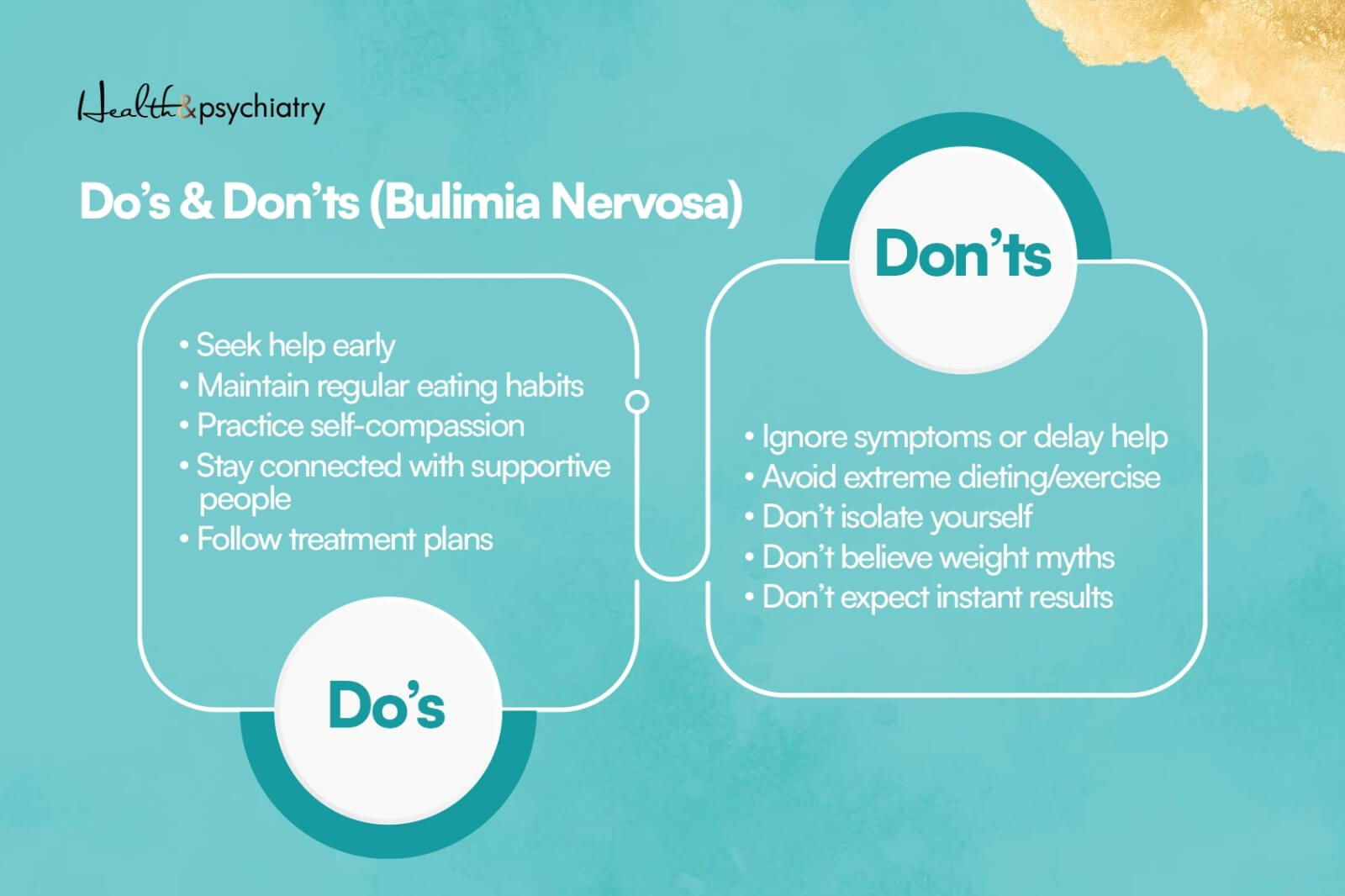
→ Do’s:
- Early professional help should be sought in case of bulimia nervosa symptoms.
- Eat on a regular basis and maintain regular eating habits.
- Be self-compassionate and patient in recovery.
- Keep in touch with positive people.
- Adhere to treatment plans.
→ Don’ts:
- Ignore symptoms of bulimia nervosa or procrastinate to seek help.
- Take up dieting or excessive training.
- Shun the ways of people.
- Count on falsehoods about weight and health.
- Get instant outcomes- recovery is a long process.
Bulimia Nervosa Health Risks and Complications!

With lack of attention, it can lead to a wide range of health risks associated with bulimia nervosa. Persistent vomiting can cause damage to the esophagus, erosion of the teeth by enamel and a chronic sore throat.
The electrolyte imbalances due to vomiting, especially a low level of potassium, can disrupt heart rhythms and are life-threatening.
The additional bulimia nervosa complications can be gastrointestinal issues, dehydration, hormonal issues, and bone loss.
Other common psychological problems, such as depression, and anxiety are common.
Bulimia Nervosa Long Term Effects
The long-term effects of bulimia nervosa may cause permanent physical and psychological effects. Long-term stomach issues, constant tiredness, and cardiovascular challenges can occur. The damage to the dentals can be irreversible, and considerable treatment might be necessary.
Psychologically, they can have such long-term difficulties as self-image, emotional regulation, and relationships. The disorder can greatly decrease the quality of life and pose a risk of serious health consequences without treatment.
Living With Bulimia?
Bulimia is a highly stressful process. But that can be cured. The majority of the population is taught to manage their symptoms and re-form a normal relationship with food and their bodies. This may be as long as therapy is continued with bulimia nervosa specialists, a change in lifestyle, and continuous encouragement.
The negative habits can be replaced with the development of more health-promoting coping strategies, such as mindfulness, journaling, or creative practices. Recovery is not a linear process at all times, yet every step will be towards recovery in the long run.
 Start Your Eating Disorder Recovery with Health & Psychiatry!
As the leading bulimia nervosa treatment centers in Florida, we can help you maintain your eating habits.
Health & Psychiatry provides highly qualified bulimia nervosa specialists, medication management, and caring services, which are individual-centered. We enable people to restore their health and develop sustainable recovery with the help of qualified clinicians, evidence-based treatment in a favorable atmosphere at our state-of-the-art facilities…
Make the first step to recovery today- because healing is not just somewhere it is possible, but it is close.
FAQs
Is bulimia nervosa different than binge eating disorder?
Binge eating is simple, you eat a lot and occasionally do a diet or cut food. But with bulimia nervosa, the person feels guilty and uses means like vomiting, fasting, or using laxatives to get rid of the food.
What happens to the body in a binge-purge cycle?
Binge involves eating large quantities of food within a short period, which is usually accompanied by pain and remorse. Purging, in its turn, tries to wash away the calories, which disturbs normal processes of the body, leading to dehydration, electrolyte imbalance and putting pressure on the digestive system.
What does bulimia do in the long run?
The effects of it may become heart complications and other digestive issues, severe dental impairments, hormonal issues and long-term mental health.
Is bulimia nervosa dangerous?
Yes. It is life-threatening in the case of untreated cases of bulimia nervosa. The consequences of some complications, such as heart rhythm abnormalities and severe electrolyte imbalances, can be rather serious, and that is why the diagnosis and treatment of these complications at an early stage are needed.