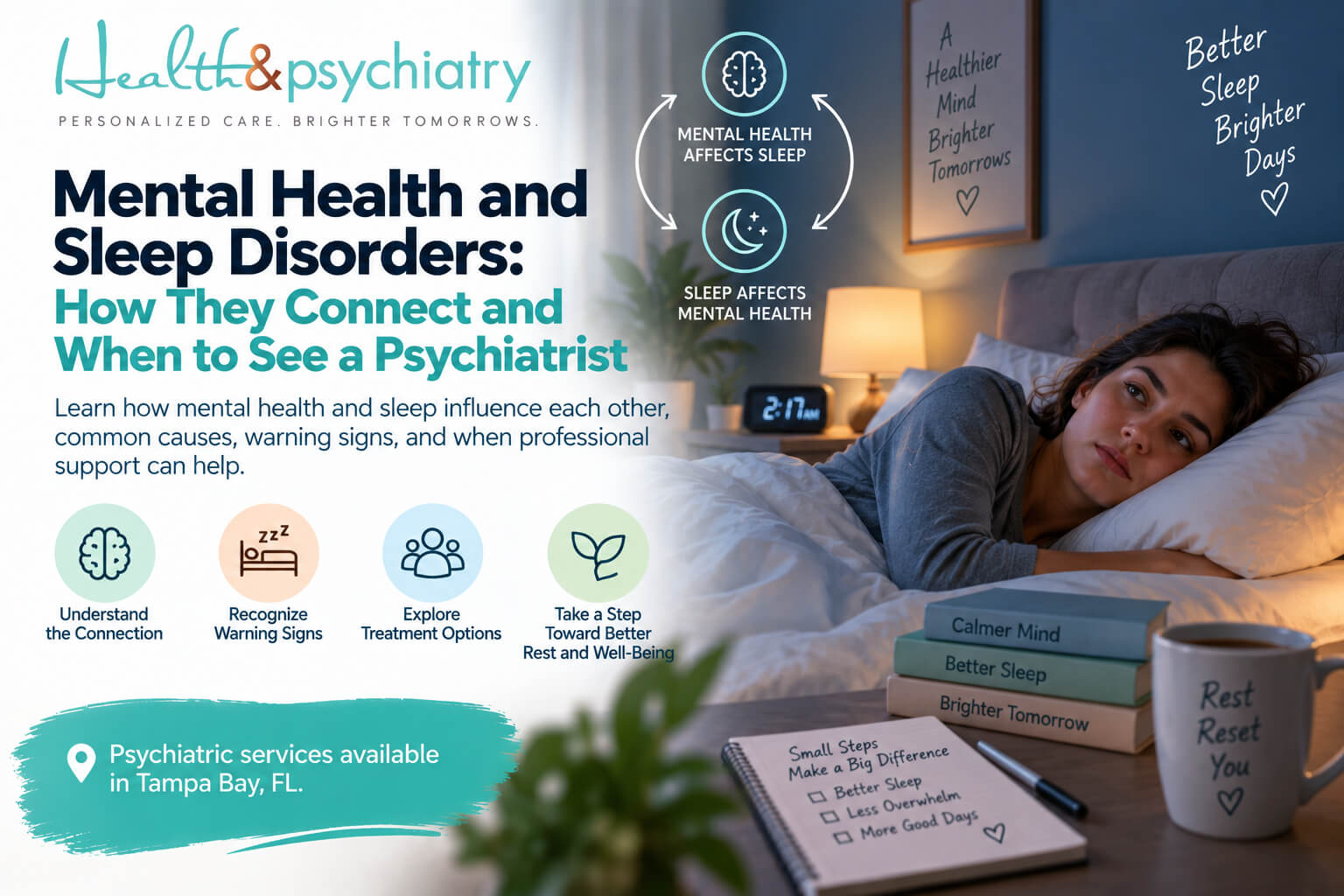
You feel exhausted all day, but your thoughts become louder when you turn off the lights. Or you sleep through the night and still wake feeling drained, irritable, and unable to focus. When this pattern continues, it can affect your work, relationships, and confidence.
Mental health and sleep disorders can influence each other. Anxiety or depression may disrupt sleep, while ongoing sleep problems can make emotional symptoms harder to manage. However, poor sleep does not automatically mean you have a psychiatric condition. Breathing problems, medication effects, pain, and irregular schedules can also contribute.
For Florida residents balancing work, caregiving, or changing shifts, identifying the cause matters more than simply trying another sleep aid. You may need psychiatric support, a medical evaluation, or care from a sleep specialist.
This article explains common connections, signs that deserve attention, what an evaluation involves, and treatment options worth discussing. You will also learn when to seek urgent help and how to take a practical next step.
Key Takeaways
✅ Mental health and sleep disorders can affect each other.
✅ Trouble sleeping, excessive sleepiness, and reduced need for sleep are different experiences.
✅ Snoring and gasping may require evaluation for sleep apnea.
✅ A psychiatrist can assess mood, anxiety, and medication-related contributors.
✅ Chronic insomnia often needs structured treatment beyond bedtime habits.
How Are Mental Health and Sleep Disorders Connected?
Sleep supports attention, learning, decision-making, and emotional regulation. When you regularly get insufficient or disrupted sleep, everyday demands may feel harder to manage.
The relationship can work in both directions. Emotional distress may interfere with sleep, and sleep deficiency can worsen how you feel and function. The National Heart, Lung, and Blood Institute links sleep deficiency with problems managing emotions, coping with change, and maintaining daytime performance.
Consider this pattern: you worry about tomorrow, struggle to sleep, feel less focused the next day, and then worry about another difficult night. Over time, concern about sleep itself can become part of the problem.
An evaluation helps identify which factors need attention rather than assuming one diagnosis explains everything.
Common Patterns Worth Discussing
Anxiety and Trouble Falling Asleep
Worry, tension, and repeated mental planning can make it difficult to settle down. You may replay conversations, check the clock, or feel pressure to fall asleep immediately.
Occasional stress-related sleep loss differs from a persistent pattern that causes distress or interferes with daily life. Tell your clinician whether worry also affects you during the day.
Depression and Changes in Sleep
Depression may involve difficulty falling asleep, waking too early, or sleeping longer than usual. You may also notice low mood, reduced interest, fatigue, or trouble concentrating.
The National Institute of Mental Health includes both insomnia and oversleeping among possible depression symptoms. Sleep changes alone do not establish the diagnosis.
Bipolar Symptoms and Reduced Need for Sleep
Feeling tired but unable to sleep differs from sleeping very little while feeling unusually energetic.
A reduced need for sleep alongside racing thoughts, increased activity, irritability, or impulsive behavior deserves prompt assessment. These changes can occur during mania or hypomania, according to NIMH’s bipolar disorder guidance.
Do not assume that several highly energized, sleepless nights are simply ordinary insomnia.
Breathing Problems During Sleep
Loud snoring, breathing pauses, or waking while gasping can suggest sleep apnea. Daytime sleepiness and concentration problems may overlap with concerns people associate with mental health.
The NHLBI sleep apnea overview recommends discussing these symptoms with a healthcare provider; a sleep study may be necessary. Psychiatric treatment alone does not address an untreated breathing disorder.
When Should You See a Psychiatrist for Sleep Problems?
Consider a psychiatric evaluation when sleep difficulties occur with persistent anxiety, low mood, significant behavior changes, or problems managing daily responsibilities.
You do not need to wait until symptoms become severe. Useful reasons to schedule include:
- Worry regularly prevents you from sleeping.
- Poor sleep accompanies loss of interest or persistent sadness.
- Your energy, mood, or behavior changes noticeably.
- Sleep problems begin after a psychiatric medication change.
- You increasingly rely on alcohol or sleep products.
- Previous treatment has not addressed both sleep and emotional symptoms.
An initial psychiatric evaluation can help clarify these concerns and whether additional medical care is appropriate.
Psychiatrist, Primary Care, or Sleep Specialist?
The right starting point depends on your symptoms. More than one clinician may contribute to your care.
| What You Notice | Appropriate Next Step |
|---|---|
| Poor sleep with anxiety, low mood, or mood swings | Psychiatric evaluation |
| Loud snoring, gasping, or witnessed breathing pauses | Primary care or sleep-medicine assessment |
| Sleep problems with pain or other physical symptoms | Primary-care evaluation |
| Persistent insomnia despite basic sleep changes | Ask about structured insomnia treatment |
| Severe daytime sleepiness or unintended sleep episodes | Prompt medical assessment; avoid driving when sleepy |
| Very little sleep with unusual energy or risky behavior | Prompt psychiatric assessment |
These patterns guide a conversation; they cannot diagnose the cause.
How Clinicians Evaluate Mental Health and Sleep Disorders
Your clinician needs more than the number of hours you spend in bed. Expect questions about bedtime, waking, naps, mood, breathing symptoms, and daytime functioning.
They may review:
- When the problem started and how often it occurs
- Whether you have enough opportunity to sleep
- Work schedules and recent life changes
- Current prescriptions, supplements, and sleep aids
- Caffeine, nicotine, alcohol, and other substances
- Previous mental health diagnoses and treatment
- Medical conditions and safety concerns
A sleep diary can help. Record approximate sleep and wake times, nighttime awakenings, naps, and daytime symptoms for one to two weeks if practical.
Depending on the findings, your clinician may recommend medical testing, a sleep study, or coordination with another specialist.
Unsure whether stress, medication, or another factor is affecting your sleep? Bring your sleep history and medication list to an evaluation so your clinician can assess the pattern.
What Treatment Options May Help?
Cognitive Behavioral Therapy for Insomnia
Cognitive behavioral therapy for insomnia, or CBT-I, addresses thoughts and behaviors that maintain insomnia. It is more structured than general advice about avoiding screens.
The NHLBI identifies CBT-I as a usual first treatment for long-term insomnia. Ask whether a qualified clinician or referral service can provide it.
Treatment for Co-Occurring Conditions
If anxiety, depression, or another psychiatric condition contributes, care may include psychotherapy, medication, or both. Sleep symptoms may also need separate attention.
Treating one condition does not guarantee that every sleep problem will resolve. Follow-up helps determine what still needs assessment.
Medication Review
Some medicines can affect alertness or sleep. Your prescriber can review timing, interactions, benefits, and side effects.
Do not stop prescriptions or add sedating products independently. Discuss over-the-counter sleep aids and supplements, too.
Practical Sleep Support
A consistent wake time, quiet bedroom, and calming evening routine may support treatment. Limiting late caffeine and avoiding alcohol as a sleep aid may also help. These habits complement care but may not resolve chronic insomnia by themselves.
Finding Care in Florida
Florida residents seeking help with overlapping mood and sleep concerns can explore evaluation options through Health & Psychiatry. Eligible patients may access telepsychiatry, while the practice’s Oldsmar clinic provides a physical care location. Explore virtual care.
Ask which appointment format suits your symptoms. An online psychiatric visit cannot perform a sleep study or replace necessary physical assessment.
Before scheduling, clarify provider availability, insurance benefits, and whether referrals are needed. Explain that sleep concerns are part of your reason for seeking care.
When Sleep Changes Require Urgent Help
Seek prompt help for little or no sleep accompanied by severe agitation, unusual energy, hallucinations, or unsafe behavior.
If there is immediate danger, call 911 or go to the nearest emergency department. In the United States, call or text 988 for suicidal thoughts or a mental health crisis.
Do not drive if you struggle to stay awake.
Frequently Asked Questions
Sleep deficiency can affect mood, concentration, and emotional control. However, these symptoms have many possible causes. Persistent changes deserve assessment rather than self-diagnosis.
No. Insomnia may occur with depression, anxiety, medical conditions, or other factors. Your clinician considers your broader symptoms and history.
Yes, particularly when mood, anxiety, or psychiatric medications contribute. A psychiatrist may also recommend primary care, CBT-I, or a sleep specialist.
It can be, but medications, disrupted sleep, and medical conditions may also contribute. Report excessive sleepiness or difficulty functioning to a clinician.
Not everyone does. Your clinician may recommend one for suspected sleep apnea or another disorder requiring sleep testing.
Yes. A virtual evaluation can review sleep, mood, medications, and history. Your provider may recommend in-person assessment or testing afterward.
Medical disclaimer: This article provides general education and does not diagnose a condition or replace individualized medical advice.
Take the Next Step Toward Better Sleep and Mental Health
Mental health and sleep disorders deserve attention when they disrupt your life. You do not need to determine the cause alone.
If you live in Florida and sleep changes are affecting your mood, focus, or functioning, request a psychiatric appointment with Health & Psychiatry to discuss your symptoms and appropriate next steps.