
Bipolar disorder is a chronic mood swings disorder. Previously called manic depression, this mental health disorder is characterized by extreme mood swings, including episodes of elevated or irritable mood and high energy (mania or hypomania) and episodes of low mood, fatigue, and
Bipolar disorder in men refers to the same condition. But signs of bipolar disorder in men present a greater number of manic episodes. In contrast, the number of depressive and mixed episodes was higher in women with bipolar...
Bipolar disorder is a serious mental disorder as it affects the way a person thinks, acts, and functions in normal life. Even though it is at a fairly equal rate between men and women, in men, it tends to manifest itself differently, and they are less inclined to seek early assistance.
In discussing statistics, the WHO recorded approximately forty million individuals with bipolar disorder. An equal prevalence, but as far as studies point out, men have an earlier onset and more severe manic symptoms, which are usually associated with impulsivity.
What is Bipolar Disorder in Men?

Bipolar disorder is a long-term mood disorder that is distinguished by severe mood swings characterised by depressive (low energy) and manic (high energy) episodes. They are not only the normal mood swings, but are extreme and prolonged, and can interfere with working, relationships & physical health.
Bipolar disorder manifestations in men often reflect outward behavior, yet not emotionality. Depression may manifest itself as being irritable or angry, as opposed to sadness. Manic men are highly motivated, impulsive, and may be violent.
Bipolar disorders have three clinical presentations:
→ Bipolar I Disorder is characterized by severe mania that may cause them to be hospitalized & they are often confused with spells of depression.
→ Bipolar II Disorder is a combination of mania (albeit in a mild form) and major depression.
→ Cyclothymic Disorder or cyclothmia is characterized by less severe mood swings over a length of time.
Men are first affected by the symptoms late in adolescence and early adulthood, and the earlier the onset, the worse the course of the disease is likely to be.
Difference Between Bipolar Disorder in Men and Women

Although the diagnostic criteria remain unchanged, the way bipolar disorder presents itself may differ in both sexes, that is, men and women.
The symptoms of bipolar disorder are more likely to become externalized in adult men. These include aggression, irritability and risk taking like spending sprees and drug. Women instead tend to be more susceptible to depression bouts and rapid mood swings.
Research in The Journal of Clinical Psychiatry revealed that men tend to have behavioral expressions such as anger and impulsivity that may conceal the underlying illness.
The other important distinction of bipolar disorder in men is in the help-seeking behavior. The cultural norms tend to dislike it when men show their vulnerability and hence, there is a late diagnosis and treatment.
Bipolar Disorder Symptoms in Men
Bipolar disorder in young men and adults presents with these symptoms:
→ Manic Symptoms
- Hyper energetic
- Insomnia or sleep issues
- Inflated self-esteem
- Risky behaviors (reckless driving, spending sprees, unsafe sex)
- Aggressive
→ Depressive Symptoms
- Low energy
- Loss of interest
- Fatigue
- Difficulty concentrating
- Hopelessness
- Irritated behavior
→ Behavioral Changes in Daily Life
- Sudden changes in sleep
- Disrupted routine
- Isolation
- Increased work or activity during manic phases
→ Earlier Onset
Studies indicate that men tend to develop bipolar disorder at an earlier stage in life, which is at times late in adolescence. Early development is associated with a more devastating course in the case of non-treatment.
What Causes Bipolar Disorder in Men?
Bipolar disorder has no one cause. It is a combination of biological vulnerability and environmental stressors that develop it.
Brain structure: Biologically, researchers have observed brain differences in structure and functioning in individuals with bipolar disorder, particularly in those brain sections that are involved with emotional control.
Disruption of neurotransmitters: Abnormality of neurotransmitters, such as dopamine and serotonin, governing mood and reward. This is a crucial dysfunction in both manic and depressive.
Immunity: The role of the immune system has also been studied in recent times. Abnormalities of immune reaction and chronic inflammation can be a cause of mood instability.
Genetics: There is a powerful influence of genetics. The presence of a first-degree relative with bipolar disorder is a significant factor that raises the chances of developing bipolar disorder.
Environmental factors: Environmental precipitants stimulate episodes, e.g., the problem with finances, problems with relationships or problems with inadequate sleep which frequently initiate them in predisposed individuals.
Diagnosis of Bipolar Disorder in Men

Bipolar disorder in young men is not easily diagnosed. It cannot be confirmed by a blood test or a scan. Rather, mental health professionals will use the intricate clinical assessments.
Typically, a psychiatrist will look at alterations in mood patterns over time, and whether it involves mania or hypomania. It considers family history, behavior, and duration of symptom patterns.
The diagnosis is based on the DSM-5. Due to the underreporting of their emotional symptoms by men, behavioral signals (impulsivity, or anger) will be given attention by clinicians, especially.
Bipolar Disorder in Men: Treatment Options
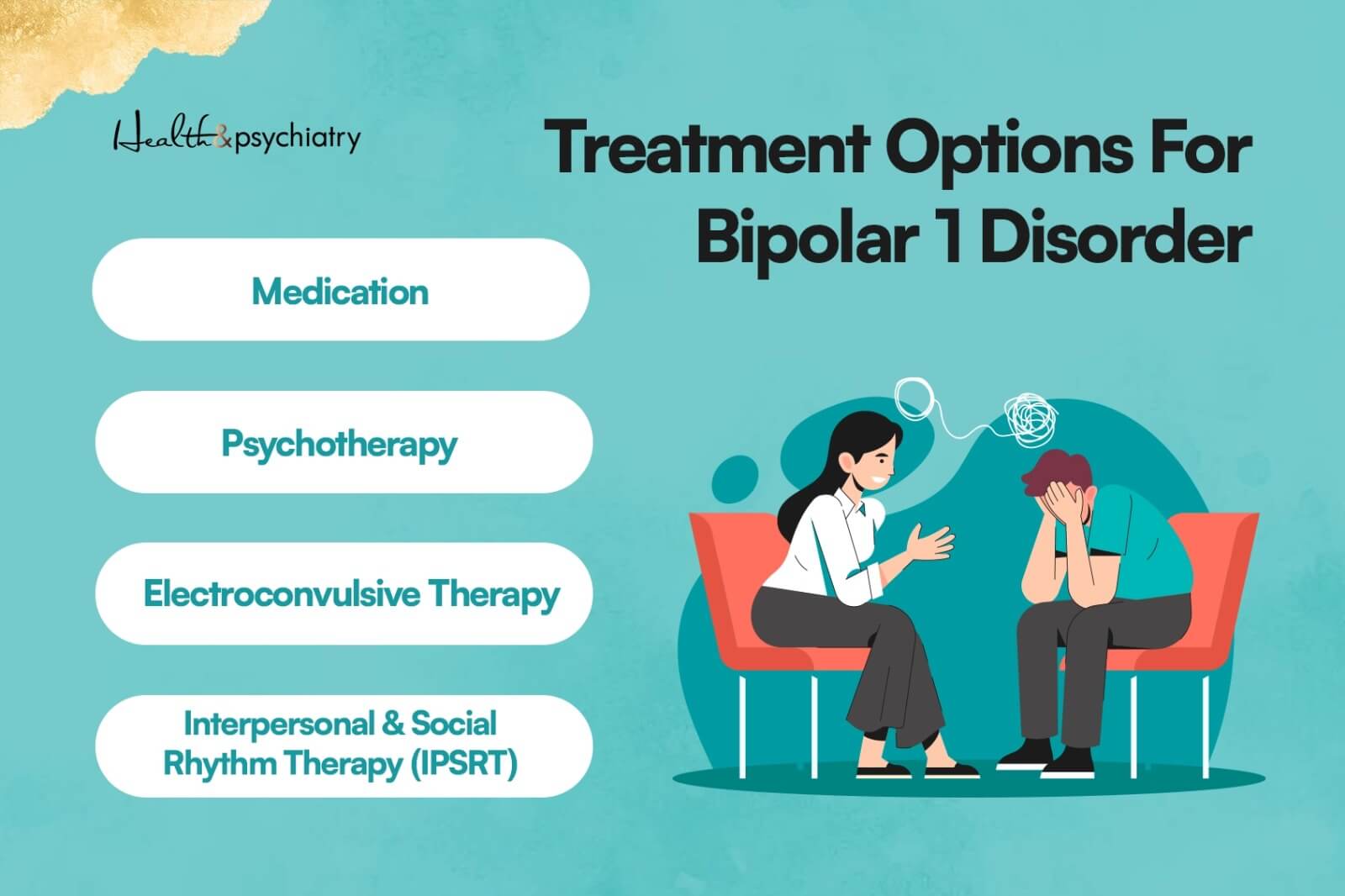
The most effective form of bipolar disorder men treatment is a combination of medication, psychological therapy, and social support.
It is not only aimed at lessening the symptoms, but also stabilizing mood in the long-term.
→ Medications
Treatment is typically based on medication. These mood stabilizers have proven to be among the most effective and are known to decrease suicide risk.
→ Psychotherapy
Psychotherapy is an important step towards educating people to manage and cope with their condition. Cognitive Behavior Therapy (CBT) assists in the detection of negative thinking patterns and substitutes them with healthier response patterns.
Social rhythm therapy is aimed at adhering to regular day-to-day schedules and sleep patterns in particular, which play a pivotal role in episode prevention.
→ Family Support
Family-centered treatment enhances communication and constructs a support network in the environment of the individual.
The support systems could be family members and friends or a peer group & they can go a long way in case of recovery and relapse prevention.
→ TMS Therapy for Bipolar Disorder
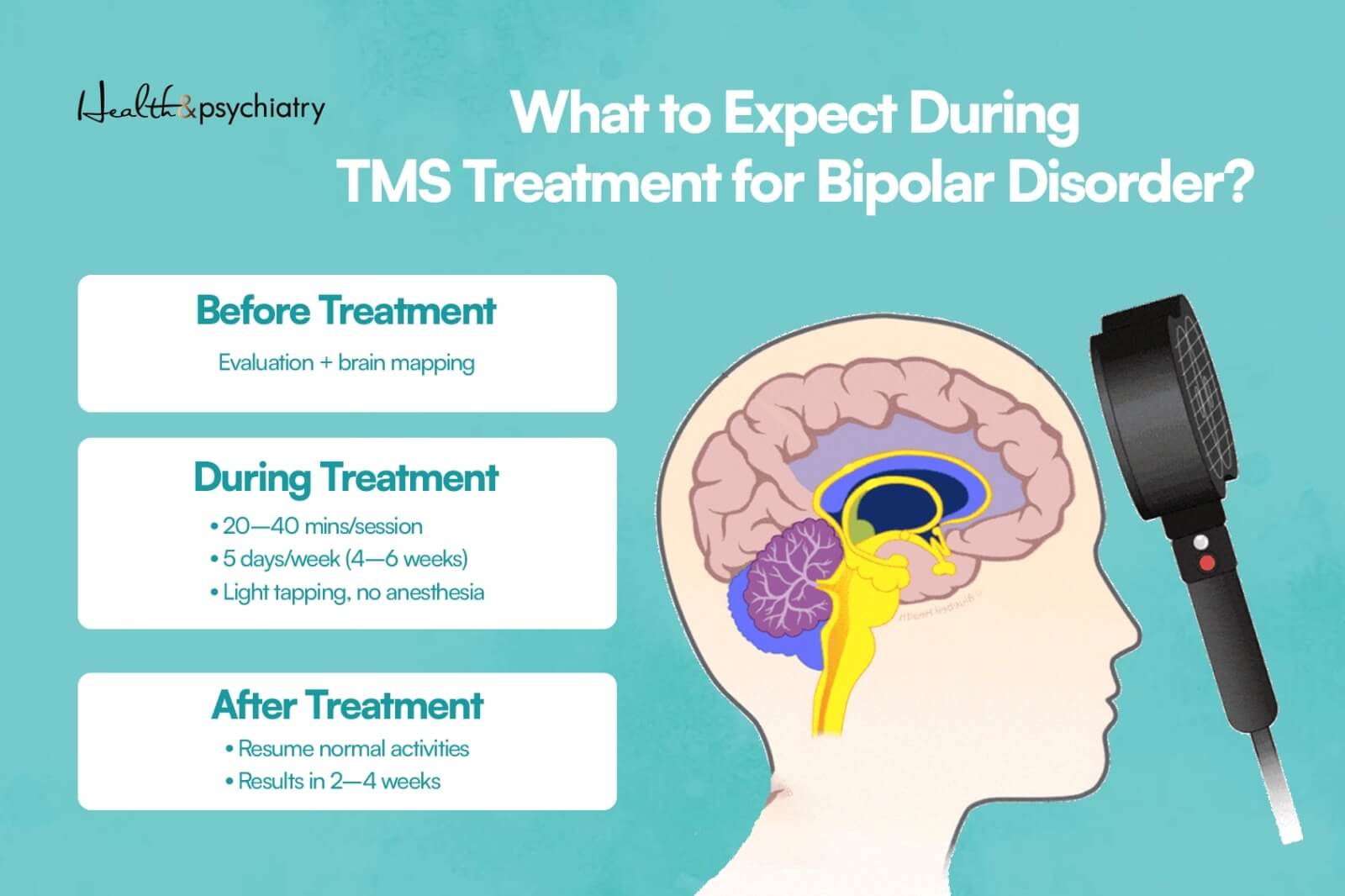
Transcranial Magnetic Stimulation (TMS) is a non-invasive technique. Involves stimulation the brain, which uses a magnetic pulse in particular parts of the brain, which are involved in mood control. For depression and TMS therapy bipolar disorder does not require anesthesia, unlike electroconvulsive therapy (ECT) & neither does it result in seizures.
TMS is mainly off-label in bipolar disorder to treat depression but not mania. Evidence indicates that it can potentially be used to stabilize mood by enhancing the activity in underactive brain areas, especially the dorsolateral prefrontal cortex (DLPFC), an area involved in emotional regulation.
Changes in Lifestyle and Coping Mechanisms
Treatment of bipolar disorder extends beyond the medical field. Stability may be impacted by habits and lifestyle decisions made daily.
One of the most important factors is a regular sleep habit. One of the trigger factors of manic as well as depressed effects is sleep disruption.
Research indicates that routine practices are very effective in minimizing the occurrence of episodes and their severity.
Effects of Bipolar Disorder on the Lives of Men

Bipolar disorder impacts almost all spheres of life. It may result in an uneven performance or a lack of job security in a career. Mood instability may be a source of misunderstanding and conflict in relationships.
Physical health is in danger as well. Bipolar patients are more predisposed to cardiovascular diseases and chronic illnesses. Impulsive choices may lead to financial issues and legal problems in manic phases.
The increased risk of suicide is perhaps the most worrying. Studies show that individuals with bipolar disorder are 20-30 times more likely to commit suicide compared to the overall population.
When to Seek Help?

Mood changes that start to affect your everyday life or relationships are some of the reasons why men with bipolar disorder should seek professional assistance. Constant irritability, excessive energy changes, or worse still, low moods should be considered.
There is a need to receive immediate assistance in case of self-harming thoughts, or out-of-control behavior. The complications can be avoided through early intervention, and long-term outcomes can be greatly enhanced.
Get Bipolar Disorder Treatment in Florida at Health & Psychiatry!

If you or a loved one is experiencing symptoms of Bipolar disorder, early intervention can make a significant difference.
At Health & Psychiatry, a bipolar disorder treatment center in Florida, our experienced professionals provide personalized diagnosis, evidence-based treatment, and ongoing support suitable to your needs.
Schedule a confidential consultation today, or a telepsychiatry appointment… to start your journey toward balanced mental health.
FAQs
What are some of the symptoms of bipolar disorder in men?
Some of the common signs will manifest as perceptible mood variations, high irritability, alterations in sleep habits, and outbursts of high activity as well as exhaustion. It may also manifest in the early stages as risk-taking behavior and not shaking routine.
Are there differences between bipolar disorder in men and women?
Yes, although the underlying belief is the same, males tend to have severe manic episodes, and aggression. Women experience more depressive episodes and are usually more inclined to seek treatment at an earlier stage.
What causes bipolar in men?
The triggers are common but are usually stress, sleep disturbance, drugs and alcohol, significant life events and unresolved emotional conflict. These stimuli have the ability to trigger episodes in biologically susceptible individuals.